As an Amazon Associate, we earn from qualifying purchases. Some links on this site are affiliate links at no extra cost to you. Our recommendations are based on thorough research and editorial judgment.

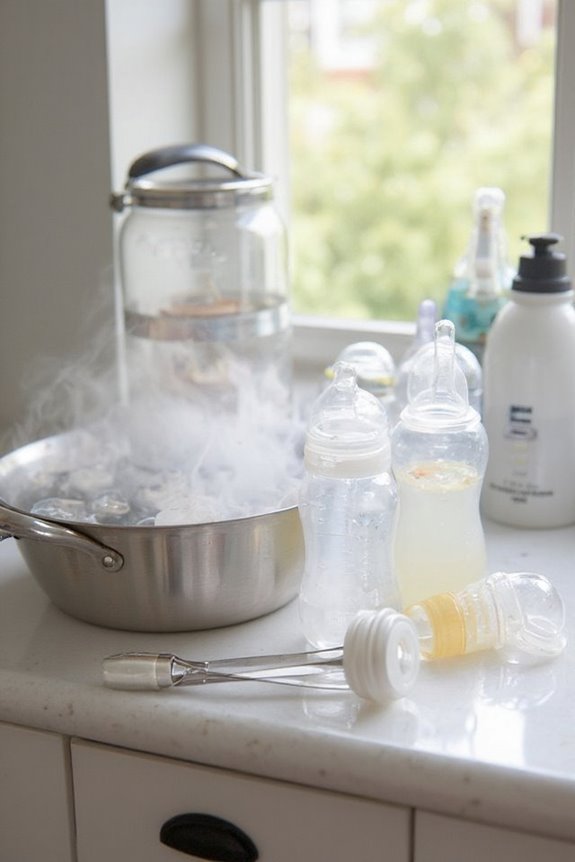
How to Safely Sterilize Baby Bottles

To safely sterilize baby bottles, you can use boiling water (5-10 minutes), electric steam sterilizers, microwave sterilizers, cold water chemical systems, or UV sterilizers. For newborns 0-3 months, sterilize after every use; gradually reduce frequency as your baby ages. Always wash bottles with hot, soapy water first, handle hot items with tongs, and let equipment cool completely before touching. Your choice of method should match your budget, time constraints, and available space. The following details will help you select the perfect sterilization routine for your family.
Key Takeaways
- Wash bottles with hot soapy water before sterilizing using boiling, steam, microwave, UV, or chemical methods.
- Sterilize after every use for newborns 0-3 months, gradually reducing frequency as baby’s immune system develops.
- Use tongs to handle hot bottles and allow all sterilized items to cool completely before reassembling.
- Electric steam sterilizers offer convenience, processing multiple bottles in under 10 minutes with minimal effort.
- Store sterilized bottles in a clean, closed container for up to 24 hours to maintain sterility.
Common Methods of Baby Bottle Sterilization
You may be interested
When it comes to keeping your baby’s bottles germ-free, you’ll find several effective sterilization methods available today. Each option offers different benefits depending on your specific needs.
The traditional boiling method involves submerging bottles in boiling water for 5-10 minutes. This approach is cost-effective but requires careful handling to prevent burns.
Electric sterilizers provide a convenient alternative that generates steam to kill bacteria without water immersion. These units can process multiple bottles simultaneously and typically complete a cycle in under 10 minutes.
Other common options include:
- Microwave sterilizers that create steam in a dedicated container
- Cold water systems using chemical tablets
- UV sterilizers that eliminate bacteria using ultraviolet light
Your choice may depend on your budget, available space, and environmental concerns.
Recommended Products

Smarter Design, Not Smaller Capacity: Stop Choosing Between Capacity and Counter Space. We reimagined the interior to be 20% more space-efficient than other bulky old models. Grownsy SteriDry Pro compact sterilizer dryer fits all your daily bottles and feeding supplies accessories—and works 30% faster—letting you save more precious moments with your little one instead of waiting around.

𝟭𝟬𝟬% 𝗻𝗼𝗻-𝘁𝗼𝘅𝗶𝗰 𝗰𝗼𝗮𝘁𝗶𝗻𝗴: The first brand to implement ceramic-coated plates in sterilizers. Our pioneer CeraCare ceramic coating is 100% non-toxic, also makes descaling limesacles and mineral build-up a breeze. One less thing to stress about for your newborn's feeding hygiene.

When to Sterilize: Frequency Guidelines by Age
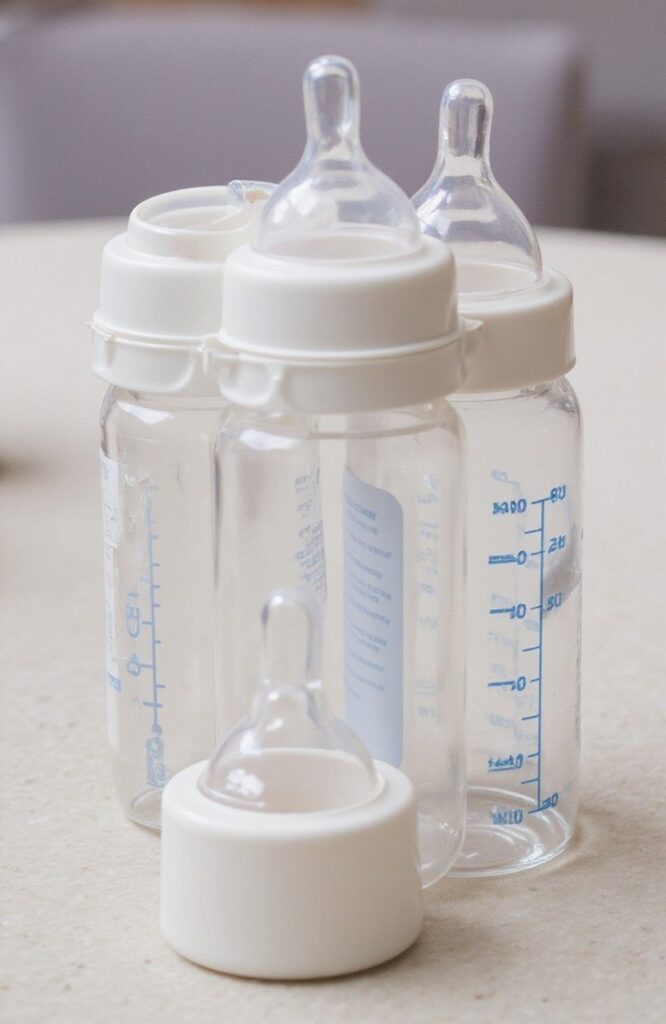
The frequency of bottle sterilization changes markedly as your baby grows from newborn to toddler. I’ll break this down by age:
0-3 Months:
- Sterilize after every use
- Newborns have highly sensitive immune systems
- Risk of infection is greatest at this stage
3-6 Months:
- Begin reducing sterilization frequency
- Clean with hot, soapy water between sterilizations
- Baby’s immune system is strengthening
6-12 Months:
- Continue regular but less frequent sterilization
- Gradually decrease as baby approaches 12 months
- Monitor for any health issues
12+ Months:
- Most babies can stop bottle sterilization
- Continue if your child has health conditions
- Maintain thorough washing practices
Recommended Products

Large Capacity, Fewer Sterilizing Cycles: The Grownsy bottle sterilizer and dryer fits 6+ baby bottles, along with pump parts, nipples, and pacifiers—all in one cycle. No more running multiple rounds or waiting for bottles to finish. Everything comes out clean, dry, and ready to use, so you can spend less time managing baby product and more precious moments with your baby.

【All-in-One Sterilizer & Dryer — Not a Washer】 This is a sterilizer and dryer for baby essentials (hand wash required). It combines 5 functions: Auto Steam Sterilization, Dry, Store, Sterilize-Only, and Preset. Our bottle sterilizer and dryer delivers safety without the detergent residues common in combo washer-sterilizers. Its simple front-panel control means no bending, offering pure, reliable convenience for busy parents. A thoughtful baby shower gift for the modern nursery.

3-Layer Extra-Large Capacit: Momcozy Bottle Sterilizer and Dryer can accommodate up to 6-12 baby bottles, along with lots of breast pump parts, pacifiers, and teethers etc. Its spacious 3-layer design allows you to sterilize all your baby essentials at once.
Step-by-Step Instructions for Each Sterilization Method
Five proven sterilization methods exist for baby bottles, each with distinct advantages. I’ll walk you through each approach:
Recommended Products

Fast & Efficient Sterilizer: Our baby bottle sterilizer uses 360° high-temperature steam technology combined with hot air drying for 3D sterilization. It’s a nice baby shower gift for modern new parents.

【8-in-1 Intelligent Steamer and Drying Center】 Your Complete Baby Care hub. Go beyond ordinary Steamer and dryer. This is your all-in-one station featuring high-temperature steam hygienic processing, powerful drying, and hygienic storage. Our fully automated process eliminates the hassle of boiling water and air-drying, saving busy moms up to more time every day. Enjoy true hands-free convenience and peace of mind.

👶🏻【 High Efficient Sterilization 】Baby bottle sterilizer eliminates 99.9% of bacteria, mold, and the yeast that causes thrush. Sterilize up to 6 baby bottles at once, plus bottle parts, pacifiers and other baby stuff.
Boiling Method
- Fill a large pot with enough water to cover bottles
- Bring to a rolling boil (212°F/100°C)
- Submerge bottles for 5 minutes
- Remove with tongs and dry on clean surface
Electric Steam Sterilization
- Add recommended amount of water to unit
- Place bottles inside (like the Philips Avent Sterilizer & Dryer)
- Set timer per manufacturer instructions
- Wait 10-30 minutes for completion
Other effective options include:
- Microwave sterilization (1-2 minutes in special bags)
- Cold water sterilization (using chemical tablets)
- UV sterilization (chemical-free, energy-efficient)
Choose the method that best fits your lifestyle, considering time, energy use, and convenience.
Safety Precautions to Prevent Burns and Chemical Exposure
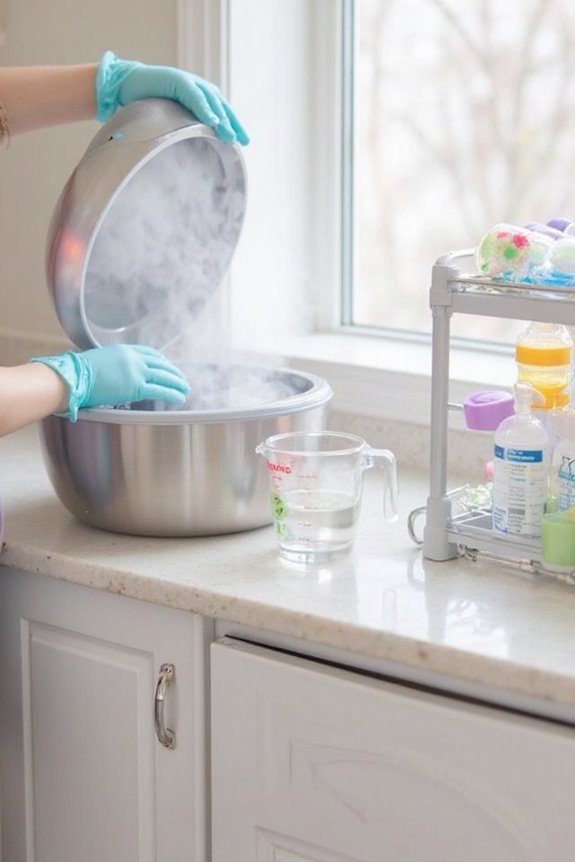
Safety takes center stage once you’ve selected your preferred sterilization method. To guarantee burn prevention when using heat-based methods:
- Use tongs or clean towels when handling hot equipment
- Place steam sterilizers out of children’s reach
- Allow all items to cool completely before handling
- Store sterilized equipment in a safe location
For chemical safety during sterilization:
- Wear gloves to prevent skin irritation
- Guarantee good ventilation to avoid inhaling fumes
- Follow container instructions precisely
- Keep all chemicals away from children and pets
- Dispose of solutions after 24 hours
Remember to sanitize all equipment before sterilization and maintain clean hands to prevent recontamination. For babies under 3 months, preemies, or those with weakened immune systems, daily sterilization is recommended—potentially after every use.
Recommended Products

High-Quality Material Bottle Tong. Made of PP material, non-toxic, lightweight, and durable. It makes your sterili-zation process easier.

Two-Piece Bottle Scissor: Our boby bottle scissor is practical and suitable for grabbing bottles, pacifiers, or other items. It comes in a set of two, making it convenient for parents to have one at home and one

Durable & comfortable to grip
Choosing the Right Sterilization Method for Your Lifestyle
Selecting the right sterilization method for your baby’s bottles isn’t just about safety—it’s about finding a solution that fits seamlessly into your daily routine. Consider these factors when making your choice:
- Budget constraints: Sterilization costs vary considerably—from free (boiling water) to purchasing specialized equipment like UV or electric sterilizers
- Environmental impact: Microwave bags create plastic waste, while boiling and electric methods consume energy
- Family size: Larger families benefit from electric sterilizers that handle multiple bottles simultaneously
- Available time: Microwave and electric options offer quick results compared to chemical methods
- Space limitations: Compact UV sterilizers work well in smaller kitchens
For newborns under three months, daily sterilization is recommended regardless of your chosen method.
Recommended Products

【99.9% Germ-Free Steam Sterilization】Our baby bottle sterilizer uses powerful 212°F steam to eliminate 99.9% of bacteria and viruses, ensuring bottles, pacifiers, and pump parts are safe and hygienic. The automatic sterilize-and-dry cycle completes in just 50 minutes, perfect for busy parents prioritizing their baby’s health and safety

Kindly note: This is a sterilizer and dryer for baby essentials, it does not include a washing function. This product is only suitable for US standard rated voltage 120V.

BABY BOTTLE AND PACIFIER STERILIZER. Sterilize up to six baby bottles at once, plus bottle parts, pacifiers and more.
Frequently Asked Questions
Can Sterilized Bottles Be Stored? for How Long?
Like a well-preserved time capsule, I’ve found sterilized bottles can be stored for about 24 hours when kept properly. Follow sterilization guidelines by using airtight containers or specialized sterilizers for ideal storage duration.
Are Silicone and Glass Bottles Sterilized Differently Than Plastic?
While I can sterilize silicone, glass, and plastic bottles using similar methods, I need to be careful with silicone safety at high temperatures. Glass bottles offer better durability during boiling but are heavier to handle.
Do I Need to Sterilize Pacifiers and Breast Pump Parts Too?
Yes, I definitely recommend sterilizing pacifiers and breast pump parts. Pacifier cleaning should follow the same methods as bottles, and pump hygiene is essential since breast milk can harbor bacteria. Both need regular sterilization for baby’s safety.
Can I Use Dishwashers for Sterilizing Instead of Dedicated Methods?
Your dishwasher is a helpful ally but not the ultimate guardian. I recommend using it with hot water and heated drying cycles, but dishwasher settings don’t reach the sterilization temperature needed for complete germ elimination.
When Traveling, What’s the Easiest Sterilization Method to Use?
When I’m traveling, I find cold water sterilization with Milton tablets is easiest. It’s portable, needs no electricity, and works in 15 minutes. Pre-sterilized bottle liners are also great travel sterilization options.