As an Amazon Associate, we earn from qualifying purchases. Some links on this site are affiliate links at no extra cost to you. Our recommendations are based on thorough research and editorial judgment.

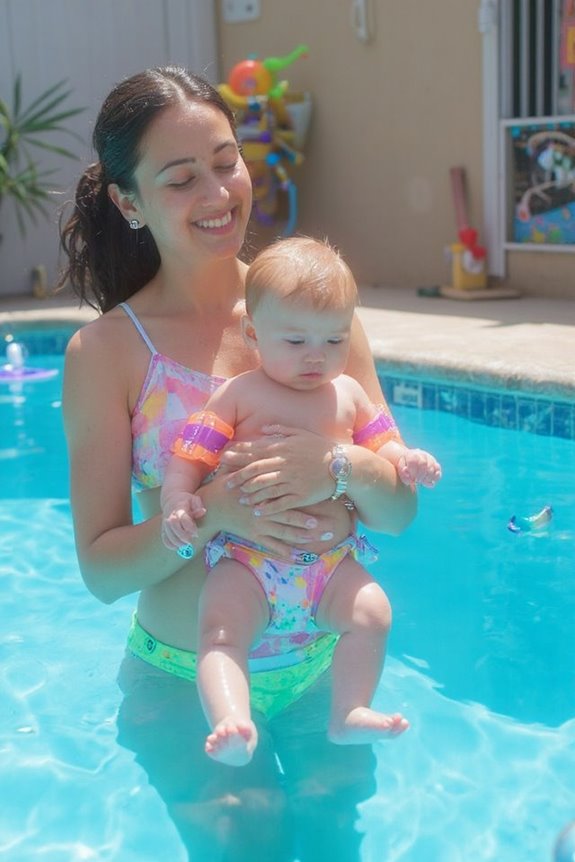
When Can Babies Safely Go in the Pool?

Babies can safely experience pool time around 6 months old when they’ve developed good head control and can sit with minimal support. I recommend waiting until this age because younger infants can’t regulate body temperature effectively in pool water. Always maintain constant supervision, use proper safety equipment like infant life jackets, and guarantee water temperature stays between 86-92°F. Keep initial sessions brief (10-15 minutes) and use swim diapers. The sections below offer essential guidance for guaranteeing your baby’s first aquatic experiences remain both enjoyable and safe.
Key Takeaways
- Babies can begin pool activities around 6 months old when they have good head control and can sit with minimal support.
- The American Academy of Pediatrics recommends formal swimming lessons starting at age 1.
- Water temperature should be between 86°F-92°F (30-33°C) for infant comfort and safety.
- Initial swimming sessions should be limited to 10-15 minutes to avoid fatigue and temperature drops.
- Constant supervision within arm’s reach is essential, regardless of a baby’s age or swimming ability.
At What Age Can Babies Start Swimming?
You may be interested
Are Baby Walkers Harmful for Infants?
August 15, 2025
How to Safely Sterilize Baby Bottles
August 5, 2025
While there’s no single “right age” for all babies to start swimming, most pediatricians recommend waiting until your baby is around 6 months old before introducing them to the pool. By this age, most infants have developed sufficient head control and can sit with minimal support—two critical developmental milestones for safe water exposure.
When considering infant water acclimation, watch for these readiness signs:
- Good head control
- Ability to sit upright with little assistance
- Interest in water
Baby swimming techniques typically begin with simple exposure—letting your little one get comfortable with water sensations. The American Academy of Pediatrics doesn’t specify an exact starting age but suggests formal swimming lessons around age 1, though parent-child water classes are available earlier.
Remember: Regardless of age, constant supervision is non-negotiable.
Essential Pool Safety Measures for Infants
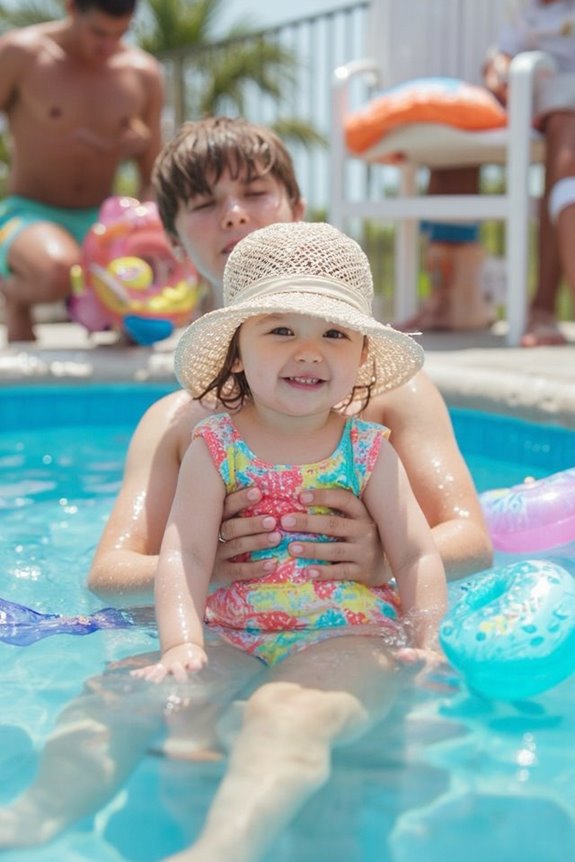
Now that you know when babies can start swimming, let’s focus on keeping them safe in and around pools. Proper infant supervision is the most critical aspect of pool safety—never leave your baby unattended near water, even for a moment.
Ensure your pool has:
- A fence at least 4 feet high with no gaps wider than 4 inches
- Self-closing, self-latching gates
- A fence positioned 3-5 feet from the pool edge
Additional safety measures include:
- Installing alarms on doors leading to the pool
- Using a power safety cover when the pool isn’t in use
- Keeping rescue equipment nearby (shepherd’s crook, life jackets)
- Maintaining a first aid kit and phone for emergencies
Consider taking infant CPR classes—this knowledge could save your baby’s life in an emergency situation.
Recommended Products

Removable, mesh, pool safety fencing for use around swimming pools to help protect against accidental falls into the pool.
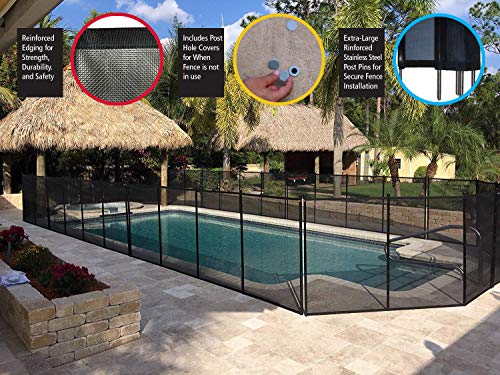
POOL SAFETY FENCE – Protects against unauthorized access to your pool, keeping your loved ones safe. Sturdy & extremely safe while in use, it’s easy to remove. Must be installed on cement or concrete tiled decks. NOT recommended for use with pavers. NOTE: You must determine the perimeter surrounding your pool area to be fenced in, and the appropriate number of 12’ fence segments must be ordered.
The Right Water Conditions for Baby’s First Swim
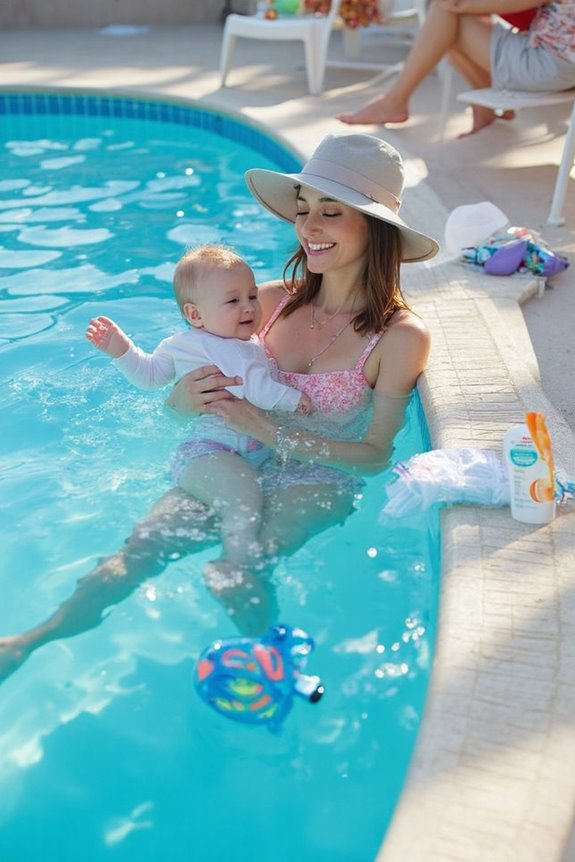
Creating the perfect environment for your baby’s first pool experience involves three essential factors: water temperature, chemical balance, and overall pool cleanliness.
For water temperature, I recommend keeping it between 86°F and 92°F (30-33°C). Babies lose body heat quickly due to their higher skin-to-weight ratio, making proper temperature vital for comfort and safety.
Regarding chemical safety:
- Monitor chlorine levels carefully, as excessive exposure may increase respiratory risks
- Consider that studies suggest more than 20 hours of pool time in infancy might raise asthma risk
- Saltwater pools offer a gentler alternative with lower chlorine levels
Always test water with a thermometer before entering, limit initial sessions to 10-15 minutes, and dry your baby thoroughly afterward to maintain body warmth.
Recommended Products

Every Bath Starts with the Right Temperature Your baby's skin is far more sensitive than an adult's. Our floating bath thermometer instantly checks water temperature and clearly alerts you when it's Too Hot, Too Cold, or Just Right, helping create a safer, more comfortable bath every single time.

𝐀𝐜𝐜𝐮𝐫𝐚𝐭𝐞 𝐓𝐞𝐦𝐩𝐞𝐫𝐚𝐭𝐮𝐫𝐞 𝐌𝐞𝐚𝐬𝐮𝐫𝐞𝐦𝐞𝐧𝐭: This otter bath thermometer provides precise water temperature readings, ensuring a safe and comfortable bath for your baby. Accurate monitoring helps maintain the ideal bath temperature, giving you peace of mind

🏊Cute Design: Adorable Turtle shape designs - that will add a touch of whimsy to your pool or spa.
Protective Gear and Equipment for Baby Pool Time
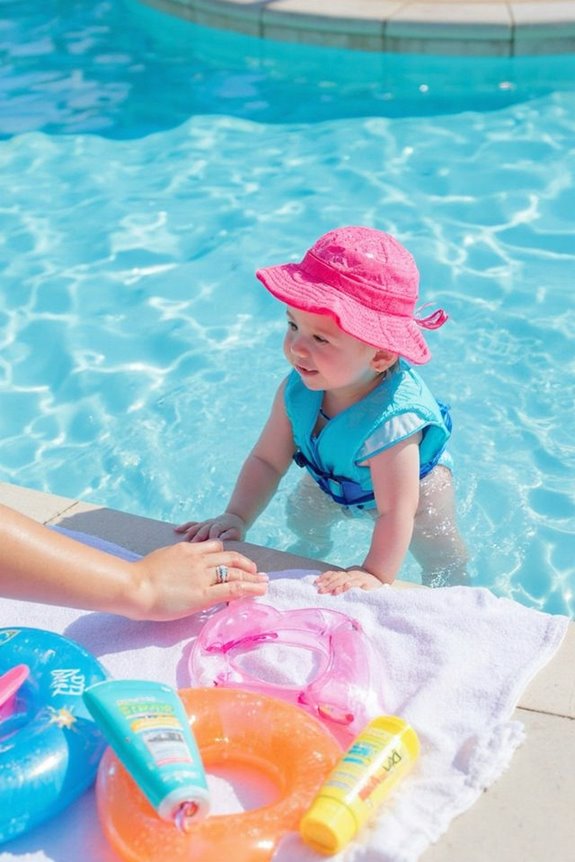
Proper safety equipment forms the foundation of a secure swimming environment for your baby’s pool adventures. When introducing your little one to water, these essentials are non-negotiable:
- U.S. Coast Guard-approved life jackets that fit snugly on your baby
- Baby flotation devices designed specifically for infants (always with your supervision)
- Age-appropriate swimming aids that support your child’s developmental stage
- Proper swim diapers to maintain pool hygiene
- Installing MagnaLatch ALERT or Poolguard Door Alarms on gates
- Setting up mesh pool fencing (minimum 4 feet high)
- Using pool surface alarms to detect unexpected water movement
- Splashing fun: Encourage gentle splashing in shallow water to develop motor skills
- Sensory play: Use colorful floating toys to stimulate visual development
- Water games: Try simple cause-and-effect activities with cups and containers
- Musical engagement: Sing water-themed songs to create a positive atmosphere
- Maintain constant arm’s-reach supervision
- Keep water lukewarm to prevent chilling
- Guarantee water depth remains very shallow
- Place the pool on a flat, soft surface
For pool areas, I recommend:
Remember: Even with the best equipment, nothing replaces “touch supervision” – keeping your baby within arm’s reach at all times.
Recommended Products

USCG APPROVED INFANT LIFE JACKET: Coast Guard approved baby life jacket for infants and toddlers under 30 lbs. Designed for boating, pool, beach, lake and supervised family water activities.

【Safe&Comfortable Material】Our swim vests are made of safe and durable nylon and EPE foam materials that are comfortable and skin-friendly and won't cause irritation to your child's skin. Bring comfort to your child in the water.

USCG Coast Guard Approved Infant Toddler Life Jacket / Suitable for kids use on the boat / pool / beach / lake
Fun and Safe Pool Activities for Babies
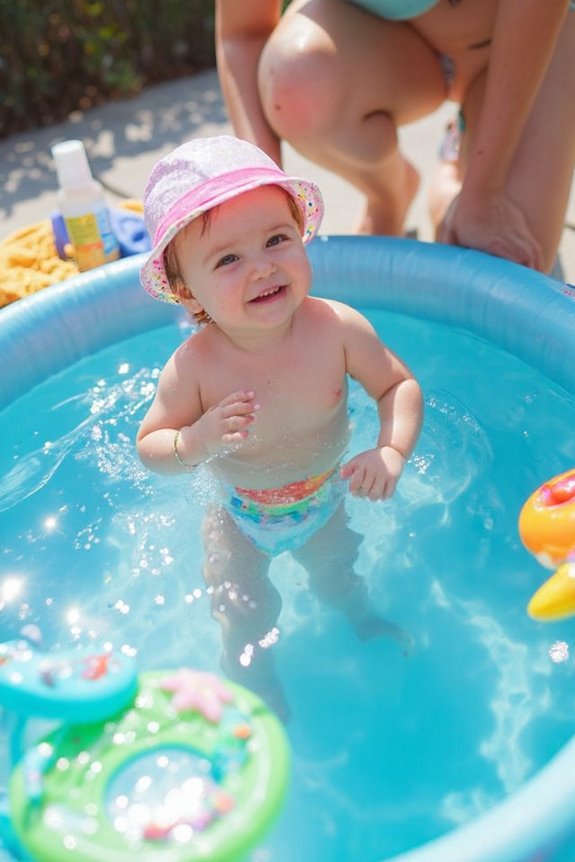
While introducing your baby to water, engaging activities can make pool time both enjoyable and developmentally beneficial. I recommend these age-appropriate options:
Remember these safety essentials:
For babies 6+ months, retrieving floating objects can improve coordination while building water confidence. Always prioritize safety over activity complexity.
Recommended Products

🛁 Fun in the Tub: Underwater Adventure Awaits--Transform bath time into an exciting underwater adventure! Featuring adorable marine animal designs, these bath toys are squeezable, float in water, and are sealed to keep moisture out—ensuring endless fun for kids.

Kids Safe Toy: this seaplane toy is made using earth friendly materials. Use of 100% recycled plastic milk jugs ensures that the toy is safe for child as well as the environment. Does not contain BPA or Phthalate
Frequently Asked Questions
Can Babies Who’ve Had Ear Infections Go Swimming?
If your baby has had ear infections, I’d recommend waiting until they’re fully healed before swimming. For otitis externa, wait three days after symptoms resolve. Always prioritize ear protection and swimming safety to prevent recurrence.
How Long Should a Baby’s First Pool Session Last?
Like dipping toes in unfamiliar waters, I’d recommend keeping your baby’s first pool experience brief. For baby swim duration, start with just 10-15 minutes and watch for signs they’re getting cold or fussy.
Is Indoor or Outdoor Swimming Better for Babies?
I’d say it depends on your circumstances. Indoor pools offer benefits like temperature control and less UV exposure. Outdoor pools have natural sunlight but come with risks of sun exposure and variable temperatures.
Can Chlorine Cause Diaper Rash in Babies?
Yes, chlorine can cause diaper rash in babies with chlorine sensitivity. I recommend thorough rinsing after swimming and proper diaper care, including applying protective barrier creams and changing diapers promptly to prevent irritation.
Should Babies Eat Before or After Swimming?
I recommend light snacks before swimming to maintain your baby’s energy. Pre-swim hydration is important too! There’s no strict rule, but I’ve found that timing meals around your baby swimming prevents discomfort.