As an Amazon Associate, we earn from qualifying purchases. Some links on this site are affiliate links at no extra cost to you. Our recommendations are based on thorough research and editorial judgment.


Can Babies Get a 103 Fever From Teething?

No, babies shouldn’t get a 103°F fever from teething. While mild temperature increases (under 101°F) can occur during teething, high fevers above 101°F are not normal teething symptoms and suggest illness. If your baby has a temperature of 103°F or higher, contact your pediatrician immediately as this requires medical evaluation. True teething symptoms include drooling, chewing on objects, and mild irritability. Understanding the difference between normal teething and illness can protect your baby’s health.
Key Takeaways
- High-grade fevers above 101°F are not normal teething symptoms.
- A fever of 103°F requires immediate pediatric care and is not caused by teething.
- Teething may cause only slight temperature elevation under 101°F.
- A temperature of 103°F indicates illness requiring medical attention, not teething.
- Attributing high fevers to teething can lead to delays in diagnosing serious conditions.
Understanding Normal Teething Symptoms
You may be interested
Can Babies Get Strep Throat?
August 18, 2025

Do Babies Sweat? Understanding Infant Perspiration
August 14, 2025
Teething marks an important milestone in your baby’s development, typically occurring between 6 and 24 months of age. The teething timeline varies considerably among infants, with the lower front teeth usually emerging first.
During this process, you may notice:
- Increased drooling
- A stronger urge to chew on objects
- Swollen, red gums where teeth are emerging
- Mild irritability or fussiness
- Changes in eating or sleeping patterns
Symptom variations are common, with some babies showing multiple signs while others sail through teething with minimal discomfort. You might observe your baby rubbing their cheeks or pulling at their ears when teeth are breaking through.
Remember that each baby experiences teething differently, and what’s normal for one may not apply to another.
The Truth About Fevers and Teething
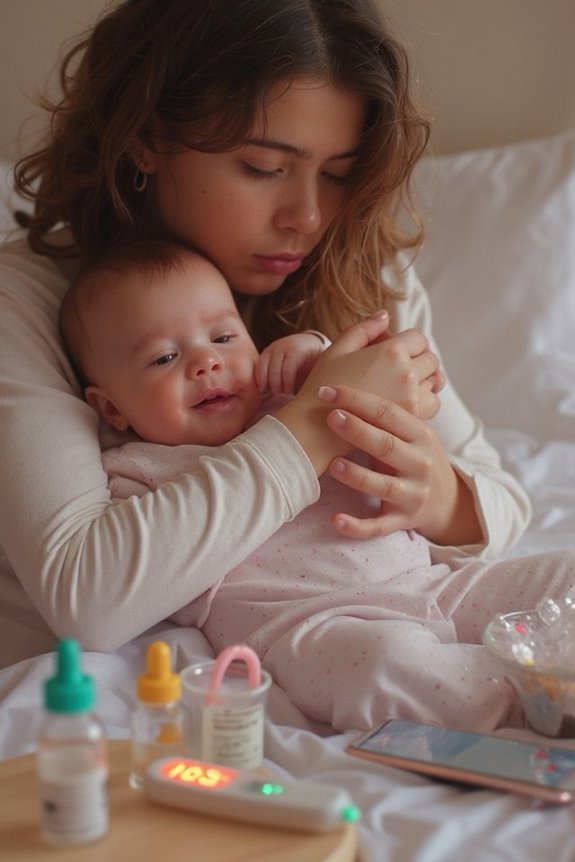
While you’re familiar with common teething symptoms like drooling and irritability, one question parents frequently ask is whether teething can actually cause a fever.
Recommended Products

ACCURATE FOR ALL AGES: Designed for infants, toddlers, and kids, this thermometer delivers reliable readings whether used rectally, orally, or under the arm, adapting as your child grows.

Water-filled teethers soothe baby’s gums

Accurate reading in 8 seconds
Teething and Mild Fevers
Research shows up to 42% of children may experience mild fever during teething. However, one of the biggest teething myths is that high-grade fevers (above 101°F) are normal teething symptoms.
The truth:
- Teething may cause slight temperature elevation (under 101°F)
- Rectal temperatures provide more reliable measurement
- Inflammation from tooth eruption likely causes mild fever
- Fever misconceptions lead parents to overlook potential illnesses
If your baby has a temperature above 101°F, it’s likely not from teething alone. Contact your pediatrician, as this could indicate an infection or illness requiring medical attention.
Recommended Products

Accurate, Safe & Quick: Boncare thermometers are equipped with the latest high - sensitivity advanced sensory probes, ensuring highly accurate results within just 9 seconds. This remarkable accuracy makes it a reliable choice for measuring the temperature of infants, children, adults, and the elderly.

Accurate reading in 30 seconds (°F/C)

PRECISION FOR PEACE OF MIND: Delivers accurate temperature readings in just 10 seconds, so you can quickly assess your baby's health at any time of day or night.
When to Worry About High Temperatures
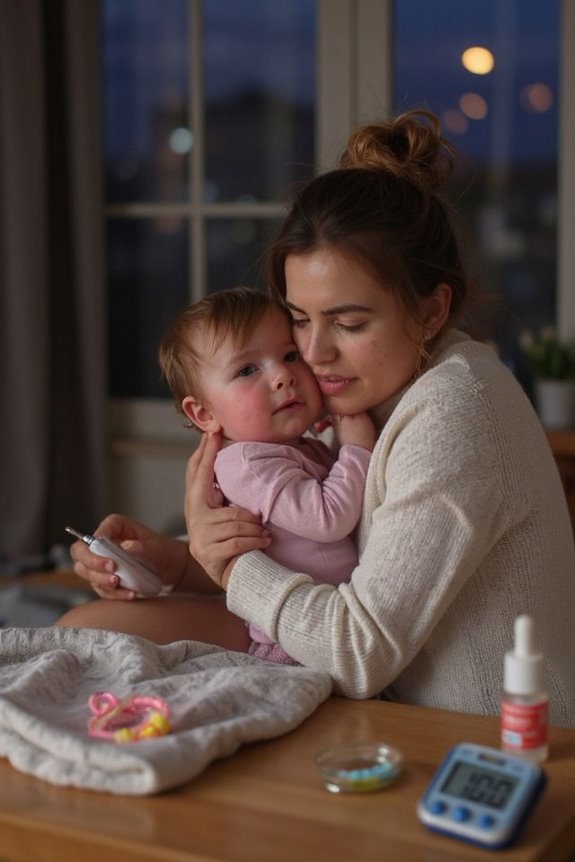
Although mild temperature increases can occur during teething, it’s crucial to distinguish between normal teething symptoms and signs that require medical attention.
When managing your baby’s fever, remember these key guidelines:
- A temperature of 100.4°F (38°C) or higher is considered a true fever and likely not from teething
- Any fever of 103°F or higher requires immediate pediatric care
- Fevers lasting more than three days warrant medical evaluation
- Be concerned if fever appears with rash, vomiting, or painful urination
- Watch for signs of dehydration like reduced urination or lethargy
For children over three months, temperatures above 102.2°F are concerning. Trust your instincts—if your baby seems unusually distressed or shows multiple concerning symptoms, contact your doctor promptly rather than assuming it’s just teething.
Distinguishing Teething Discomfort From Illness
Many parents face the challenge of determining whether their baby’s discomfort stems from teething or indicates a more serious illness.
When examining teething signs, look for:
- Swollen, sensitive gums
- Excessive drooling
- Gnawing on fingers or toys
- Mild irritability
- Low-grade fever (below 100.4°F)
Illness indicators that suggest something beyond teething include:
- Fever above 100.4°F
- Coughing or congestion
- Vomiting or diarrhea
- Significant changes in sleep or feeding patterns
- Severe fussiness that doesn’t improve with comfort measures
I’ve found that while teething can cause mild discomfort and slight temperature elevation, it rarely causes high fevers or significant symptoms. If your baby has a fever above 100.4°F or exhibits concerning symptoms, it’s best to consult your pediatrician.
Managing Your Baby’s Teething Pain Safely
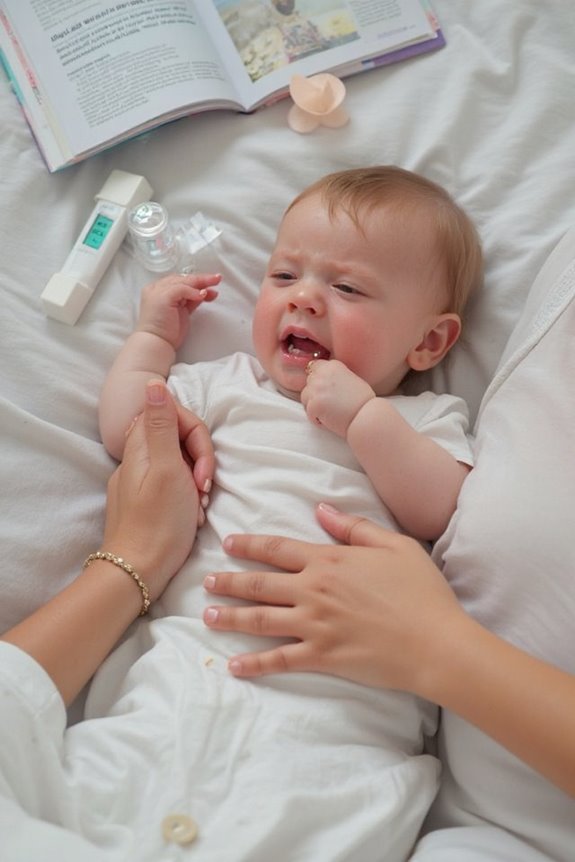
Since teething discomfort can make both babies and parents miserable, I’ve found that safe pain management strategies are essential during this developmental phase. Natural remedies and gentle soothing techniques should be your first line of defense.
Try these proven methods:
- Massage your baby’s gums with a clean finger
- Offer chilled (not frozen) teething rings or cold washcloths
- Provide cold foods like refrigerated cucumber or pureed fruits
- Create a calming environment with warm baths and extra cuddles
While these approaches work for most babies, remember that teething typically doesn’t cause high fevers above 102°F. If your baby develops a significant fever, contact your pediatrician immediately. Medication should be a last resort and only used with medical guidance—natural soothing techniques are typically sufficient for managing normal teething pain.
Recommended Products

Colorful Baby Teething Toys: The Haakaa Silicone Baby Teether Set includes a colorful palm-shaped baby teether and a ferris wheel-shaped teether ring. Their bright colors and unique shapes easily capture your little one’s interest and attention!

COOLING TEETHING RELIEF: Each teether is filled with purified water and can be placed in the refrigerator for a soothing, cool sensation that helps reduce teething discomfort. The chilled surface soothes sore gums, offering relief for teething babies

Comforts growing babies as they develop
Common Infections That Coincide With Teething
While teething itself doesn’t typically cause fevers, it often occurs during a period when your baby’s immune system is particularly vulnerable. Many teething myths suggest that high fevers are normal during this time, but that’s not accurate.
The infection overlap during teething includes:
- Ear infections, which can be mistaken for teething discomfort
- Upper respiratory infections, common in babies exploring with their mouths
- Urinary tract infections that may be overlooked
- Dental infections in the erupting or nearby teeth
Between 6-12 months, babies lose maternal antibodies while increasing environmental exploration—creating perfect conditions for infections to coincide with teething. If your baby’s temperature exceeds 100.4°F (38°C), it’s likely an infection rather than teething and requires medical attention.
Recommended Products
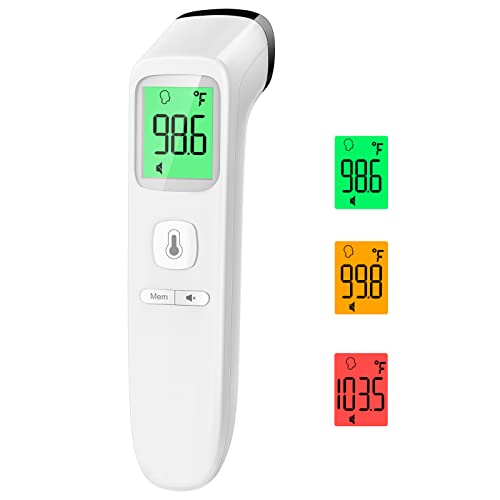
Reliable & Accurate: Goodbaby Forehead Thermometer has been clinically tested and found to be a fast and absolutely reliable gadget to use. It is ideal for forehead readings.

✨Swift Results in Just 1 Second: Experience the efficiency of ANMEATE thermometer for adults with its remarkable 1-second read capability. Obtain accurate temperature readings swiftly, providing you with timely and dependable results.

✅Fast & Accurate - Discover the precision of our forehead thermometer. Engineered to deliver highly accurate temperature measurements, our professional-grade device offers a user-friendly experience. With a non-contact design, it ensures hygienic usage and provides fast results within seconds. Suitable for all ages, it is a must-have for households and medical professionals alike. Rely on our brand's commitment to accuracy and obtain the peace of mind you deserve.
Warning Signs That Require Medical Attention
Although teething can cause mild discomfort, it’s vital to recognize the warning signs that indicate your baby needs medical care rather than home remedies.
When to Call the Doctor
- Any fever of 100.4°F (38°C) or higher in babies under 3 months
- Temperatures above 102°F (39°C) in older babies
- Fevers lasting more than 24 hours
- Refusal to feed accompanied by fever
Emergency Warning Signs
- Fever reaching 104°F (40°C) or higher
- Seizures, severe vomiting, or diarrhea
- Extreme lethargy or difficulty waking
Proper fever management is a significant aspect of infant care. Remember, teething doesn’t typically cause significant fevers – any temperature above 100.4°F likely indicates an infection requiring medical evaluation, not just teething.
Evidence-Based Approaches to Teething Relief
Now that you know when to seek medical help, let’s look at proven ways to comfort your teething baby.
Gentle gum massage with a clean finger provides immediate relief. I recommend applying light pressure to irritated areas. For more effective gum care, try:
- Cold teething toys (rubber teethers cooled in the refrigerator)
- Chilled washcloths (dampen, fold, and refrigerate)
- Cold, soft foods for older babies (yogurt, cucumber slices)
When necessary, acetaminophen or ibuprofen can be used following your pediatrician’s dosing guidelines. These medications should be reserved for significant discomfort.
Don’t underestimate the power of distraction and comfort. Sometimes a cuddle, gentle rocking, or engaging play can help your baby temporarily forget their discomfort while their body continues the natural teething process.
Recommended Products

Safety: Food grade silicone, BPA free, Toxin Free. Easy to clean and disinfect.(WARNING:Adult supervision is required during use at all times. Always inspect product before each use. Discard immediately if any part becomes loose, cracked or broken.)

3-STAGE TEETHER SET: Includes three teethers designed to support babies while providing soothing comfort during teething; For babies 3+ months

🍼【10-Piece Baby Rattles & Teethers Set】 This premium 10 baby toys set includes a variety of soft silicone teethers and gentle bell rattles. Designed to engage your baby’s senses (touch, sound, sight). Different shapes (rings, animals, easy-grip handles) help develop fine motor skills and hand-eye coordination for 0-3-6-12 months infants.
Frequently Asked Questions
Can Teething Affect a Baby’s Sleeping Patterns?
I’ve found that over 80% of babies experience sleep disturbances during teething. When your little one shows teething signs like irritability and drooling, you’ll likely notice changes in their sleep patterns too.
How Long Does Each Teething Episode Typically Last?
I’ve found that each teething episode typically lasts about 3-7 days. Your baby’s teething symptoms may be most intense just before the tooth emerges. Try different soothing techniques like cold teethers during this time.
Do Babies Develop Immunity After Experiencing Teething-Related Infections?
Nearly 100% of fevers over 100.4°F aren’t teething-related. I should clarify that babies don’t develop immunity from teething symptoms. Their immune response to infections during teething is coincidental, not part of the teething process itself.
Can Certain Foods Worsen Teething Discomfort?
Yes, certain foods can worsen teething discomfort. I recommend avoiding spicy, citrus, and salty foods. Instead, try soothing techniques like offering chilled soft foods and using proper teething remedies like cool teething rings.
Should Vaccinations Be Postponed During Active Teething Periods?
No, I don’t recommend postponing vaccinations during teething. Teething symptoms don’t affect vaccine efficacy, and maintaining the vaccination timing is important for your baby’s protection against serious diseases. Always consult your pediatrician with concerns.