As an Amazon Associate, we earn from qualifying purchases. Some links on this site are affiliate links at no extra cost to you. Our recommendations are based on thorough research and editorial judgment.

When Do Babies Start Sleeping Through the Night?

Most babies start sleeping through the night (defined as a 5-hour stretch) between 3-6 months, though some take up to 12 months. This milestone varies considerably based on developmental readiness, feeding needs, and temperament. By 4-5 months, sleep patterns typically become more predictable as circadian rhythms mature. Consistent bedtime routines in a calm environment promote better sleep quality, which directly impacts your baby’s cognitive and emotional development. The journey to consolidated sleep involves several key factors worth understanding.
Key Takeaways
- Most babies begin to sleep through the night (5+ hours) between 3-6 months of age.
- By 6 months, many infants consolidate sleep, reducing from multiple short naps to fewer, longer sleep periods.
- Sleep patterns typically stabilize around 5-6 months, when babies develop more predictable circadian rhythms.
- Genetic factors account for 30-35% of sleep duration differences among babies.
- Consistent bedtime routines and allowing babies to practice self-soothing skills promote longer sleep stretches.
What Defines “Sleeping Through the Night” for Babies?


Sleep expectations can vary dramatically when it comes to infants. “Sleeping through the night” doesn’t have a universal definition that applies to all babies, which often creates confusion for new parents.
When I discuss sleep definitions with parents, I emphasize that research often considers a 5-hour stretch between midnight and 5 am as “sleeping through the night.” However, parental expectations frequently involve longer periods—sometimes 10-12 hours uninterrupted.
The reality falls somewhere in between. Babies naturally wake during sleep cycles, but those who’ve developed self-soothing skills can return to sleep without assistance. Most 5-month-olds are developmentally capable of longer sleep stretches, though individual variability exists.
Remember: Brief wakings are normal and developmentally appropriate, even when “sleeping through the night.”
Typical Sleep Milestones From 2-6 Months
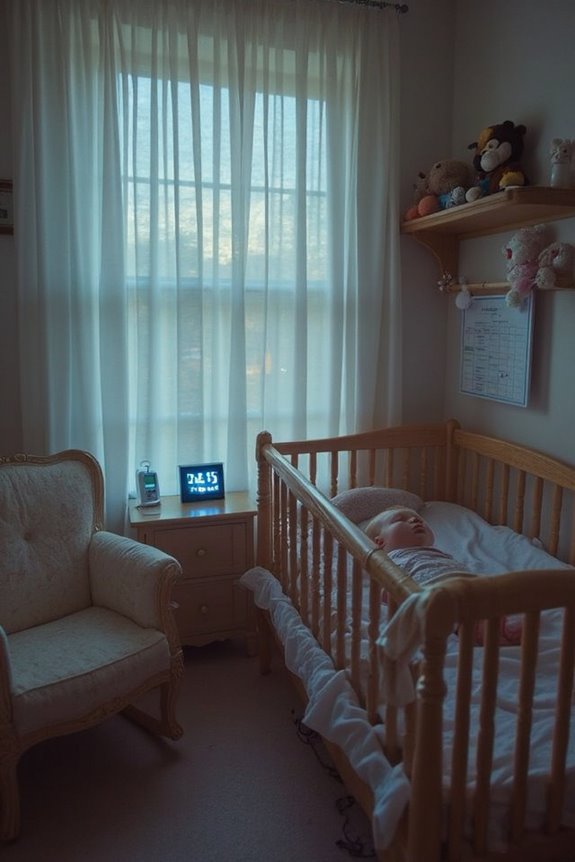
The first six months of your baby’s life bring remarkable changes in sleep patterns as their brain and body develop. During this period, your baby’s sleep becomes more organized and predictable.
At 2-3 months, infants typically:
- Sleep 15 hours total daily
- Take 4-5 naps per day
- Have short, irregular nap durations
By 4-5 months, you’ll notice:
- Total sleep decreases slightly to 14.5 hours
- Nap frequency reduces to 3-4 daily
- Sleep patterns become more predictable
At 6 months, most babies:
- Sleep about 14 hours in a 24-hour period
- Consolidate to 3 more structured naps
- May begin resisting their final nap
- Have longer nighttime sleep stretches
This shift from multiple short naps to fewer, longer ones reflects your baby’s developing circadian rhythm.
Key Factors That Influence Your Baby’s Sleep Pattern
While each baby develops at their own pace, several key factors work together to shape your little one’s sleep patterns during the first year of life.
Genetic and Environmental Influences
- Genetic influence: Studies show that 30-35% of sleep duration variance is inherited. If you’re a light sleeper, your baby might share similar tendencies.
- Environmental stability: A calm, predictable home environment promotes better sleep quality. Consistent bedtime routines signal to your baby that it’s time to sleep.
- Caregiving practices: Your responses to night wakings can impact sleep consolidation. Gradually supporting self-soothing helps babies develop longer sleep stretches.
- Feeding patterns: Frequent feedings are normal in early months but contribute to fragmented sleep.
The Reality Behind Sleep Statistics for Infants
When it comes to understanding your baby’s sleep patterns, I’ve found that statistics only tell part of the story. While research shows infants average about 10 hours of sleep at 3 months, increasing to 11 hours by 12 months, individual experiences vary greatly.
The data reveals important trends:
- Sleep patterns typically begin stabilizing around 5-6 months
- There’s a strong correlation between maternal and infant sleep quality
- Early bedtimes often lead to longer nighttime sleep durations
What’s often overlooked in infant sleep statistics is the considerable variability between babies. Some naturally consolidate sleep earlier, while others take longer.
Remember that approximately 3,500 infants die annually from sleep-related causes in the U.S., highlighting why understanding proper sleep environments remains essential beyond just tracking hours slept.
How Sleep Quality Affects Your Baby’s Development
Sleep quality during your baby’s first years fundamentally shapes their cognitive development in ways we’re only beginning to understand. Research consistently shows that infants with better sleep efficiency and fewer nighttime awakenings demonstrate superior problem-solving skills and score higher on developmental assessments.
The connection between sleep and development is biological. During sleep, your baby’s brain releases chemicals necessary for maturation. This process supports:
- Memory consolidation
- Language acquisition
- Emotional regulation
- Stress hormone balance
Studies reveal that morning cortisol levels in well-rested toddlers mirror adult patterns, indicating mature brain development. Longitudinal research confirms that early sleep routines predict stronger learning and language outcomes years later.
Poor sleep consolidation, particularly before age two, can create a risk factor for delayed language learning and cognitive challenges in childhood.
Frequently Asked Questions
Can Sleep Training Damage My Baby Emotionally?
Research shows sleep training won’t damage your baby emotionally. I’ve seen studies confirming it doesn’t negatively impact attachment styles or emotional well-being. In fact, better sleep can improve your child’s overall development.
Do Formula-Fed Babies Sleep Longer Than Breastfed Babies?
While formula benefits may include longer sleep stretches for some babies, the research is actually inconsistent. I’d say feeding schedules matter more than the milk type itself for determining your baby’s sleep patterns.
Should I Wake My Baby for Feedings Overnight?
Curiously, 62% of babies sleep through the night by 6 months. I’d recommend letting your baby’s hunger guide you—if they’re gaining weight well, you typically don’t need to wake them for nighttime feedings after 4 months.
Can Room-Sharing Affect How Quickly Babies Sleep Through the Night?
Yes, while room sharing benefits include reduced SIDS risk, babies in a shared sleep environment often take longer to sleep through the night. I’ve found they experience more frequent awakenings and shorter sleep stretches overall.
How Do Reflux or Colic Affect Infant Sleep Patterns?
Did you know that 70% of babies experience reflux? I’ve seen how reflux symptoms and colic can severely disrupt sleep patterns, causing frequent night wakings. Many parents find relief through upright feeding and gentle colic remedies.
References
https://www.basisonline.org.uk/hcp-normal-sleep-and-sleeping-through/
https://www.whattoexpect.com/first-year/sleeping-through-the-night.aspx
https://www.sleepfoundation.org/baby-sleep/when-do-babies-sleep-through-night
https://heysleepybaby.com/when-do-babies-sleep-through-the-night/
https://babysleepconsultant.co/blogs/news/what-science-tells-us-about-sleeping-through-the-night-1
https://huckleberrycare.com/blog/when-do-babies-start-sleeping-through-the-night
https://takingcarababies.com/why-wont-my-baby-sleep-through-the-night
https://www.nationwidechildrens.org/specialties/sleep-disorder-center/sleep-in-infants
https://www.cdc.gov/ncbddd/actearly/milestones/milestones-6mo.html
https://www.betterhealth.vic.gov.au/health/healthyliving/typical-sleep-behaviour-nb-3-6-months