As an Amazon Associate, we earn from qualifying purchases. Some links on this site are affiliate links at no extra cost to you. Our recommendations are based on thorough research and editorial judgment.


When Do Babies Open Their Eyes?

Babies typically open their eyes shortly after birth, though their vision is limited. Newborns see primarily in black, white, and gray, focusing best at 8-10 inches—perfect for seeing parents’ faces. While eyes physically develop between weeks 4-12 of pregnancy, vision continues maturing after birth. By three months, babies track moving objects and recognize familiar faces. Their color perception and depth awareness keep improving through their first year of development. The journey from first glimpse to full visual capabilities unfolds remarkably fast.
Key Takeaways
- Babies open their eyes shortly after birth, though they initially see primarily in black, white, and gray shades.
- During pregnancy, eyelids form by week 12 to protect the developing eyes.
- Newborns can focus best at 8-10 inches away, perfect for seeing caregiver faces during feeding.
- Most babies can briefly track moving objects in their first month if held within their limited visual range.
- By three months, infants demonstrate improved visual tracking and begin reaching for objects they can see.
Eye Development During Pregnancy
You may be interested

Do Babies Have Kneecaps?
May 15, 2025
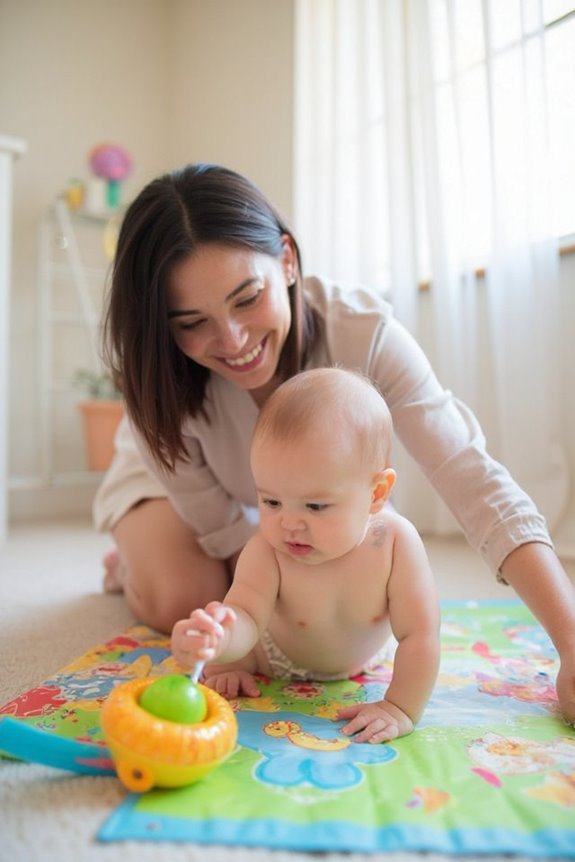
Helping Your Baby Roll Over: Tips and Techniques
July 15, 2025
While you’re enthusiastically awaiting your baby’s arrival, incredible development is happening inside the womb, especially when it comes to your baby’s eyes.
Fetal eye development begins remarkably early:
- Week 4: Optic nerve formation begins, connecting eyes to brain
- Weeks 4-5: Iris formation starts, determining future eye color
- Weeks 4-7: Lens development progresses, vital for focusing
- Week 8: Tear ducts begin forming, though they won’t produce tears until after birth
By week 12, eyelids have formed to protect the developing structures. Visual acuity improves considerably during the third trimester (weeks 24-40), with the retina and optic nerve continuing to mature. Around week 27, your baby’s eyes first open inside the womb.
Proper prenatal nutrition supports healthy eye development, providing essential vitamins and minerals that contribute to ideal visual function after birth.
The First Glimpse: Newborn Vision Capabilities
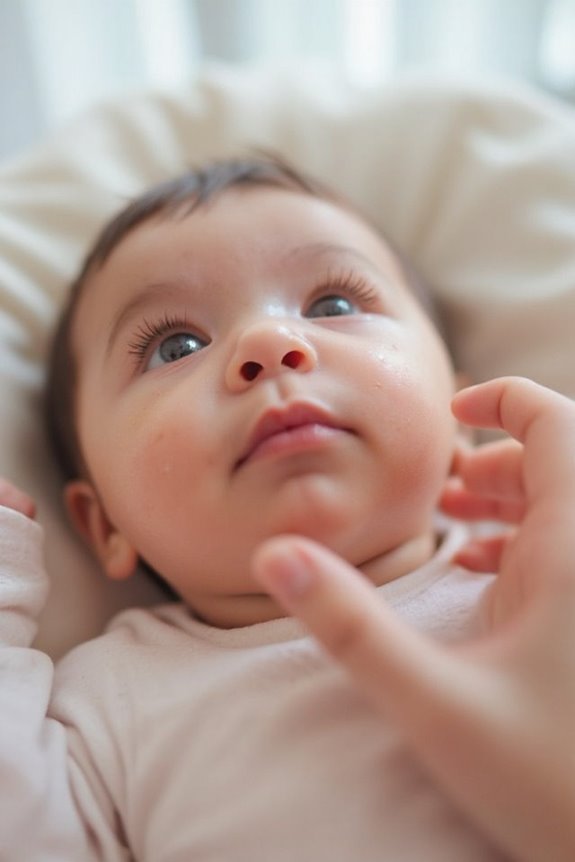
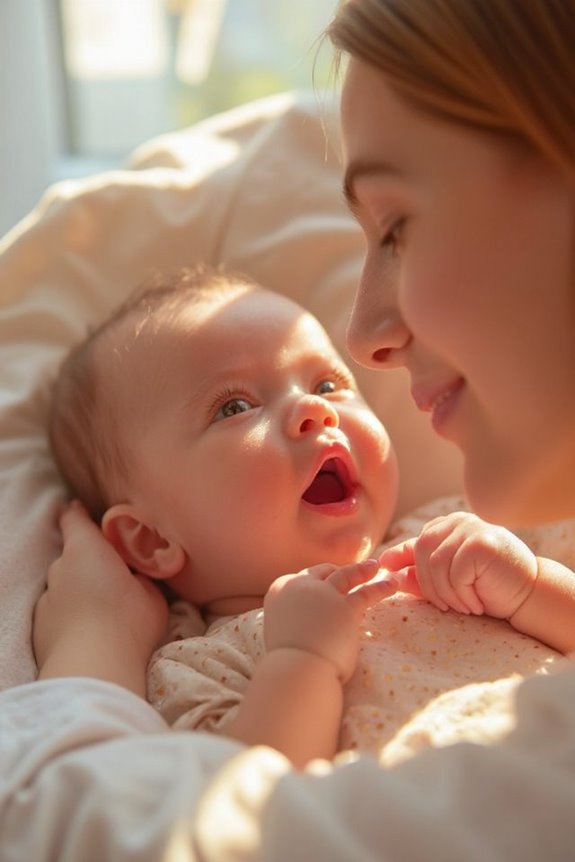
As your newborn first opens their eyes to the world, they’re experiencing a visual landscape quite different from what you see. Their vision is quite limited, focusing only on objects 8-15 inches from their face—about the distance to your face during feeding.
Recommended Products

[High Contrast Baby Toys] Our baby sensory toys sets include 1 car seat toy, 1 bear rattle toy, 1 black and white baby book, 8 high contrast baby cards and storage bag.


Visual Development Stimulation: Baby born with blurred vision, and gradually increased on 3 months. This high contrast baby book helps stimulate development in the retina and the optic nerve, to train step by step and activate the brain. This soft book contains 11 different patterns which basically are black and white patterns and 1 baby-safe mirror, all of which will aid visual development in the early stages. Flip little red flag makes more fun for baby.
Newborn Preferences and Vision Limitations
- Babies see mostly in black, white, and gray shades initially
- They prefer faces and high-contrast patterns with round shapes
- Color vision begins developing after the first week
- They can track moving objects briefly if close enough
While your baby can technically see across a room, they won’t show interest in distant objects. Their vision is sharpest for close items, particularly faces. Contact your pediatrician if your baby doesn’t fixate on nearby objects, especially faces, during the first month.
Visual Milestones in the First Three Months
The first three months of your baby’s life mark a period of remarkable visual development. During this time, your infant’s visual sensitivity evolves from simply detecting light to recognizing patterns and faces.
In the first month, babies focus best at 8-10 inches away—perfect for seeing your face while feeding. Their peripheral vision works better than central vision initially.
By month two, eye coordination improves considerably:
- Eyes become better aligned, though some crossing is normal
- Tracking of moving objects begins
- Recognition of familiar faces emerges around eight weeks
By three months, your baby will:
- Start reaching for objects they see
- Follow moving objects more smoothly
- Show preference for bright colors over pastels
- Begin to spot familiar faces from increasing distances
Recommended Products


PROMOTE SENSORY EXPLORATION - The high contrast black and white rattle socks will promote baby sensory exploration through sight, touch and sound. Baby boys and girls will be encouraged to grab and reach the wrist rattles and foot finders.

How Vision Develops From 4-6 Months
Your baby’s visual abilities expand dramatically between four and six months. During this period, their vision becomes clearer, allowing them to focus on objects both near and far with greater precision.
At this stage, you’ll notice developing visual preferences as your baby:
- Shows interest in complex patterns and varied colors
- Recognizes familiar faces from increasing distances
- Follows moving objects more consistently
- Reaches for toys they can now see clearly
Their growing environmental awareness enables them to track moving objects across a room and become more engaged with their surroundings. This is an ideal time to introduce new visual experiences through:
- Trips to different environments
- Books with large, colorful pictures
- Varied toys with different patterns and textures
Regular pediatric check-ups help guarantee normal vision development continues.
Recommended Products

High Contrast Patterns for Early Visual Development: This tummy time toy is suitable for babies aged 0-12 months. The high contrast black and white patterns are perfect for newborns (0-3 months), capturing their attention and supporting early visual development. For babies over 3 months, the colorful patterns stimulate their growing senses and encourage motor skill development.

Entertained Car Seat Toy: Keep your baby engaged and entertained during car rides with this stroller arch toy that conveniently clips onto your little one's car seat handle.

From Viral TikTok Trend to #1 Best Seller: With over 100 million views on TikTok and counting, this viral sensation has delighted over 3 million babies. Brought to you by creators of Baby Einstein, featuring US-based design and development and meeting the highest industry safety standards
Your Baby’s Visual World From 6-12 Months
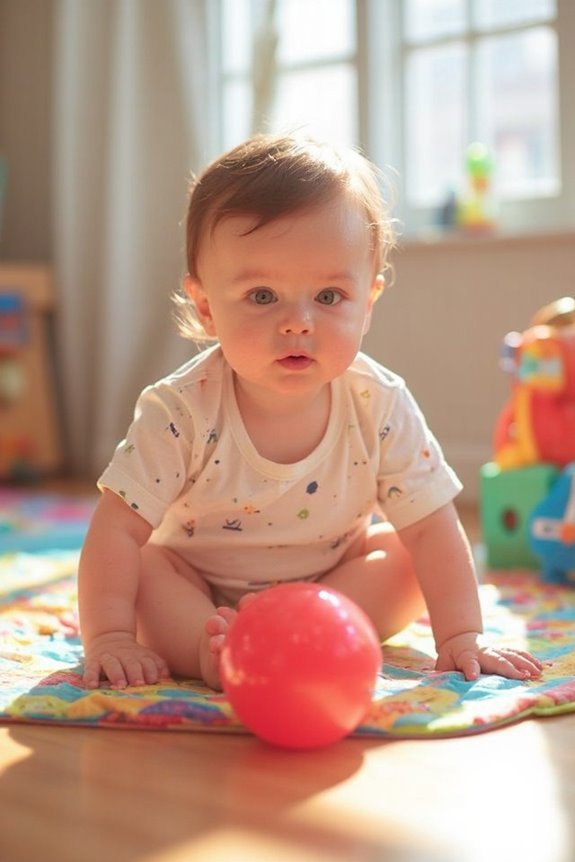
Between six and twelve months, your baby’s visual abilities undergo remarkable transformation, creating a foundation for their growing independence. During this period, your baby develops:
- Complete color recognition, allowing them to see the world in full color like adults
- Enhanced depth perception, helping them judge distances more accurately when reaching for objects
- Improved tracking abilities as eye muscles strengthen and work together
- Better hand-eye coordination, especially as crawling begins around 8 months
Your baby now uses vision to explore their environment actively. They’ll recognize faces more easily, distinguish between familiar and unfamiliar people, and manipulate objects with increasing skill. By 9 months, their eye color typically stabilizes, and they’ll use their improved vision to pull themselves up to standing position.
Recommended Products
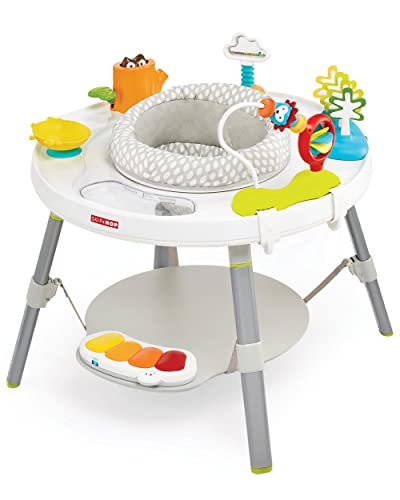
Grows With Baby in 3 Stages: Designed in collaboration with a pediatrician for babies who can hold their head upright unassisted and are not yet walking or climbing out, our baby activity center supports little ones from 4 months up to 25 lbs. It transitions seamlessly through three developmental stages: Sit, Swivel & Play for early engagement, Cruise & Interact to encourage standing and movement, and finally converts into a sturdy toddler activity table with a smooth plastic surface for coloring, crafts, snacks and imaginative play.

Grows With Baby in 3 Stages: Designed in collaboration with a pediatrician for babies who can hold their head upright unassisted and are not yet walking or climbing out, our baby activity center supports little ones from 4 months up to 25 lbs. It transitions seamlessly through three developmental stages: Sit, Swivel & Play for early engagement, Cruise & Interact to encourage standing and movement, and finally converts into a sturdy toddler activity table with a smooth plastic surface for coloring, crafts, snacks and imaginative play.

Converts from Activity Center, to Activity Play Table, and to a Flat Table
Frequently Asked Questions
Can Premature Babies Open Their Eyes Immediately After Birth?
As delicate as dawn’s first light, I’ll tell you: premature eye opening depends on gestational age. Before 28 weeks, babies often have fused eyelids; after 28-30 weeks, their newborn visual development typically allows immediate eye opening.
Do Eye Color Changes Affect a Baby’s Vision Development?
I’m happy to assure you that eye color changes don’t affect your baby’s vision development. The melanin deposition that changes eye color occurs independently from the visual development processes your little one experiences.
When Should I Worry About My Baby’s Crossed Eyes?
Like a camera slowly finding focus, your baby’s eyes need time to align. I’d worry if crossed eyes persist beyond 4 months, missing vision milestones. Early evaluation is vital—don’t wait beyond this developmental checkpoint.
How Do Visual Impairments Present in Early Infancy?
I look for delays in visual milestones like tracking objects or making eye contact. Watch for unusual eye movements, light sensitivity, or white pupils. Early detection is essential—don’t hesitate to discuss concerns with your pediatrician.
Can Screen Time Affect My Baby’s Developing Vision?
The digital glow can cast shadows on your baby’s future sight. Yes, excessive screen exposure can strain your baby’s eyes and potentially hinder visual development. I’d recommend limiting screens and prioritizing real-world visual experiences instead.