As an Amazon Associate, we earn from qualifying purchases. Some links on this site are affiliate links at no extra cost to you. Our recommendations are based on thorough research and editorial judgment.

Helping Your Baby Roll Over: Tips and Techniques

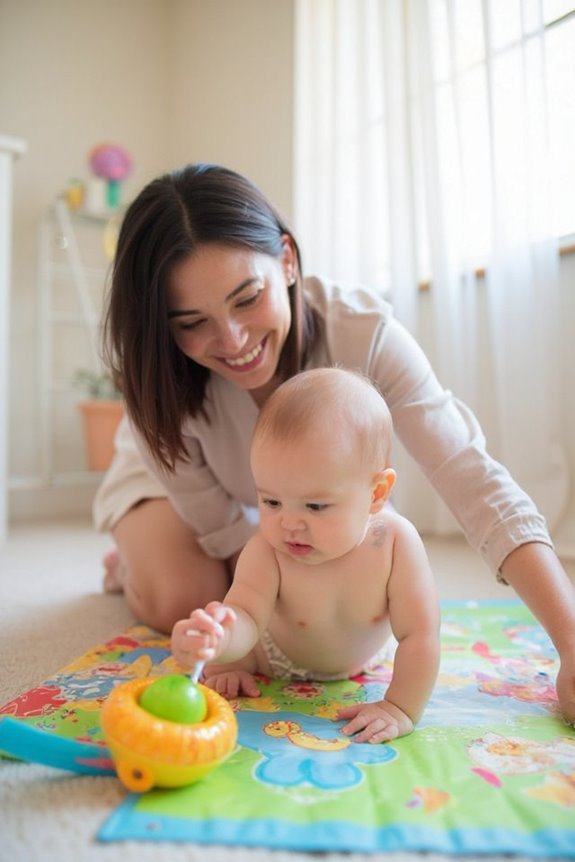
To help your baby roll over, focus on daily tummy time sessions with toys positioned slightly out of reach to encourage movement. Build core strength through gentle assisted rolling exercises and side-lying practice. Create a safe, padded area without distractions for practice sessions. Look for readiness signs like strong head control and side-to-side rocking. Always prioritize safety by stopping swaddling once rolling begins. The following techniques will equip you with everything needed for this exciting milestone.
Key Takeaways
- Practice tummy time daily to build neck and core strength needed for rolling.
- Position toys slightly out of baby’s reach to encourage weight shifting and rolling movements.
- Try side-lying practice with support behind baby’s back while offering toys at shoulder level.
- Create a safe, padded area free from obstacles where baby can freely practice movement.
- Stop swaddling once rolling attempts begin and switch to sleep sacks with free arm movement.
Understanding the Rolling Over Milestone
You may be interested

Do Babies Have Kneecaps?
May 15, 2025
How to Help Your Baby Crawl: Tips and Techniques
August 29, 2025
Rolling over is one of your baby’s first major physical achievements, typically unfolding across three distinct stages. Most infants follow a predictable rolling sequence, beginning with back-to-side rolling around 3-5 months, followed by belly-to-back rolling at 4-6 months, and finally mastering the more challenging back-to-belly roll between 5-7 months.
Developmental variability is completely normal. While 75% of babies master belly-to-back rolling by 6 months, your child may progress at their own pace. Key readiness indicators include:
- Strong neck control
- Ability to push up on arms
- Active leg kicking
- Reaching for objects
- Side-to-side rocking
Your baby’s core strength, coordination, and flexibility all contribute to this milestone. Remember that earlier or later achievement is perfectly acceptable—each baby follows their unique developmental timeline.
Recommended Products

Thickened Foam Play Mat: Our padded foam mat is made of 1.2 inches thickened memory foam.It's sturdy enough to support two adults without ground feeling. The surface is made of ultra-soft flannel fabric, luxurious and comfortable for babies and family time.It does not fade.It provides a soft and safe play space, making it an ideal play mat for babies 6-12 months, encouraging them to explore endless fun with confidence.

2-IN-1 PLAY MAT & SOFT PLAY ARENA: Use flat for sitting and crawling or pop up the four soft walls to create a cozy, contained play space. To assemble, fold each corner in half to form a triangle, pass the strap through the mat hole located at each corner, and secure with the buckle. Quick, tool-free setup.

Essential Exercises to Build Rolling Strength
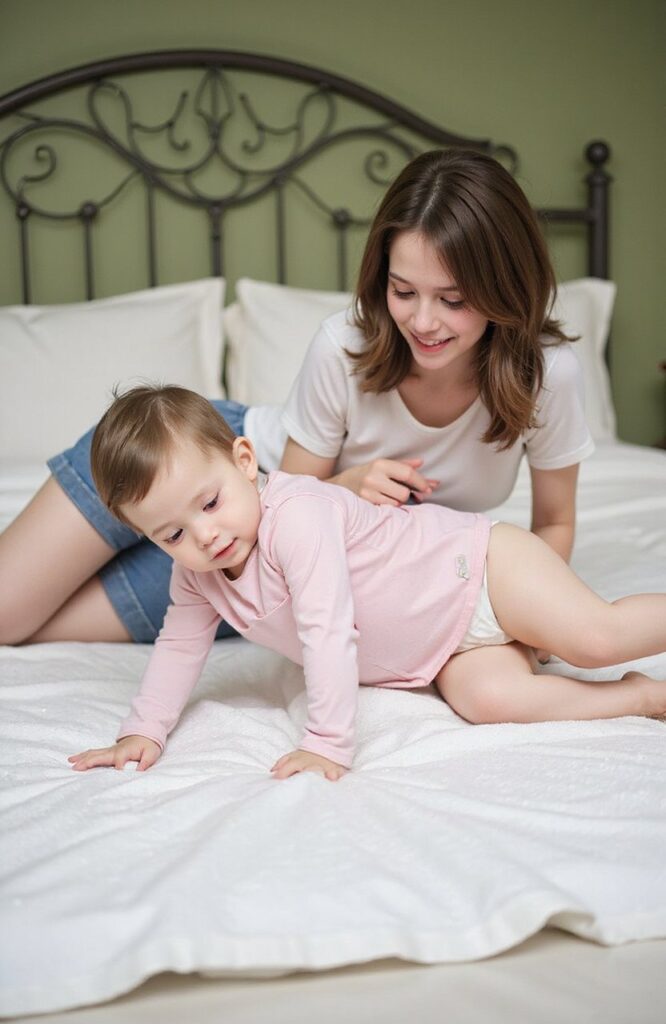
Now that you understand your baby’s developmental path toward rolling over, let’s look at practical exercises to help them build the necessary strength.
Tummy Time Enhancement
- Position toys slightly out of reach to encourage weight shifting
- Move toys to alternate sides to promote balanced muscle development
- Limit sessions to 3-5 minutes, gradually increasing as tolerance improves
Side-Lying Practice
- Place baby on their side with support behind back
- Offer toys at shoulder level to encourage reaching
- Switch sides regularly for balanced development
Core Activation
- Gently rock baby’s hips while on back
- Use a small rolled towel under one side for partial positioning
- Guide baby’s arm across body to initiate trunk rotation
Remember to praise any attempt at movement, and always monitor for signs of fatigue.
Recommended Products
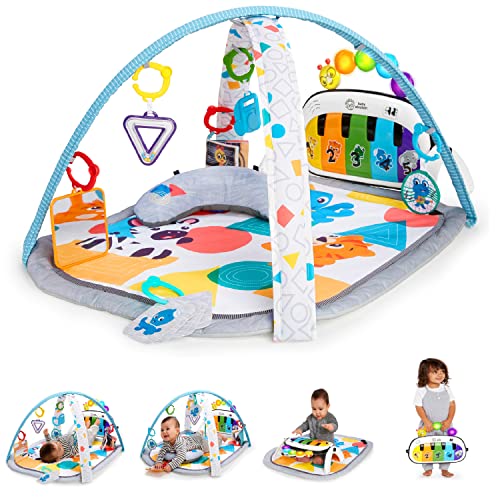
The best-selling Baby Einstein 4-in-1 Kickin’ Tunes Music & Language Discovery Activity Gym supports fine and gross motor skill development and cause and effect skills; grows with baby from 0 to 36 months

Promote your baby's sensory development: The soft, comfortable baby tummy time water mat is the perfect sensory toy for developing solid head, neck and shoulder muscles as well as refining the hand-eye coordination, fine motor and social skills. The bright, colourful sea animals and eye-catching illustrations will keep your baby playing for hours.

High Contrast Patterns for Early Visual Development: This tummy time toy is suitable for babies aged 0-12 months. The high contrast black and white patterns are perfect for newborns (0-3 months), capturing their attention and supporting early visual development. For babies over 3 months, the colorful patterns stimulate their growing senses and encourage motor skill development.
Creating the Perfect Environment for Practice
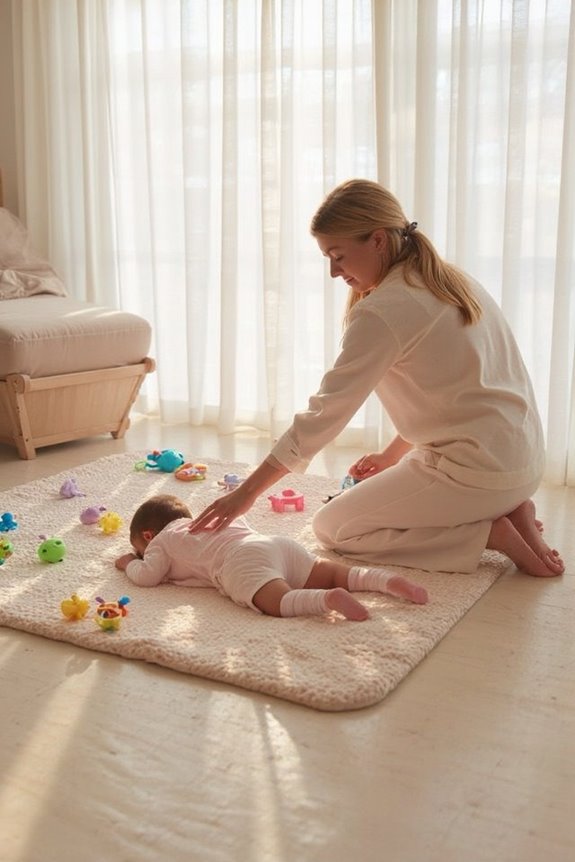
The environment you create for your baby’s rolling practice can greatly impact their progress and comfort level. I recommend designating a specific floor space that’s:
- Clear of obstacles and hazards
- Cushioned with soft mats or blankets
- Well-lit with natural light when possible
- Quiet with minimal distractions
- Comfortable temperature
Incorporating different textures on your practice surface enhances sensory development. Try alternating between:
- Soft blankets
- Firm mats
- Textured play rugs
Strategic toy placement just beyond your baby’s reach can motivate movement. Position colorful objects at different angles to encourage rolling in various directions.
For best results, limit time in confined spaces like swings or baby seats, which restrict the free movement necessary for developing rolling skills.
Recommended Products
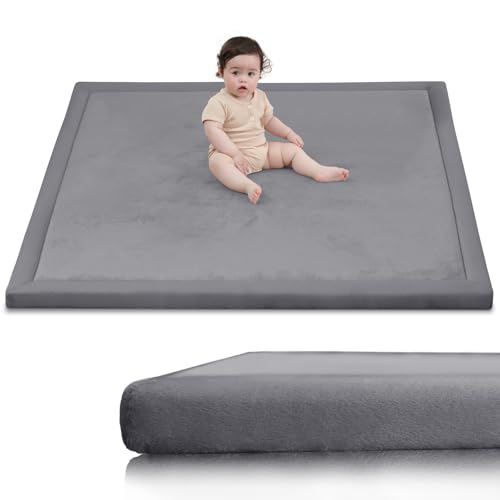
【Safe & Certified for Babies】Our baby play mat is designed with safety as the top priority. Certified by OEKO-TEX fabric standards and tested to meet CPSIA and ASTM requirements, this kids play mat is free from harmful substances. Parents can choose with confidence, knowing their little ones are playing on a non-toxic, ultra-soft crawling mat.

Newborn Baby Essentials - The baby play gym is designed to develop stage-based sensory and motor skill. The soft mat provides a comfortable space for baby to rest, entertain and learn, and the hanging toys can stimulate baby's sight hearing and touch, they can effectively enhance the development of sensory perception and improve physical coordination

6 SENSORY HANGING TOYS & BONUS CARDS: Elevate playtime with our baby gym's 6 removable toys. These thoughtfully crafted toys cater to your baby's growth needs and spark boundless sensory exploration. As a delightful bonus, we also include 12 colorful milestone cards to celebrate each month of your baby's incredible journey.
Safety Measures During Rolling Development
As your baby begins to master the art of rolling over, safety concerns shift dramatically, requiring vigilant attention to their sleep environment and surroundings. The following safety precautions are essential:
- Stop swaddling immediately when rolling starts to prevent positional asphyxia
- Remove all loose items from the crib (pillows, blankets, toys)
- Use sleep sacks with free arm movement instead of traditional blankets
- Maintain a firm mattress with tightly fitted sheets only
Effective monitoring techniques include:
- Regular supervision during tummy time and practice sessions
- Using video monitors to observe sleep positioning
- Learning infant CPR before this developmental stage begins
- Checking the sleep area for hazards before each nap
Always place baby on their back initially, even if they can roll over independently. Contact your pediatrician if you notice breathing difficulties during rolling attempts.
Recommended Products
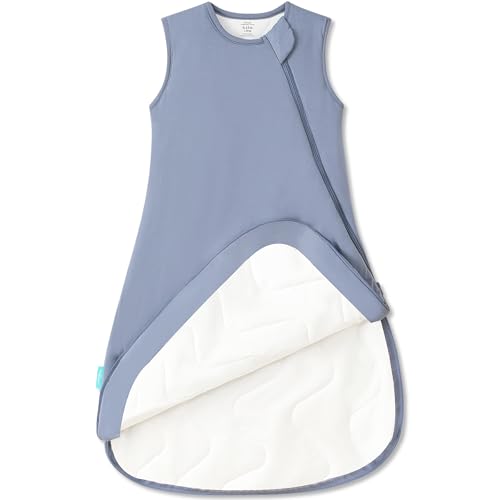
BETTER THAN EVER: Our beloved baby Viscose baby sleep sack, the epitome of comfort for your little one. Crafted with care, it's a cozy cocoon designed to cradle your baby in warmth and security, guiding them into a restful slumber that lasts all night. Simplifying nighttime diaper changes and ensuring optimal temperature regulation, its heavenly softness invites your touch, offering unparalleled comfort for your precious bundle of joy.

【Hassle-Free Swaddle for New Parents】Designed by ingenuity to transition from swaddle to sack, the baby swaddle with wrap offers three convertible wearing choices. Adjust the swaddle for arms-in to reduce startle reflex, hands-up to face for self-soothing, or arms-out to transition to sleep sack, meeting the needs of babies at different stages of development 0-6, 6-9 months and up to 12 months

SAFE AND SECURE SLEEP SOLUTION: The Original Halo Sleepsack Swaddle replaces loose blankets in the crib, creating a safer sleep environment. Endorsed by hospitals nationwide to promote safe and restful sleep for your baby.
Signs Your Baby Is Ready to Roll
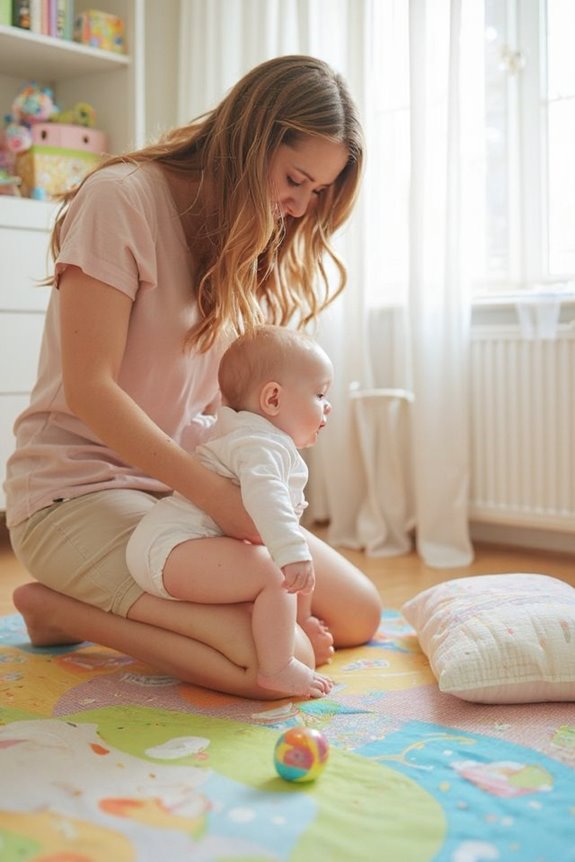
Recognizing when your baby is developmentally ready to roll over helps you provide appropriate support during this exciting milestone.
Watch for these clear rolling signs that indicate baby readiness:
- Strong head control and the ability to push up during tummy time
- Upper body strength development (typically around 3-5 months)
- Side-to-side rocking motions when lying on their back
- Increased muscle coordination across their torso
- Attempts to reach for toys placed slightly out of reach
Most babies master rolling from belly to back first (3-5.5 months) before learning the more challenging back-to-belly roll (5-7 months). By 6 months, approximately 75% of babies can roll in both directions, though individual development varies. Regular tummy time sessions are essential for building the necessary strength for this important milestone.
Frequently Asked Questions
Can Rolling Skills Develop Differently in Premature Babies?
Yes, I’ve seen that premature milestones often follow a different timeline. Your preemie may face rolling challenges due to muscle development. I assess progress using their adjusted age, not calendar age.
Should I Worry if My Baby Rolls Only in One Direction?
Just yesterday, I was thinking about rolling milestones! I wouldn’t worry immediately if your baby has a direction preference. It’s common, but do encourage both sides to promote balanced development and prevent muscle imbalances.
How Does Rolling Affect Sleep Patterns and Crib Safety?
When your baby starts rolling, I’d recommend lowering the crib height and removing swaddles for safety. Their sleep position may change throughout the night, causing temporary disruptions that should resolve within two weeks.
Can Excessive Tummy Time Delay Rolling Development?
Relax, rest assured—no, excessive tummy time doesn’t delay rolling development. I’ve found the opposite is true! Regular tummy time duration actually builds the muscles needed for rolling milestones, typically around 4 months.
When Should I Introduce Rolling Practice After Feeding?
I’d wait 20-30 minutes after feeding before introducing rolling practice. This timing gives your baby’s digestive system a chance to settle, making the feeding schedule impact minimal and rolling practice more comfortable.