As an Amazon Associate, we earn from qualifying purchases. Some links on this site are affiliate links at no extra cost to you. Our recommendations are based on thorough research and editorial judgment.

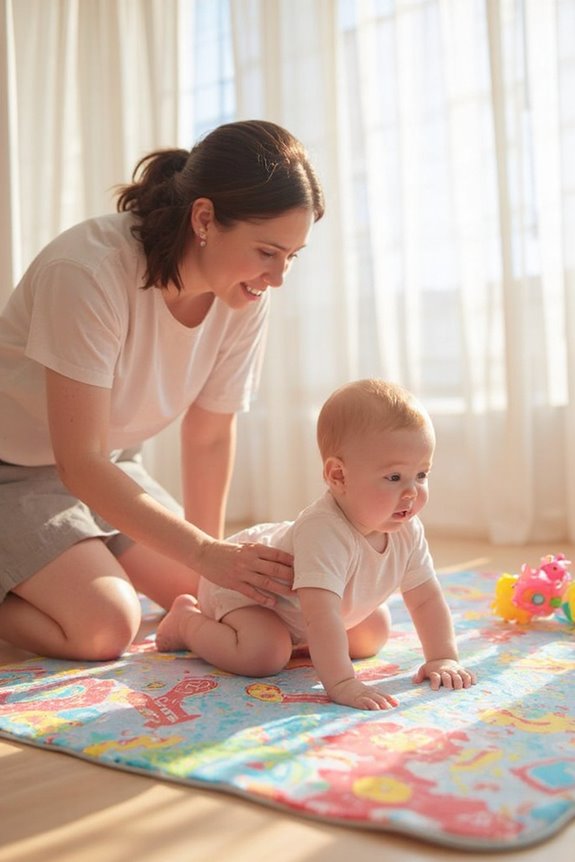
How to Help Your Baby Crawl: Tips and Techniques

To help your baby crawl, provide daily supervised tummy time starting with short 1-3 minute sessions on a firm surface. Place toys slightly beyond reach to encourage movement, and use rolled towels for chest support if needed. Create a safe environment by installing safety gates and removing choking hazards. Most babies crawl between 6-12 months, so be patient with their timeline. If your baby shows no movement milestones by 9-10 months, the following signs might indicate when to consult a pediatrician.
Key Takeaways
- Establish consistent tummy time sessions daily to strengthen core and arm muscles needed for crawling.
- Place enticing toys just beyond baby’s reach to encourage forward movement and exploration.
- Create obstacle courses with pillows and cushions to develop problem-solving skills and coordination.
- Demonstrate crawling movements yourself to provide visual cues for your baby to imitate.
- Minimize time in baby equipment like walkers or swings that restrict natural movement and development.
The Developmental Importance of Crawling
You may be interested
Do Babies Have Kneecaps?
May 15, 2025
Helping Your Baby Roll Over: Tips and Techniques
July 15, 2025
When your baby starts to crawl, they’re not just learning to move from point A to point B—they’re developing essential skills that will benefit them throughout their life. Crawling integrates different parts of the brain while strengthening core muscles and improving coordination.
The cognitive benefits are substantial:
- Enhanced spatial awareness and depth perception
- Improved problem-solving abilities
- Better sensory integration
For motor skills development, crawling:
- Builds strength in arms, legs, and core
- Enhances balance and stability
- Prepares the body for walking
- Develops fine motor control
This milestone also supports your child’s psychological growth, fostering independence and confidence. By encouraging crawling, you’re helping your baby develop neurological pathways that support both physical and mental development for years to come.
When to Expect Your Baby to Start Crawling
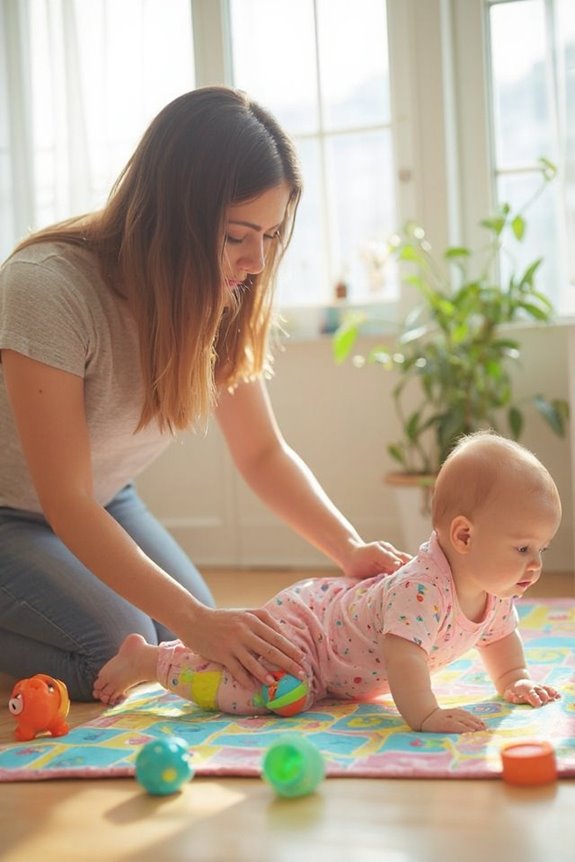
Now that you understand why crawling matters for your baby’s development, you’re probably wondering when you’ll see your little one in action. The typical crawling timeline begins between 6 and 12 months of age, with most babies starting to crawl between 7 and 10 months.
Key baby milestones in the crawling progression:
- Early crawlers may begin at 6-7 months
- Average onset occurs around 8-9 months
- Some babies start later, closer to their first birthday
Remember that development varies considerably between children. Genetic factors, environmental conditions, and individual motor skill development all influence when your baby will crawl. Some babies even skip traditional crawling altogether, moving directly to cruising (walking while holding furniture) around 9.3 months before walking independently.
Essential Tummy Time Exercises
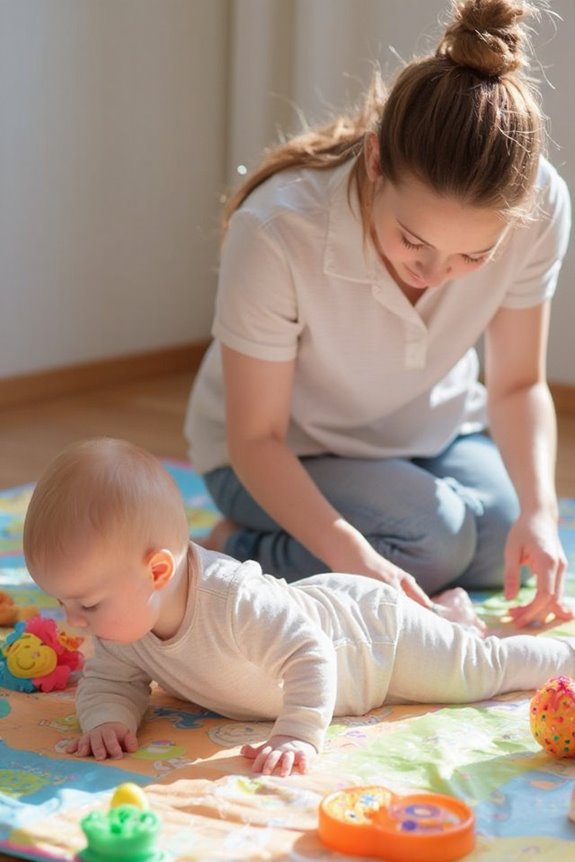
Tummy time serves as the foundation for your baby’s crawling development, helping them build the necessary muscles for independent movement. I recommend starting with short 1-3 minute sessions while your baby is awake and supervised.
Recommended Products

6 SENSORY HANGING TOYS & BONUS CARDS: Elevate playtime with our baby gym's 6 removable toys. These thoughtfully crafted toys cater to your baby's growth needs and spark boundless sensory exploration. As a delightful bonus, we also include 12 colorful milestone cards to celebrate each month of your baby's incredible journey.

Promote your baby's sensory development: The soft, comfortable baby tummy time water mat is the perfect sensory toy for developing solid head, neck and shoulder muscles as well as refining the hand-eye coordination, fine motor and social skills. The bright, colourful sea animals and eye-catching illustrations will keep your baby playing for hours.
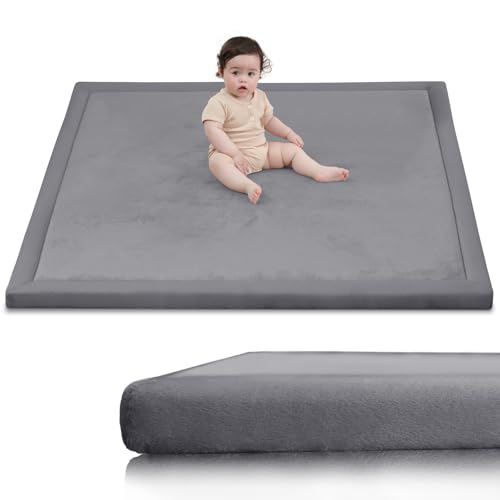
【Safe & Certified for Babies】Our baby play mat is designed with safety as the top priority. Certified by OEKO-TEX fabric standards and tested to meet CPSIA and ASTM requirements, this kids play mat is free from harmful substances. Parents can choose with confidence, knowing their little ones are playing on a non-toxic, ultra-soft crawling mat.
Key Exercises
- Position your baby on a firm, flat surface
- Place toys slightly out of reach to encourage stretching
- Use a rolled towel under the chest for better support
- Try chest-to-chest positioning for comfort and bonding
As your baby grows stronger, gradually increase tummy time duration. These exercises specifically target muscle development in the neck, shoulders, and arms—all critical for crawling success.
For variety, incorporate mirrors or high-contrast cards to maintain engagement. Remember that consistent practice is essential, but always follow your baby’s cues to avoid frustration.
Recommended Products

Soft Cotton Fabric :Made with ultra-soft, breathable cotton for delicate baby skin, ensuring comfort during Tummy Time sessions.

Multi-functional Design for Baby's Growth Stages: This 4-in-1 Tummy Time Mat is designed to grow with your baby, supporting floor play, tummy time, sitting up, and breastfeeding. From 0 to 12 months, it helps your little one meet key milestones while growth supporting physical and cognitive growth. The versatile design ensures your baby can enjoy it through different stages of growth, making it a must-have for every parent

Detachable Pillow Playmat: Including Pillow mat, upper cushion, foot pad, teething toy, crinkle paper. Support early body development and sensory exploration. ABP free teether is safe for baby to chew on which relieve teething pain. Crinkle paper allow babies to play and can make the sound to attract baby, boost babies' hearing skill.
Creating a Safe and Motivating Environment
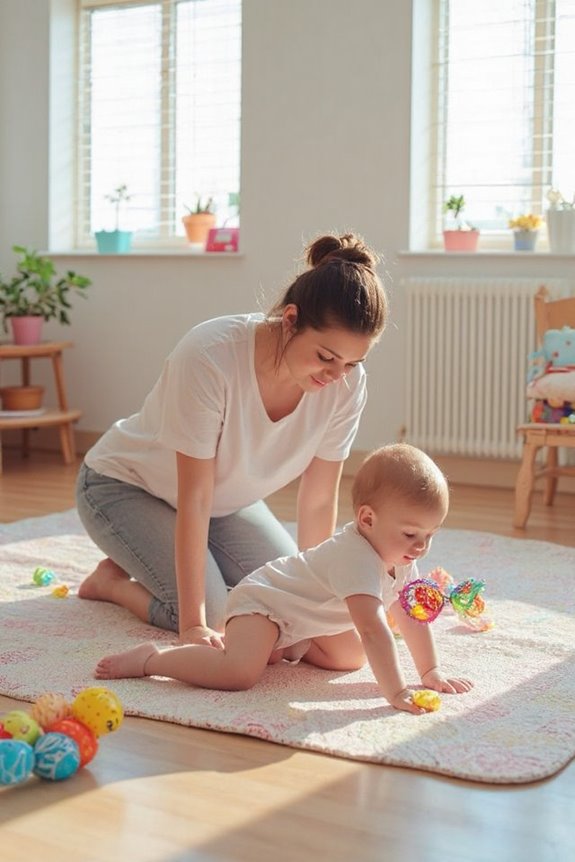
Before your baby begins crawling, it’s essential to prepare your home with safety as the top priority. Start by installing safety gates at stairways and securing furniture to prevent tipping hazards.
Create a designated area for safe exploration by:
- Removing all small objects that could be choking hazards
- Covering sharp furniture corners with protective guards
- Managing cords and cables by securing them out of reach
- Placing slip-resistant mats in high-traffic areas
Position enticing toys just beyond your baby’s reach to encourage movement. Consider the floor surface—carpets provide cushioning but can cause friction burns, while hard surfaces are easier to clean but less forgiving on little knees. Products like knee pads can offer protection during crawling practice.
Always maintain constant supervision as your baby explores their environment.
Recommended Products

✅ TESTED & TRUSTED BABY SAFETY GATE FOR OVER 30 YEARS: Parent-trusted baby safety product certified by the Baby Safety Alliance. Designed to support everyday baby proofing and help keep babies and toddlers safe at home.
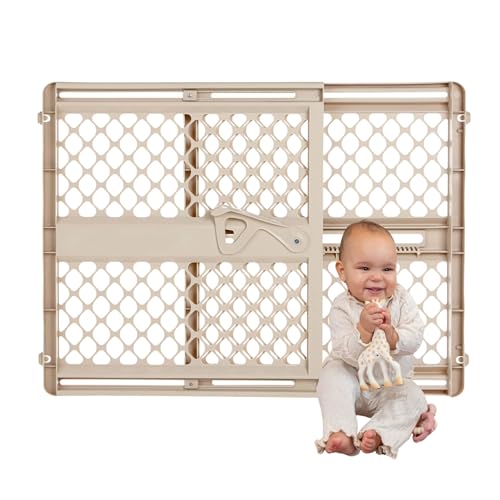
PROVIDES PEACE OF MIND - The kids gate creates a secure barrier to help prevent access to stairs, bathrooms, kitchens, and other off-limit areas, so your little one can safely explore.

Easy Installation: This fireplace mesh gate is designed for simple setup with 4 adhesive hooks and double-sided tapes. Clean and dry the surface before installation, press the hooks firmly, and allow the adhesive to set before attaching the mesh for a better hold
Strengthening Exercises for Pre-Crawling Babies
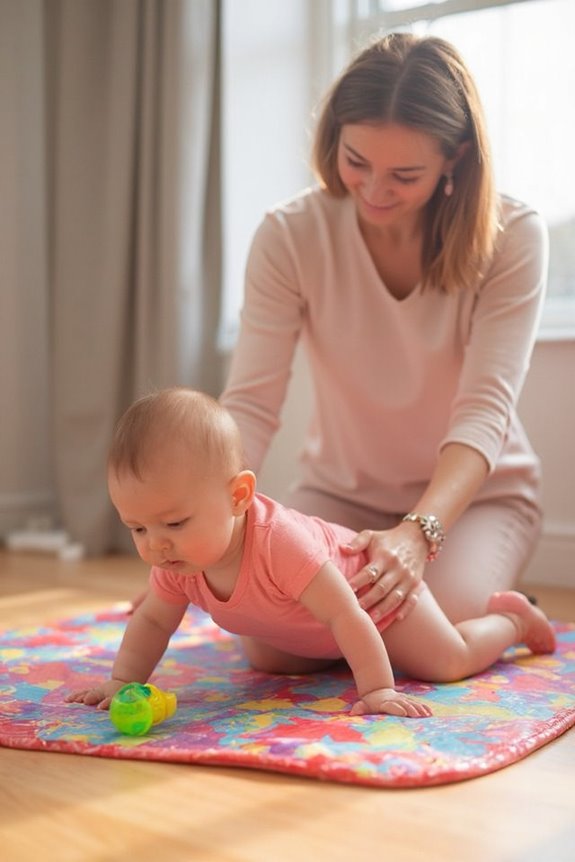
Building essential muscle strength is critical for your baby’s crawling development. I recommend focusing on three key areas:
Upper Body Development
- Practice daily tummy time to build arm strength
- Roll a small towel under baby’s chest for better arm positioning
- Try the “wheelbarrow” position over your thigh
Lower Body and Core Strength****
- Perform gentle leg lifts and knee-to-chest movements
- Support your baby in a quadruped (hands-and-knees) position
- Encourage weight transfers between arms and legs
Mobility Exercises
- Guide your baby through hip circles during tummy time
- Place toys strategically to encourage pivoting
- Create simple crawling tracks with toys just out of reach
These targeted exercises enhance muscle development across all areas needed for successful crawling techniques.
Recommended Products

BABY PLAY MAT With BABY SEATS: The baby play gym mat features a charming flower-shaped design, while the baby seat comes in an adorable rabbit form. This eye-catching and cute combination is sure to attract babies' attention and stimulate their visual development. Comes with 5 removable toys. These tummy time toys not only provide entertainment but also help in developing the baby's grasping, tactile, and cognitive skills as they explore and play with each one

Spacious & Versatile Play Zone: Generous 50"x50" size creates a safe activity area for tummy time, crawling, walking practice, or family play. Easily transitions from living rooms and bedrooms to playrooms and outdoor picnics

Thicker,Safer - Baby's each phase is a new discovery and a shared joy. Our baby play mat for floor is 30% thicker than most other brands, made padding foam and polyester fiber on surface, it provides a safer spot for babies learning to roll, crawl or walk. Each milestone is a cherished memory, enriching parenthood a blissful journey
Different Crawling Styles and How to Support Them
While many parents expect their babies to adopt the classic hands-and-knees crawl, you’ll find that infants actually develop a variety of unique crawling styles on their path to mobility. These crawling variations are perfectly normal and represent different approaches to developing essential motor skills.
Common styles include:
- Classic hands-and-knees crawl
- Bear crawl (straight arms and legs)
- Belly/commando crawl
- Bottom scooting
- Crab crawl (backward or sideways movement)
To support your baby’s unique style:
- Provide plenty of tummy time
- Create safe, clutter-free spaces for practice
- Place toys strategically just beyond reach
- Use soft play mats for comfort
- Monitor overall developmental progress rather than focusing on style
Remember that variability is normal—focus on supporting your baby’s exploration rather than enforcing a specific crawling technique.
Signs Your Baby Might Need Additional Support
Although every baby develops at their own pace, recognizing potential warning signs early can make a significant difference in addressing developmental concerns. If you notice any of these indicators, it might be time to consult your pediatrician:
- No movement milestones (pushing up, rolling) by 9-10 months
- Persistent floppiness or poor muscle tone
- Consistent one-sided movement patterns
- Inability to sit independently
- Struggles with head control or pushing up during tummy time
- Exclusive backward movement or butt scooting with no progression
- Little interest in reaching for toys or exploring surroundings
These signs could indicate potential developmental delays affecting motor skills. Remember that early intervention often leads to better outcomes, so don’t hesitate to seek professional guidance if you observe these patterns consistently.
Recommended Products

Set of 10 colorful blocks for baby to sort, stack and drop through the shape-sorter lid

Bright Starts Oball is a fan-favorite toy ball that has been engaging tiny fingers for over 25 years; flexible design features large finger holes to help baby easily grip and explore

Classic Baby Toys: Bundle including 1 stacking ring toy and 1 set of baby blocks
Frequently Asked Questions
Can Walkers or Jumpers Help My Baby Learn to Crawl?
No, I don’t recommend walkers or jumpers for crawling development. Despite claims of walker benefits, they actually delay motor skills. Jumper risks include muscle imbalances and reduced floor time essential for learning to crawl naturally.
Should I Be Concerned if My Baby Crawls Backward Only?
I wouldn’t worry – backward crawling is perfectly normal! Many babies master this before going forward as they develop arm strength first. It’s a natural part of reaching developmental milestones at their own pace.
How Does Crawling Affect My Baby’s Long-Term Physical Development?
Crawling strengthens your baby’s muscles and supports critical motor skills. I’ve seen it establish foundations for balance, coordination, and posture that impact developmental milestones well beyond the crawling stage. It’s truly foundational for physical development.
Is It Normal for Babies to Prefer Scooting Over Traditional Crawling?
Yes, it’s perfectly normal! I’ve seen many babies prefer scooting over traditional crawling. Scooting advantages include mobility and exploration while still meeting crawling milestones. Every baby develops uniquely on their own timeline.
How Can I Encourage Crawling in a Baby Who Dislikes Tummy Time?
Try tummy time alternatives like using a rolled towel under baby’s chest or incorporating sensory play during floor time. I’d suggest short sessions over your leg first, gradually increasing as their comfort grows.