As an Amazon Associate, we earn from qualifying purchases. Some links on this site are affiliate links at no extra cost to you. Our recommendations are based on thorough research and editorial judgment.

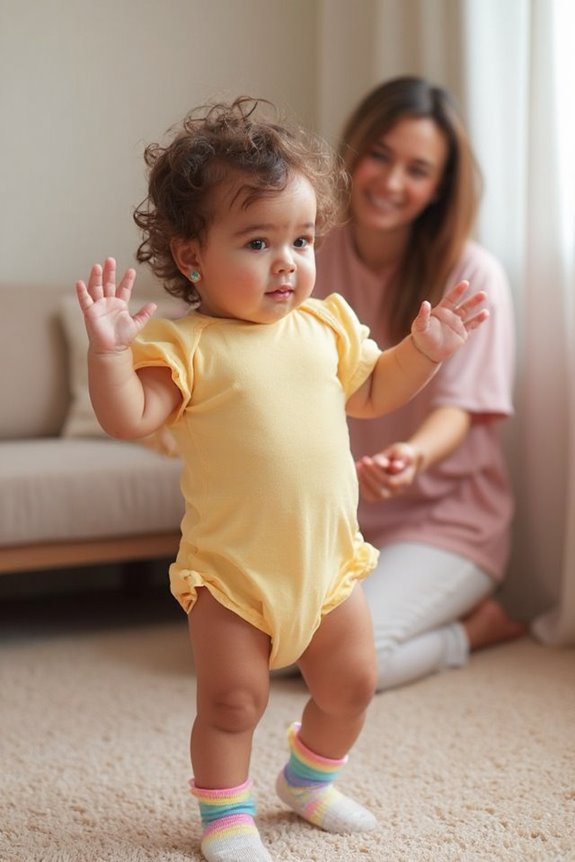
When Do Babies Start Standing?

Babies typically start standing with support between 7-10 months, progressing from pulling up on furniture to brief moments of unsupported standing around 10-16 months. This milestone requires developed core strength and leg muscles, building upon earlier achievements like rolling over (2-4 months), sitting (6-7 months), and crawling (6-10 months). You’ll notice readiness signs including increased coordination, interest in higher objects, and successful kneeling positions. The journey from standing to walking usually takes about 2-2.5 months as balance skills improve through practice.
Key Takeaways
- Most babies begin pulling to stand between 7-10 months of age when core and leg strength develops sufficiently.
- Babies typically achieve temporary standing without support between 10-16 months, after mastering pulling up on furniture.
- Early readiness signs include prop sitting, pushing down with legs, and showing interest in objects above eye level.
- Pulling up to stand requires developed core strength, which begins with earlier milestones like rolling over and sitting.
- Standing independently precedes cruising (9-13 months) and walking, with most babies walking within 2-2.5 months after mastering standing.
The Journey From Wiggling to Standing


As your baby grows from a tiny newborn to an active toddler, they’ll commence on an incredible physical journey that transforms them from wiggling in your arms to standing tall on their own two feet. This progression begins with those early wiggling movements that strengthen their core and leg muscles.
From birth, babies develop leg strength, showing noticeable improvements around 6 months. These initial movements are vital early standing techniques that build necessary muscle coordination. Your baby will follow a predictable path:
- Rolling over (2-4 months)
- Sitting independently (6-7 months)
- Crawling (6-10 months)
- Pulling up on furniture (7-10 months)
- Temporary standing without support (10-16 months)
Core strength development is essential for balance control, allowing babies to eventually support their weight independently.
Early Signs of Readiness for Standing
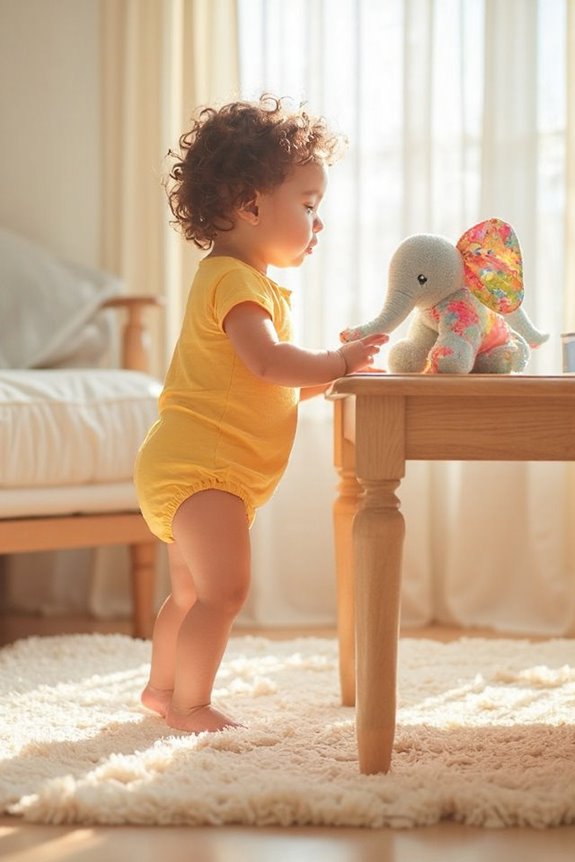
While every baby develops at their own pace, certain telltale signs indicate when your little one is preparing to stand.
I’ve observed that increased muscle coordination becomes evident when babies:
- Begin prop sitting with hands on the floor
- Push down firmly with their legs when held upright
- Pull themselves up on furniture
Balance development is another critical indicator, showing up as:
- Improved core strength during tummy time
- Ability to maintain kneeling position
- Confidence when temporarily supporting weight on legs
Your baby may also show heightened interest in objects above eye level, motivating them to reach higher. These behaviors typically emerge between 6-9 months, though premature babies may follow an adjusted timeline. The progression from crawling to cruising builds the necessary strength for this exciting milestone.
Developmental Milestones Before Standing
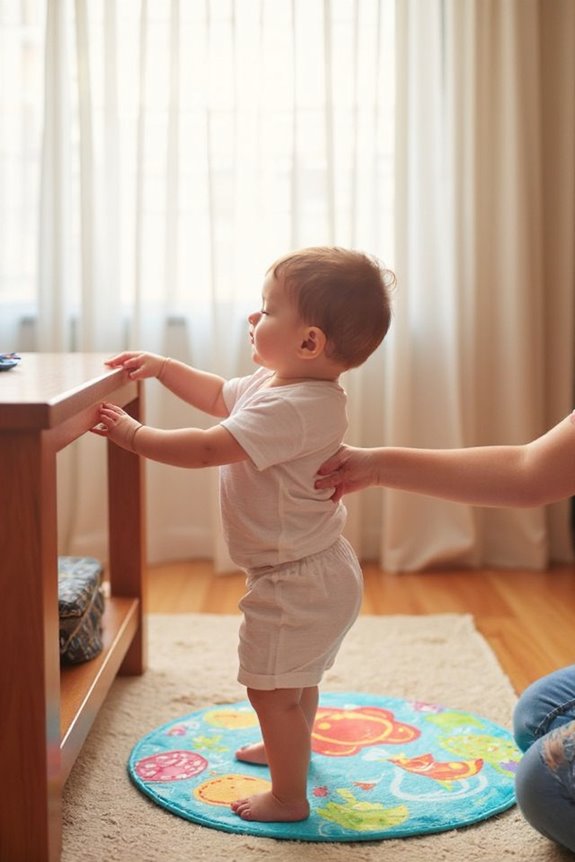 Before your baby takes those first exciting steps toward standing independently, they’ll master a sequence of developmental milestones that build the necessary foundation. This progression isn’t random but follows a logical path of physical development.
Your baby’s journey begins with:
- Developing leg strength through reflexive kicks and movements
- Building core development during tummy time sessions
- Gaining neck control, essential for maintaining upright posture
- Refining balance skills through sitting and kneeling
Motor progression continues as your baby learns to crawl, which strengthens muscles needed for standing. Sensory coordination and muscle memory improve with each attempt at new positions. Environmental factors, such as safe spaces to practice and your encouragement, play vital roles in this developmental process.
Each milestone prepares your baby’s body for the significant challenge of standing against gravity.
Recommended Products

BABY PLAY YARD: This multi-functional play set has two pieces. Place them together to form a 10-sided sensory play yard to restrict the movement of early-crawlers. Use them separately to form two, individual, pentagon shapes to entertain more than one child at a time.

INDOOR PLAY EQUIPMENT: A rainbow colored mat has become a staple for safe, indoor play in classrooms as well as homes. Mat comes with two 2 ft. x 6 ft. segmented pieces that can be rearranged to form all sorts of play areas. Hook and loop strips on the edges allow kids to make quick changes and ensure the two segments don't slide apart during activities.

Premium Memory Foam Comfort: Engineered with high-density memory foam.
How Babies Pull Themselves Up
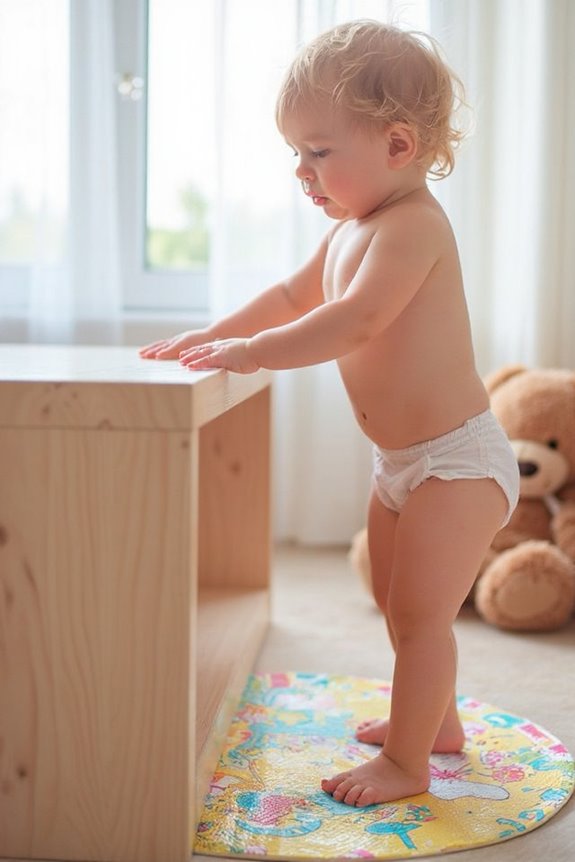
Babies master the art of pulling up to stand through a remarkable combination of strength, coordination, and determination. This typically occurs between 7-12 months of age, when their muscles have developed enough to support their weight.
The pulling techniques babies use involve several key movements:
- Starting from a sitting position
- Moving to a half-kneeling position
- Gripping furniture with their hands
- Pushing up with their legs while pulling with arms
Support systems play an essential role in this developmental stage. Babies rely on:
- Low furniture like coffee tables and couches
- Caregivers’ hands or legs
- Sturdy toys that won’t tip over
Each baby progresses at their own pace, with some focusing on standing earlier while others master other skills first.
Recommended Products

DEEP RAILS & SAFETY TREADS - Jonti-Craft's Diaper Changer with pullout stairs will put your mind at ease. The 4 raised sides and safety threads protect children as they're having their diaper changed. It's perfect for your home, daycare, or school.

PROTECTION ON 4 SIDES - Jonti-Craft's Diaper Changer with Stairs will put your mind at ease. It has 4 raised sides that protect children as they're having their diaper changed. It's perfect for your home, daycare, nursery, school, and more.

DEEP RAILS - Jonti-Craft's Changing Table with pullout stairs to the left will put your mind at ease. The 4 raised sides protect children as they're having their diaper changed. It's perfect for your home, daycare, nursery, school, and more.
What to Expect During the Standing Phase
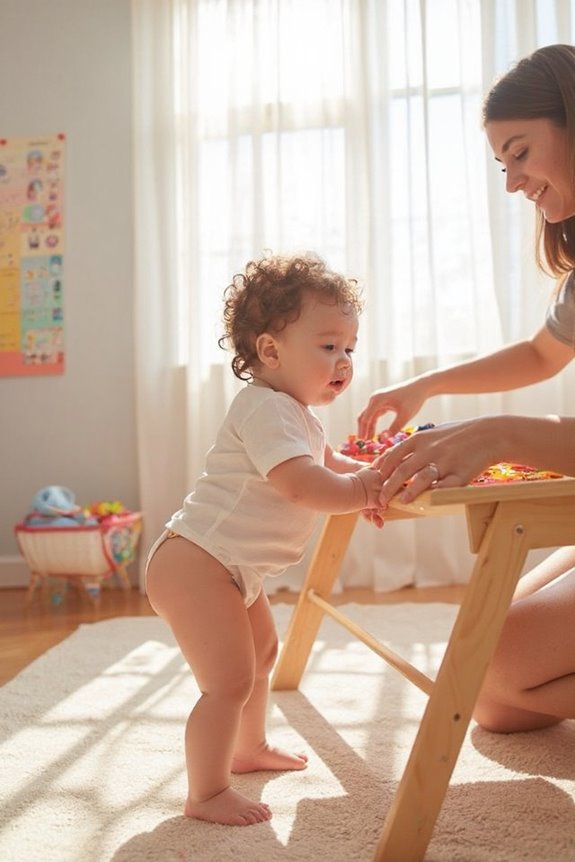
As your little one enters the standing phase, you’ll witness a fascinating series of developmental milestones that transform their mobility skills. Between 7-10 months, your baby will likely pull up on furniture, practicing their standing techniques while holding on for support.
During this phase, expect:
- Brief moments of letting go as they experiment with balance
- Weight-shifting from side to side (natural balance exercises)
- Reaching for toys with one hand while standing
- Occasional wobbling and falls as they build confidence
At 10-16 months, many babies achieve independent standing for short periods. You’ll notice their posture gradually maturing, shifting from the typical bow-legged stance toward straighter alignment. Create a safe environment by removing hazards and providing stable furniture for support as they practice.
Supporting Your Baby’s First Attempts to Stand
When your baby shows readiness to stand, you’ll need to create supportive conditions that balance safety with developmental opportunities. I recommend focusing on trunk support rather than holding their hands, as this better develops core strength and balance.
Create a safe environment by:
- Using soft mats to cushion potential falls
- Clearing away sharp objects
- Ensuring furniture is stable and won’t tip
Encourage balancing practice by placing toys slightly out of reach at different heights. This motivates your baby to practice standing while reaching. For added stability, try:
- Using non-slip socks for better traction
- Positioning your baby with back support against a wall
- Applying gentle pressure at the shoulder and pelvis to help with balance
Always supervise standing practice sessions to prevent accidents.
Recommended Products
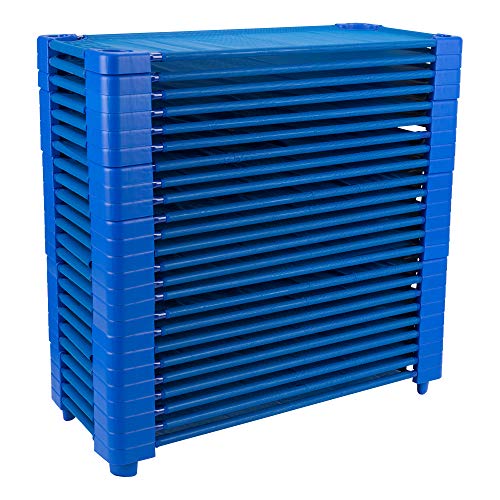
PREMIUM COMFORTABLE COT: Provides kids with a comforable spot for resting or nap time at home, daycare, or preschool
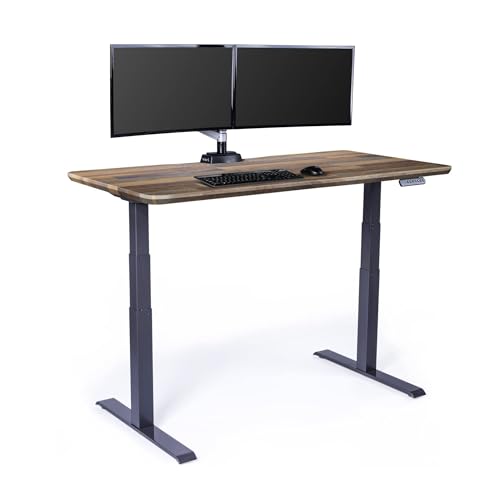
Quick Setup - Effortless assembly with a pre-installed frame and slide-and-lock legs, ensuring your new ergonomic gaming desk is ready in under 10 minutes

On-demand height adjustment: Easily adjust from a sitting to standing position with 16 inches of lift; ergonomic mechanism supports up to 15 pounds and adjusts smoothly through full range of motion from minimum height of 29 inches to maximum height of 45 inches
Common Challenges When Learning to Stand
Learning to stand represents a significant milestone in your baby’s development, though it’s often accompanied by several hurdles that you’ll need to navigate together.
As your little one attempts to master standing, you’ll notice several balance challenges that frequently result in tumbles. This is completely normal—their muscle coordination is still developing. Many babies experience:
- Difficulty maintaining balance while standing
- Limited leg strength for prolonged standing
- Frustration when unable to stand independently
- Trouble figuring out how to lower themselves safely
The process of learning to stand also involves strengthening core muscles alongside leg muscles. Your baby will need time to coordinate these muscle groups effectively. Remember to create a safe environment free of choking hazards like stickers or small objects during standing practice.
Recommended Products

Upright Support for Safer Walking – Designed to encourage natural posture, this upright rollator helps reduce strain on the back, shoulders, and wrists while supporting confident, eye-level mobility.
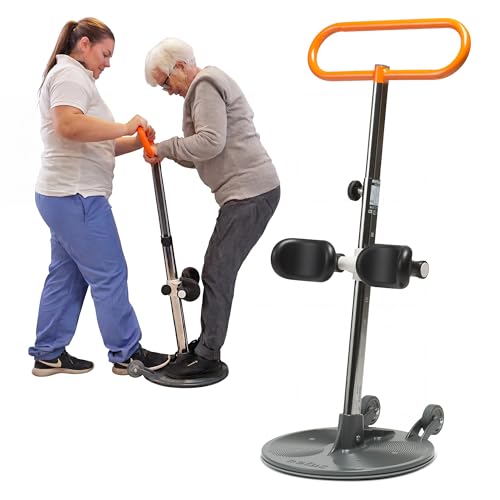
DESIGNED FOR SAFE STANDING TRANSFERS – Provides stable support when moving between seated positions such as bed, chair, wheelchair, or toilet. Encourages natural sit-to-stand movement for users who can bear weight and follow instructions.

EXTRA DURABLE FOLDING WALKER —Supports a weight capacity of up to 300 lbs., making it safe and comfortable for the user and their belongings
Creating a Safe Environment for Standing Practice
Once your baby starts showing interest in standing, you’ll need to transform your living space into a safe practice zone. Safety precautions should include:
- Clear all floor areas of small toys and slippery surfaces
- Install baby gates at both the top and bottom of stairs
- Cover sharp furniture corners with padding
Secure furniture is absolutely essential. Heavy items should be anchored to walls using anti-tip devices to prevent tipping when babies pull up on them. Make certain all standing surfaces are stable – wobbly furniture can cause serious falls.
For standing practice:
- Provide support initially around your baby’s trunk
- Place motivating toys just out of reach
- Use soft landing surfaces like rugs under practice areas
Regularly check your environment for new hazards as your baby’s mobility increases.
Recommended Products

NURSERY AND KIDS BEDROOM DRESSER: Nursery and kids dresser for bedroom with 5 drawers; Universal design easily matches any bedroom; Crafted of wood framing and wood composites, and includes Euro drawer glides; Assembly required; Anti-tip kit included
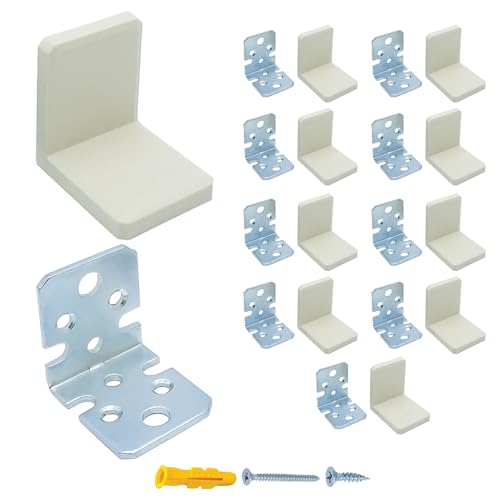
Heavy-Duty Stainless Steel L Bracket: Engineered for strength and durability, our stainless steel brackets can hold heavy loads securely. Ideal for shelving, cabinets, and furniture, it ensures stability and peace of mind for all your home or office needs.

Machine Washable: Easily clean your traditional area rug by tossing it in the washing machine for hassle-free maintenance
When to Be Concerned About Standing Delays
Most parents enthusiastically anticipate their baby’s standing milestone, though it’s important to recognize that developmental timelines vary substantially from child to child.
I generally recommend seeking a developmental assessment if:
- Your baby isn’t attempting to stand with support by 12 months
- There’s regression in previously acquired skills
- You notice asymmetry in leg movement or strength
- Your child seems disinterested in weight-bearing activities
Standing delays can sometimes indicate underlying issues that benefit from early intervention. Trust your instincts—if something doesn’t seem right with your child’s motor development, consult your pediatrician. They can conduct appropriate screenings and refer you to specialists if necessary.
Remember that early intervention produces the best outcomes when addressing developmental concerns, so don’t hesitate to seek professional guidance.
From Standing to Walking: The Next Steps
Three key phases mark your baby’s journey from standing to walking: mastering unassisted standing, cruising along furniture, and finally taking those precious first independent steps.
Most babies progress from standing to walking within about 2-2.5 months. After pulling up (7-10 months), they’ll develop balance improvement through practice. During the cruising phase (9-13 months), your baby will move sideways while holding furniture, developing vital leg strength.
Cruising techniques vary among babies:
- Side-stepping while holding furniture
- Gradually letting go for brief moments
- Using both hands, then one hand for support
Frequently Asked Questions
Can Standing Too Early Harm My Baby’s Leg Development?
Just like a seedling, I’ve observed that early standing risks are minimal. I wouldn’t worry – most leg development concerns are unfounded. Babies naturally stand when ready, and their bones adapt accordingly without harm.
Should I Buy a Baby Walker to Help With Standing?
I wouldn’t recommend a baby walker despite perceived benefits. Baby walker safety is a major concern, with AAP advising against them. Instead, try activity centers or supported standing with furniture for better development outcomes.
Do Barefoot Babies Learn to Stand Faster Than Those Wearing Socks?
Like a gentle breeze guiding a sailboat, I can’t say definitively that barefoot babies stand faster. There’s no specific research comparing the barefoot benefits versus sock support for learning to stand. Both approaches work fine.
Does Birth Weight Affect When a Baby Will Start Standing?
I believe birth weight can indirectly influence standing milestones. While higher birth weight babies may develop slightly earlier, there’s no direct correlation. Remember, many factors affect when your little one will start standing.
Can Music or Specific Toys Encourage Babies to Stand Sooner?
Swaying bodies, bouncing beats—I’ve found that musical stimulation can motivate your baby’s movement, while interactive toy design provides support for standing. These elements engage babies’ curiosity, potentially encouraging them to stand earlier through play.