As an Amazon Associate, we earn from qualifying purchases. Some links on this site are affiliate links at no extra cost to you. Our recommendations are based on thorough research and editorial judgment.

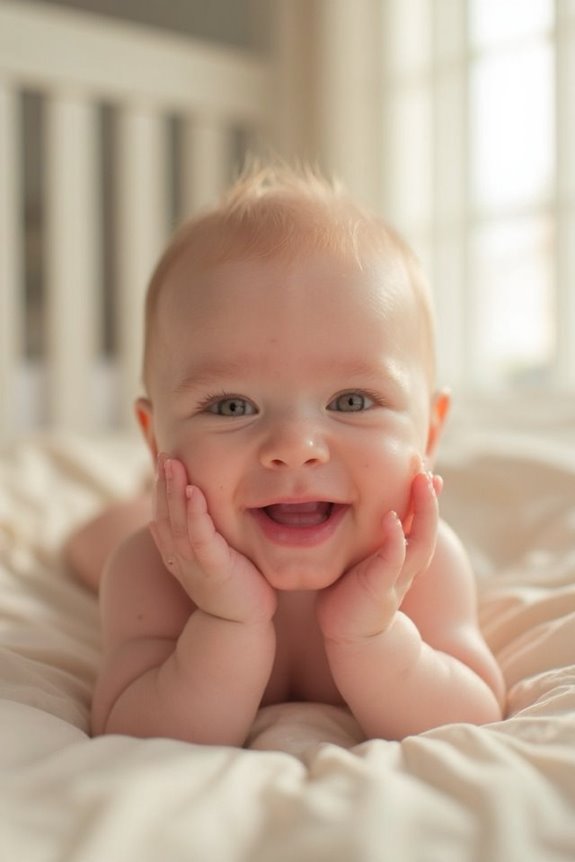
When Do Babies Start Smiling?

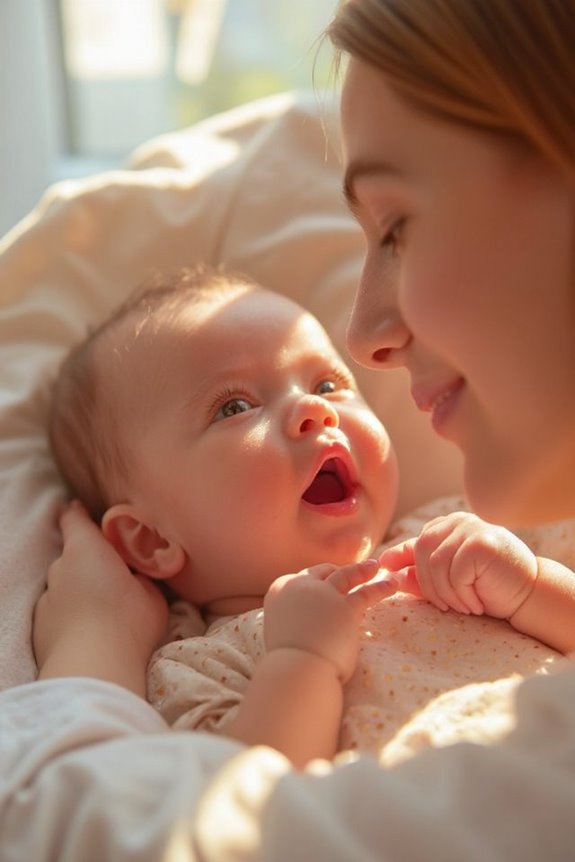
Babies actually smile from birth, but these first smiles are reflexive, often occurring during sleep or randomly. True social smiles—responses to your face or voice—typically emerge between 6-8 weeks of age. This meaningful milestone signals healthy neurological development and emerging social awareness. I recommend face-to-face interaction, animated expressions, and games like peek-a-boo to encourage smiling. If your baby hasn’t shown social smiles by 3 months, consider consulting your pediatrician. The details below will help you distinguish these important developmental stages.
Key Takeaways
- Babies may display reflex smiles from birth, even during sleep, but these aren’t social responses.
- True social smiles typically emerge between 6-8 weeks of age as a response to external stimuli.
- By 2-3 months, most babies develop consistent social smiling, indicating proper neurological development.
- Caregivers can encourage smiling through face-to-face interaction, animated expressions, and responsive play.
- Consult a pediatrician if your baby hasn’t shown social smiles by 3 months of age.
The First Signs of Smiling in Babies

While babies are born with many natural reflexes, smiling is one of the most heartwarming developments parents enthusiastically await. I’ve observed that newborns can display their first smiles shortly after birth, but these are typically reflexive responses rather than social ones.
These early reflexes often occur:
- During sleep
- Without external stimuli
- In response to internal factors like gas
Reflex smiles generally disappear around 2 months after birth, replaced by true social smiles between 6-8 weeks of age. This change marks a significant milestone in your baby’s emotional development.
The emergence of social smiling indicates your baby is beginning to:
- Recognize familiar faces
- Respond to voices
- Interact with their environment
- Develop communication skills
Watch for these changes as they signal healthy neurological progression in your infant.
Recommended Products

SOFT PLAYGROUND: The fun, purple and green colors will add a little pizzazz to any space. Climber features a foam mat is shaped like a butterfly with spots on the wings and a smiling face to further engage the imagination.

Reborn Silicone Baby Dolls Full Body:Our full silicone baby dolls are completely different from the hollow vinyl doll,she is made of high-quality liquid silicone, with ultimate realism and unparalleled softness, feeling like a real baby. The limbs of the full body silicone baby doll are flexible, allowing you to pose her as you like.

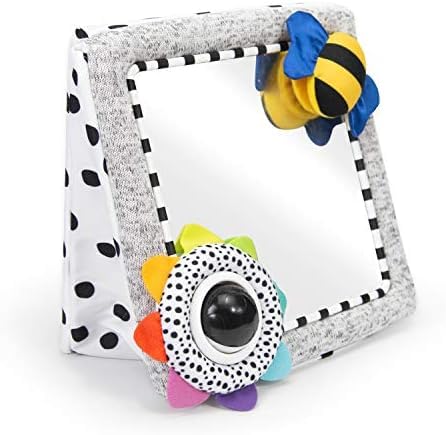
Baby Mirror: 5-sided mirror cube provides endless ways to play as children grow; mirrors spark curiosity and motivate your baby’s visual tracking skills, crawling, and hand-eye coordination
Distinguishing Between Reflex and Social Smiles
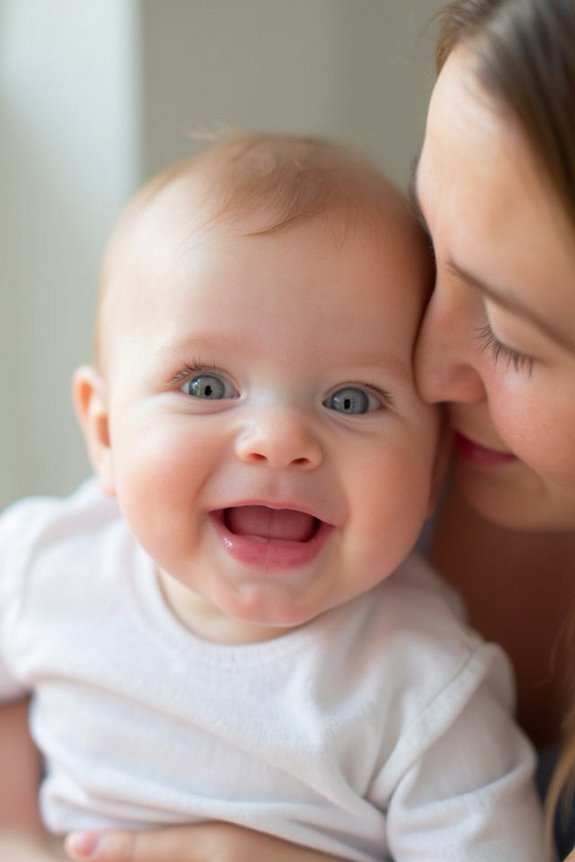
Although both types of smiles may look similar at first glance, reflex and social smiles represent fundamentally different developmental processes in your baby.
Reflex Smile Characteristics:
- Occurs as early as in the womb
- Happens randomly, not in response to external stimuli
- Part of neural development, not communication
Social Smile Characteristics:
- Typically emerges between 6-12 weeks
- Intentionally responds to your face or voice
- Serves as a form of communication and bonding
The key difference lies in purpose and timing. While reflex smiles are involuntary muscle movements, social smiles indicate your baby is developing important interaction skills. By 12 weeks, most infants consistently display social smiles, creating a rewarding feedback loop that strengthens your relationship.
Recommended Products

HOURS OF FUN FOR THE WHOLE FAMILY: Nothing beats the timeless classic of connecting four rings in a row with all your friends and family! With Giantville, we take your favorite game and make it larger than life – standing at over 3.5 feet for adults and children of any age to enjoy!

Make yourself at home in the Red Roof Country Home and discover the exciting world of Calico Critters!

REALISTIC FULL SILICONE BABY DOLL – – Unlike traditional hollow vinyl dolls, this Full Silicone Baby Doll is crafted entirely from premium silicone for an incredibly soft, realistic touch. Measuring 18 inches and weighing approximately 6.1 lbs, this Reborn Baby Doll closely matches the size and weight of a real newborn. Lifelike skin texture, delicate facial features, and naturally flexible limbs create an authentic cuddling experience for children, collectors, and photography lovers.
How to Encourage Your Baby’s First Smile
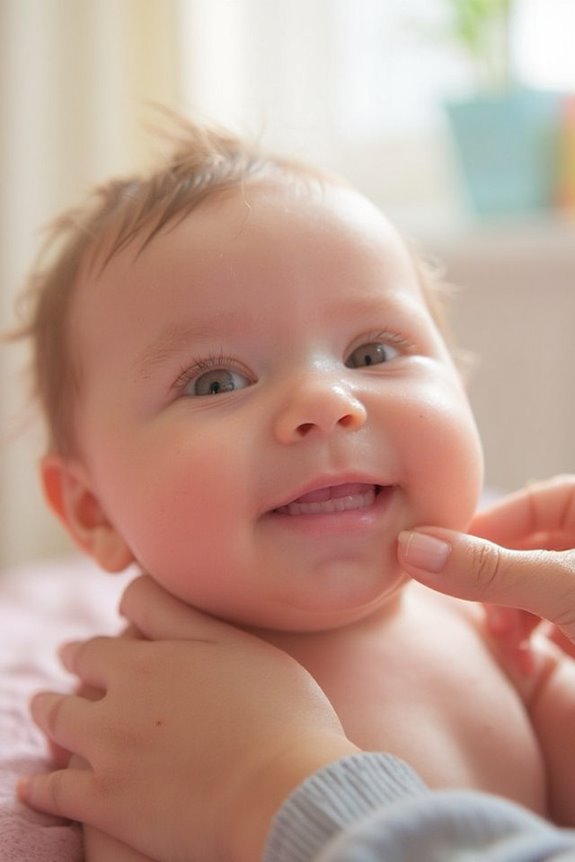
Now that you can recognize the difference between reflex and social smiles, you’ll want to create opportunities for those meaningful first social smiles.
I recommend these evidence-based approaches:
- Face-to-Face Interaction: Maintain eye contact and display animated expressions to encourage baby communication.
- Interactive Play: Games like peek-a-boo stimulate your baby’s senses and often trigger smiles.
- Mirror Time: Show your baby their reflection to spark curiosity and facial responses.
- Sensory Engagement: Use soft sounds, music, and colorful toys to create a positive atmosphere.
- Consistent Response: When your baby does smile, respond enthusiastically to reinforce this behavior.
Remember that patience is essential. By combining regular cuddles, cheerful talking, and responsive interactions, you’ll create an environment where your baby feels secure enough to share those precious smiles.
Recommended Products
![Bedtime Peekaboo! by DK Publishing [DK Preschool, 2006] Board book [Board book]](https://m.media-amazon.com/images/I/31PUG8r6H2L._SL500_.jpg)


Smiling as a Developmental Milestone
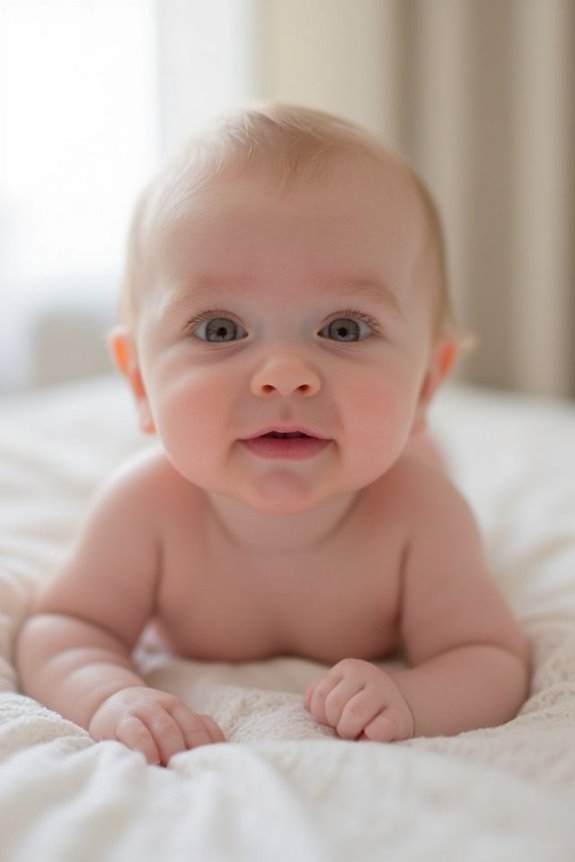
Smiles represent one of the most significant early developmental milestones in your baby’s life. When your baby begins to smile socially around 2-3 months, it signals proper neurological and sensory development.
The smiling significance extends beyond just being cute—it indicates:
- Your baby’s vision is developing, allowing them to focus on faces
- Their nervous system is maturing appropriately
- They’re beginning to integrate sensory information
- Early social cognition is emerging
Emotional bonding is enhanced through these early smiles, strengthening the connection between you and your infant. While reflexive smiles occur from birth, true social smiles by 6-8 weeks show your baby is developing on track.
Remember that premature babies may reach this milestone later, and individual differences are normal in healthy development.
When to Consult Your Pediatrician About Smiling
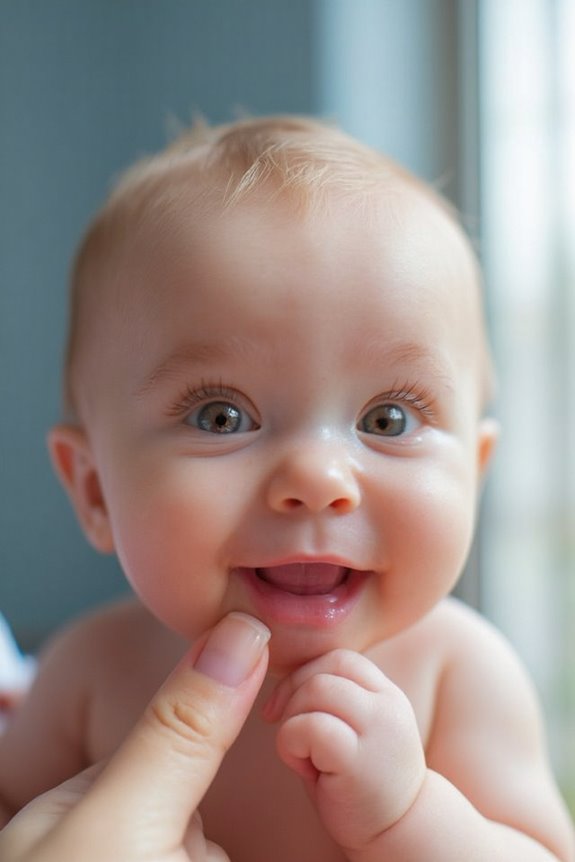
While most babies begin smiling socially between 6-12 weeks, you’ll want to monitor this important milestone and know when professional guidance might be needed.
Concerns Checklist
Consider a pediatric evaluation if:
- Your baby hasn’t smiled socially by 3 months
- Your child avoids eye contact during interactions
- A previously smiling baby stops smiling
- You notice any loss of recently acquired skills
- Your baby doesn’t engage with caregivers through smiling
Remember that babies develop at different rates, but these signs warrant discussion with your doctor. Regular check-ups (at least six times before age one) allow your pediatrician to assess developmental progress and recommend early interventions if needed.
Don’t hesitate to raise concerns—early identification of developmental issues leads to more effective support.
Recommended Products

𝐇𝐎𝐌𝐄 𝐒𝐀𝐅𝐄𝐓𝐘 𝐁𝐀𝐁𝐘 𝐂𝐑𝐘 𝐌𝐎𝐍𝐈𝐓𝐎𝐑𝐈𝐍𝐆: Monitoring your baby’s well-being is a top priority for any parent. The Baby Cry Transmitter from Bellman & Symfon provides a reliable and secure way to stay connected and instantly alerted when your baby needs attention.

【360° View and Intelligent Motion Tracking】The baby monitor built-in wide-angle lens, no longer see only a corner of the crib! With 355°Pan and 140°Tilt, which gives you a 360° view of your baby's surroundings. Baby camera monitor support digital zoom in up to 4x, every detail is within reach. The advanced motion tracking feature adds an extra layer of security by automatically following your baby's movements. (*App ONLY support 2.4GHz WiFi)

Wearable-free baby sleep and breathing monitor: Philips Avent Monitor uses SenseIQ Technology to track sleep & breathing rate*, analyzing millions of pixels per second to spot the tiniest of motions
Frequently Asked Questions
Do Premature Babies Smile Later Than Full-Term Babies?
About 70% of premature infants achieve developmental milestones later than full-term babies. Yes, I’d say they typically smile later, but I measure from their corrected age (around 2 months), not chronological age.
Can Blind Babies Develop Social Smiles?
Yes, I’ve found that blind infants absolutely develop social smiles! They respond to auditory and tactile cues rather than visual ones, demonstrating that social development proceeds through alternative pathways even without visual feedback.
Do Babies Smile More at Certain Family Members?
Yes, babies often smile more at family members they recognize emotionally. I’ve noticed this connection strengthens family bonding, as babies develop preferences for those they interact with most frequently and feel secure around.
How Do Cultural Differences Affect Baby Smiling Patterns?
I’ve found that cultural norms considerably shape babies’ smiling patterns. While the milestone timing remains universal, how often babies smile and in what contexts is influenced by cultural approaches to emotional expression and face-to-face interaction.
Can Excessive Smiling Indicate a Neurological Condition?
Yes, I’ve seen excessive smiling potentially indicate conditions like Angelman Syndrome. While smiling milestones vary, persistent inappropriate smiling should prompt neurological assessments to identify underlying conditions requiring specialized support and intervention.
References
https://www.medicalnewstoday.com/articles/when-do-babies-start-smiling
https://health.clevelandclinic.org/when-do-babies-start-laughing-smiling
https://www.whattoexpect.com/first-year/first-smile/
https://www.healthychildren.org/English/tips-tools/ask-the-pediatrician/Pages/When-do-babies-first-smile.aspx
https://www.childresearch.net/aboutCS/mediscience/31.html
https://www.parents.com/baby/development/laughing/when-do-babies-start-smiling/
https://pathways.org/when-will-my-baby-smile
https://www.innovativeinterventionsnj.com/post/when-do-infants-smile-for-the-first-time
https://raisingchildren.net.au/babies/connecting-communicating/bonding/whats-in-a-smile
https://today.ucsd.edu/story/babies_time_their_smiles_to_make_their_moms_smile_in_return
Recommended Products

360 DEGREE PLAY SET: This 360 degree, indoor soft play set will help toddlers develop their balance and coordination motor skills as they enjoy climbing, crawling, and gliding around the soft play structure
The information below is per-pack only

Premium performance and long-lasting battery: With two 12V rechargeable batteries, this kids bumper car provides 3 hours of non-stop riding fun. Its speedy charging time of 8-12 hours.