As an Amazon Associate, we earn from qualifying purchases. Some links on this site are affiliate links at no extra cost to you. Our recommendations are based on thorough research and editorial judgment.

When Do Babies Start Teething?

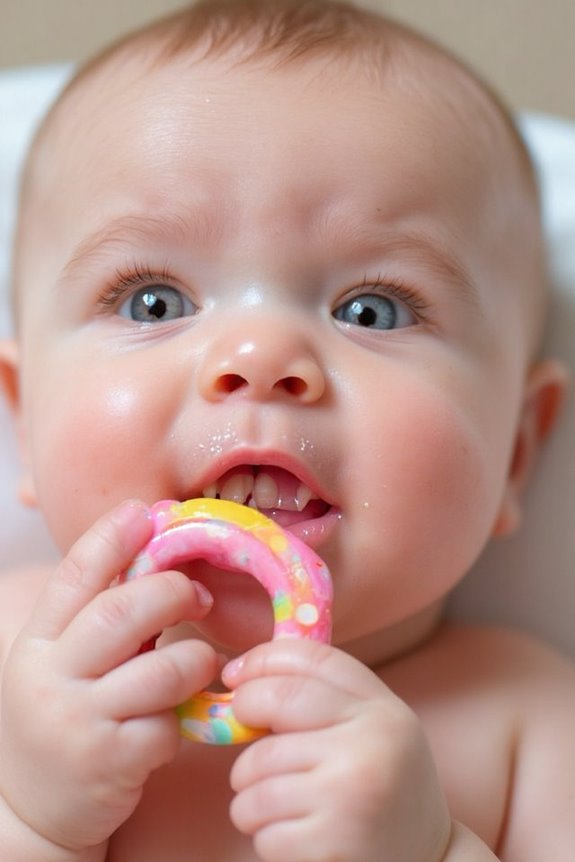
Most babies start teething around 6 months, though some begin as early as 3 months or as late as 12 months. You’ll notice increased drooling, irritability, and a desire to chew on objects when teeth are emerging. The first teeth to appear are typically the lower central incisors, followed by the upper central incisors. If your baby has a fever above 38°C or excessive crying, consult your pediatrician. The complete teething journey continues through age 3.
Key Takeaways
- Most babies begin teething around 6 months of age when their first tooth typically emerges.
- Some babies may start showing teething signs as early as 3 months of age.
- Lower central incisors (bottom front teeth) are usually the first to appear between 6-10 months.
- Upper central incisors (top front teeth) typically emerge between 8-12 months.
- Early teething signs include increased drooling, swollen gums, chewing on objects, fussiness, and sleep disturbances.
The First Signs Your Baby Is Teething
You may be interested
When your baby begins teething, you’ll likely notice several distinctive changes in their behavior and physical appearance. The most common teething symptoms include increased drooling (often causing facial rashes), swollen or tender gums where teeth are emerging, and a strong desire to chew on hard objects.
You may observe your baby:
- Becoming fussier than usual
- Rubbing their cheeks or ears
- Experiencing mild sleep disturbances
- Having changes in eating patterns
I’ve found that many babies also develop a slight temperature increase (below 38°C/100.4°F). Remember that high fevers, diarrhea, and severe symptoms aren’t typical teething symptoms and warrant medical attention.
For immediate relief, try these soothing techniques:
- Chilled (not frozen) teething toys
- Gentle gum massage
- Cold compresses
Recommended Products

HIGH-QUALITY BABY FRUIT/FOOD FEEDERS & TEETHERS: These innovative devices allow your little one to safely try new foods.The soft silicone pouch is designed with tiny holes encouraging for self-feeding, that only ensuring small, digestible pieces are consumed. Our one-piece silicone handle design eliminates choking hazards, offering a safe, worry-free feeding experience.

Safety: Food grade silicone, BPA free, Toxin Free. Easy to clean and disinfect.(WARNING:Adult supervision is required during use at all times. Always inspect product before each use. Discard immediately if any part becomes loose, cracked or broken.)

Water-filled teethers soothe baby’s gums
Common Age Ranges for Tooth Eruption
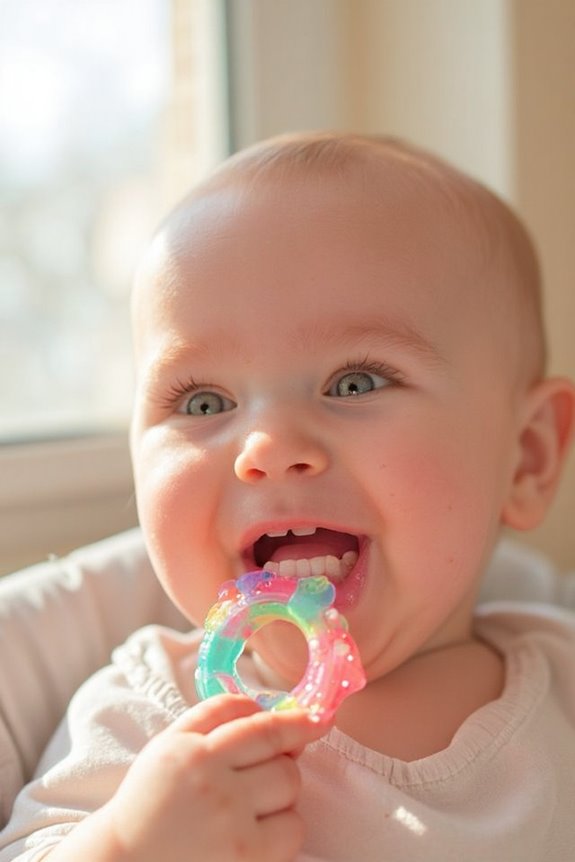
The typical baby develops their first tooth around 6 months of age, though I’ve seen considerable variation in this timeline among infants. Some babies may start teething as early as 3 months, while others might not show signs until their first birthday.
The eruption sequence generally follows this pattern:
- Lower central incisors (6-10 months)
- Upper central incisors (8-12 months)
- Upper/lower first molars (13-19 months)
- Canines (17-23 months)
Despite popular teething myths suggesting fever or diarrhea are normal symptoms, these actually warrant medical attention. For safe teething remedies, I recommend:
- Cold (not frozen) teething rings
- Gentle gum massage with clean fingers
- Soft, refrigerated washcloths
The Complete Baby Teeth Timeline
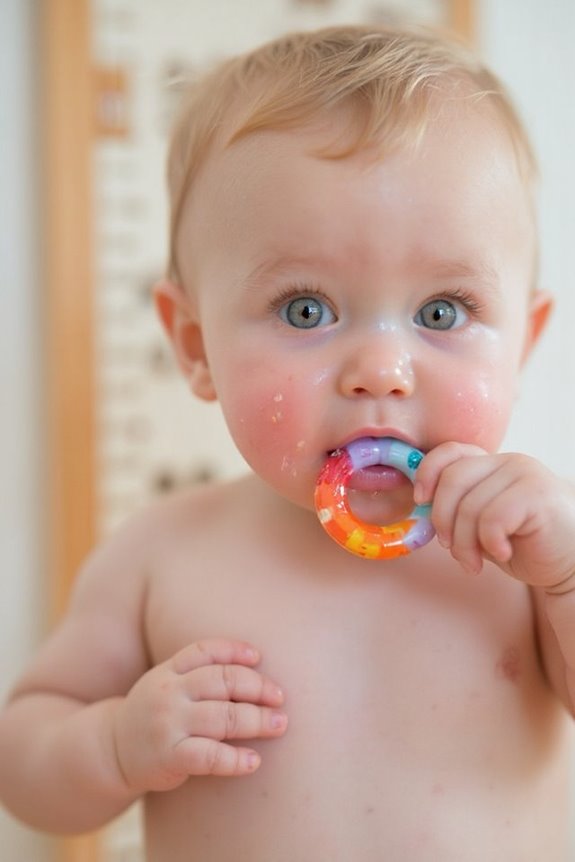
Although many parents expect teething to begin around 6 months, your baby’s dental journey actually starts long before their first tooth emerges. Those tiny teeth begin forming in the womb, with a full set of 20 primary teeth already developed in the jawbone at birth.
Key teething milestones typically follow this pattern:
- 6-10 months: Lower and upper central incisors appear
- 10-16 months: Lateral incisors emerge
- 13-19 months: First molars erupt
- 16-23 months: Canines break through
- 23-33 months: Second molars complete the set
Tooth eruption timing varies greatly between children. While some babies show signs of teething as early as 3 months, others may not get their first tooth until after 12 months. Most children have all 20 primary teeth by age 3.
Recommended Products

Colorful Baby Teething Toys: The Haakaa Silicone Baby Teether Set includes a colorful palm-shaped baby teether and a ferris wheel-shaped teether ring. Their bright colors and unique shapes easily capture your little one’s interest and attention!

🍼【10-Piece Baby Rattles & Teethers Set】 This premium 10 baby toys set includes a variety of soft silicone teethers and gentle bell rattles. Designed to engage your baby’s senses (touch, sound, sight). Different shapes (rings, animals, easy-grip handles) help develop fine motor skills and hand-eye coordination for 0-3-6-12 months infants.
Managing Teething Discomfort and Pain
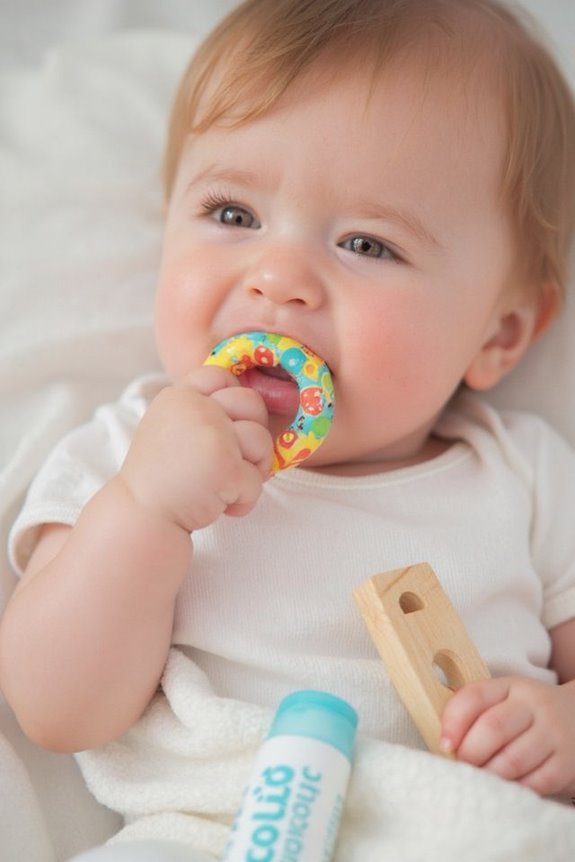
Watching your baby struggle with teething pain can be heartbreaking, yet there are many effective ways to provide relief during this challenging developmental stage.
Effective teething remedies include:
- Gently massaging your baby’s gums with a clean finger
- Offering chilled (not frozen) teething rings or cold spoons
- Providing refrigerated washcloths for gnawing
- Using acetaminophen-based medications like Infants’ TYLENOL when appropriate
Soothing techniques that help manage discomfort:
- Giving warm baths to relax your distressed baby
- Maintaining consistent sleep routines
- Providing extra comfort and cuddles
- Offering chilled foods for babies who are eating solids
Always supervise your baby with teething aids to prevent choking hazards, and seek medical advice if symptoms persist or worsen.
Recommended Products

Safe & Healthy Teether for Babies 3-6 Months:Say goodbye to worries and hello to safe and healthy playtime! Our baby teething toys are made of high-quality 100% food-grade silicone materials that are PVC-free, lead-free, BPA-free, and latex-free, meet US and EU Toys Standard, baby girl boy newborn safe essentials. Plus, they're soft, pliable, and odor-free, making them perfect for babies 3 6 10 12 18 months old

Innovative Cooling Relief: The Nippii freezable teething pacifier delivers soothing comfort for teething babies with a unique cooling effect that lasts up to 30 minutes. This freezer pacifier design ensures your baby’s gums are soothed without chilling the cheeks, face, or hands, so cooling relief stays exactly where your baby needs it.

Comforts growing babies as they develop
Normal vs. Concerning Teething Symptoms
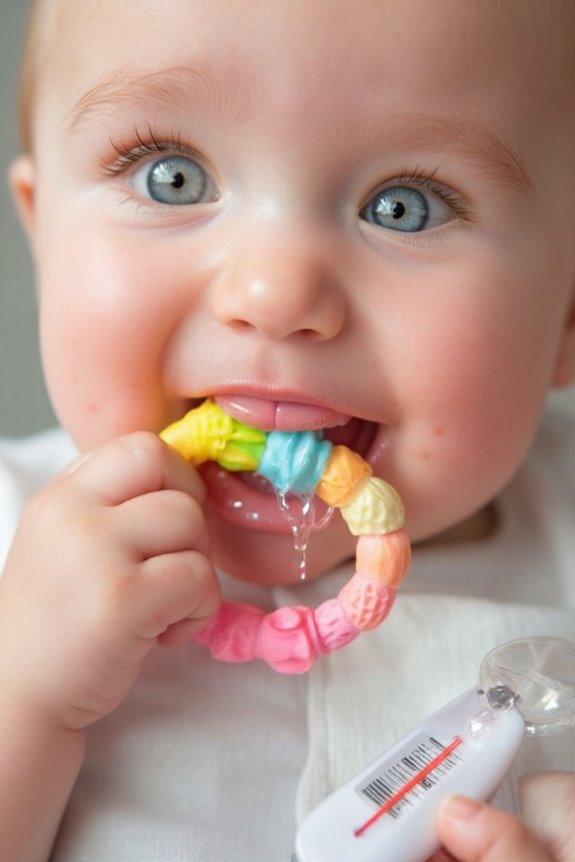
While you’re managing your baby’s teething discomfort, it’s important to recognize which symptoms are normal parts of the process and which might signal something else entirely.
Many teething myths persist about what’s normal during this developmental stage. Let’s clarify with a symptom comparison:
Normal teething signs:
- Increased drooling and facial rash
- Chewing on objects
- Sore, tender gums
- Mild irritability
- Slight temperature increase (not a true fever)
Concerning symptoms requiring medical attention:
- Fever above 38°C
- Diarrhea
- Persistent diaper rash
- Runny nose
- Excessive crying that can’t be soothed
If your baby experiences any concerning symptoms, don’t automatically attribute them to teething. Contact your healthcare provider to rule out other potential causes.
Recommended Products
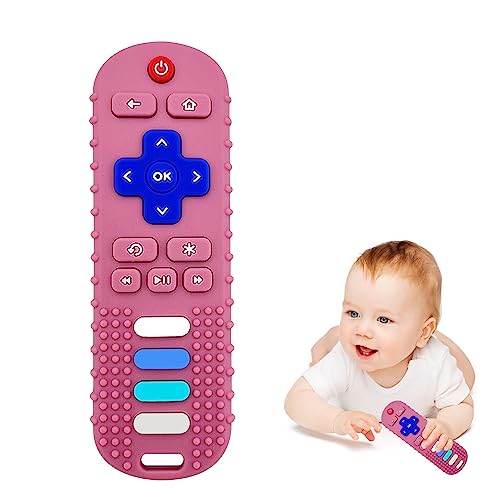
[Peace in Mind]: Our cute baby teething toys are made of food-grade silicone, non-toxic and BPA free. The soft and elastic material reduces the risk of oral injuries and is completely safe for infants, toddlers and newborns, suitable for 0-6 months and 6-12 months old babies. No need to worry about any safety problem. The silicone toddler teething toy is durable, yet soft on your baby's tender gums.

3-STAGE TEETHER SET: Includes three teethers designed to support babies while providing soothing comfort during teething; For babies 3+ months

Unique Apple Shape Design – Easy to Grip: The Apple inspired shape is not only adorable but also ergonomic, making it easy for tiny hands to hold. There are different textures surfaces provide different chewing sensations to soothe sore gums.
The Science Behind Tooth Development
Before your baby’s first tooth even breaks through the gums, an incredible developmental process has been underway for months. This journey begins around 6-8 weeks into pregnancy when soft tissues start forming, followed by hard tissue development after 3-4 months.
Tooth development follows a predictable pattern:
- Enamel forms during fetal development
- Dentin develops beneath the enamel
- Roots continue developing as teeth erupt
Both genetic factors and nutritional influence play significant roles in this process. Your baby’s tooth development timeline is largely predetermined by genetics, while adequate nutrition during pregnancy supports proper formation. Environmental elements like fluoride exposure can affect tooth hardening.
Understanding this developmental process helps explain why teeth emerge in a specific sequence—typically starting with lower central incisors around 6 months of age.
Caring for Your Baby’s New Teeth
Now that your baby’s first teeth are beginning to emerge, proper care becomes a central focus for maintaining their oral health. Even these tiny new teeth require regular attention for proper teething hygiene.
Start by:
- Gently wiping teeth with a clean, damp washcloth once daily
- Using a soft infant toothbrush when multiple teeth appear
- Avoiding toothpaste until your pediatrician recommends it
For tooth care during teething discomfort:
- Massage gums with a clean finger for about two minutes
- Offer chilled (not frozen) teething rings filled with distilled water
- Consider soft mesh feeders with chilled fruit for older babies
Remember that oral care habits established now create a foundation for lifelong dental health. Monitor new teeth regularly and schedule your baby’s first dental visit by their first birthday.
Recommended Products

BABY’S FIRST TOOTHBRUSH AND TOOTHPASTE. Safely clean baby’s first teeth and gums - just add a pea-sized drop of toothpaste to the toothbrush and use small circular motions to clean.

TWO TRAINING TOOTHBRUSHES SET: Complete infant to toddler oral care solution includes two baby toothbrushes for different developmental stages; start healthy dental habits and tooth brushing routines as early as 6 months.
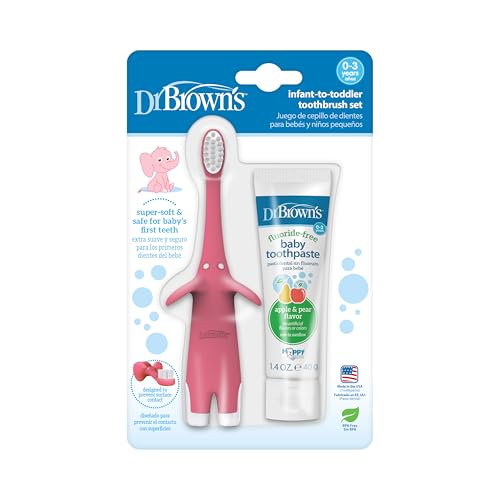
BABY'S FIRST TOOTHBRUSH AND TOOTHPASTE. Safely clean baby's first teeth and gums - just add a pea-sized drop of toothpaste to the toothbrush and use small circular motions to clean.
Frequently Asked Questions
Can Teething Cause Diaper Rash or Diarrhea?
I’ve seen many parents confused about this! Teething itself doesn’t directly cause diaper rash, but excess drooling (a common teething symptom) can lead to looser stools. Proper diaper care becomes extra important during this challenging phase.
Is Early or Late Teething Linked to Developmental Issues?
I’ve seen no significant evidence linking early or late teething to developmental delays. Teething milestones vary widely among babies, and research shows no direct correlation between tooth eruption timing and other developmental issues.
Can Thumb-Sucking Affect Teething or Tooth Alignment?
Yes, I’m concerned about thumb sucking effects on your child’s teeth. While occasional sucking is harmless, persistent habits beyond age 4 can cause alignment concerns including open bites and protruding front teeth.
Do Pacifiers Help or Hinder the Teething Process?
My niece found relief with silicone pacifiers during teething. I’ve seen that pacifiers can help as a soothing technique when babies are uncomfortable, but they shouldn’t be used long-term to avoid dental alignment issues.
Are There Genetic Factors That Influence When Teething Begins?
Yes, teething genetics definitely play a role in when your baby’s first teeth appear. I’ve seen research showing family history is a strong predictor of whether your little one will be an early or late teether.
References
https://www.pampers.com/en-us/baby/teething/article/baby-teeth-chart
https://www.orajelkids.com/en/resources/teething-chart-see-when-your-babys-teeth-will-come-in
https://www.medicalnewstoday.com/articles/baby-teeth-chart
https://www.healthychildren.org/English/ages-stages/baby/teething-tooth-care/Pages/Babys-First-Tooth-Facts-Parents-Should-Know.aspx
https://www.colgate.com/en-sa/oral-health/infant-oral-care/baby-teething-timeline
https://www.seattlechildrens.org/conditions/a-z/teething/
https://www.webmd.com/parenting/baby/teething-symptoms-remedies
https://www.nhs.uk/baby/babys-development/teething/baby-teething-symptoms/
https://my.clevelandclinic.org/health/articles/11179-teething-teething-syndrome
https://www.whattoexpect.com/first-year/teething/