As an Amazon Associate, we earn from qualifying purchases. Some links on this site are affiliate links at no extra cost to you. Our recommendations are based on thorough research and editorial judgment.


When Do Babies Get Their Molars?

Babies typically get their first molars between 13-19 months for upper teeth and 14-18 months for lower teeth. Second molars usually emerge between 25-33 months (upper) and 23-31 months (lower). Most children have all their primary molars by age 3, though timing can vary by 4-6 months in either direction depending on genetics and overall health. Watch for signs like swollen gums, increased drooling, and chewing behaviors. The complete journey from first tooth to final molars reveals fascinating developmental milestones.
Key Takeaways
- First upper molars emerge between 13-19 months, while first lower molars appear around 14-18 months.
- Second upper molars typically erupt between 25-33 months of age.
- Second lower molars usually emerge between 23-31 months of age.
- Most children have all their primary molars by age 3.
- Timing can vary by 4-6 months earlier or later, depending on genetics and overall health.
The Important Role of Baby Molars in Development
You may be interested

While many parents focus on those first adorable front teeth, I can’t emphasize enough how vital baby molars are to your child’s overall development. The molar importance extends far beyond simple chewing.
These powerful back teeth greatly impact:
- Nutrition – Molars break down solid foods properly, supporting nutrient absorption and healthy growth
- Speech development – Proper tooth alignment helps with clear articulation
- Facial structure – Molars guide jaw development and maintain proper spacing
- Future teeth – They create pathways for permanent teeth, reducing orthodontic issues
The developmental impact of baby molars is profound. When these teeth are healthy and properly maintained, they contribute to balanced nutrition, clear speech patterns, and proper facial development—all essential foundations for your child’s health.
Timeline for Upper Molar Eruption
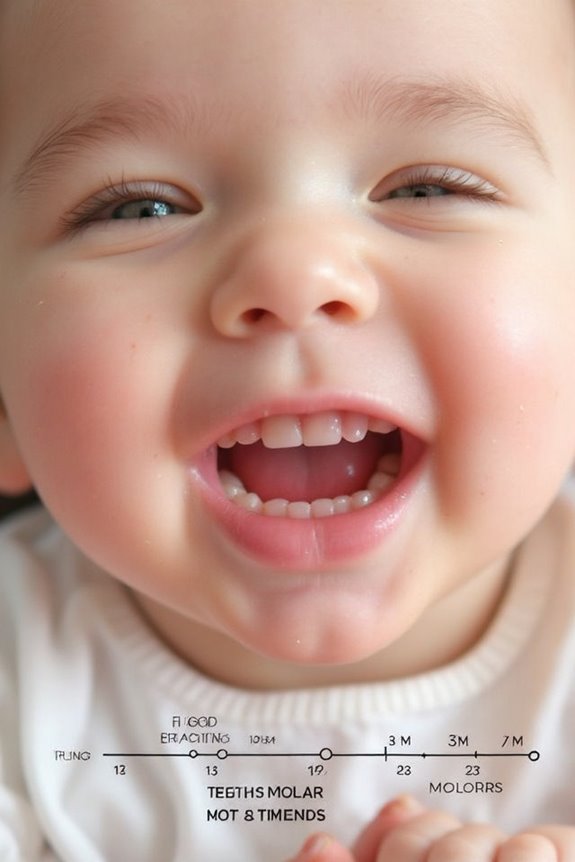
Now that we’ve established why baby molars matter so much, let’s look at when those upper molars actually appear. The molar eruption follows a predictable development sequence:
- First upper molars typically emerge between 13-19 months
- Second upper molars usually appear between 25-33 months, around your child’s second birthday
Most children will have all their primary upper molars by age 3, though individual timing varies by 4-6 months in either direction. These molars emerge after the incisors and before or alongside the canines.
Watch for signs like:
- Increased drooling
- Irritability or fussiness
- Gum swelling where molars will emerge
- Disrupted sleep patterns
If your child’s molars don’t appear within the expected timeframe, consult your pediatric dentist for evaluation.
When to Expect Lower Molars to Appear
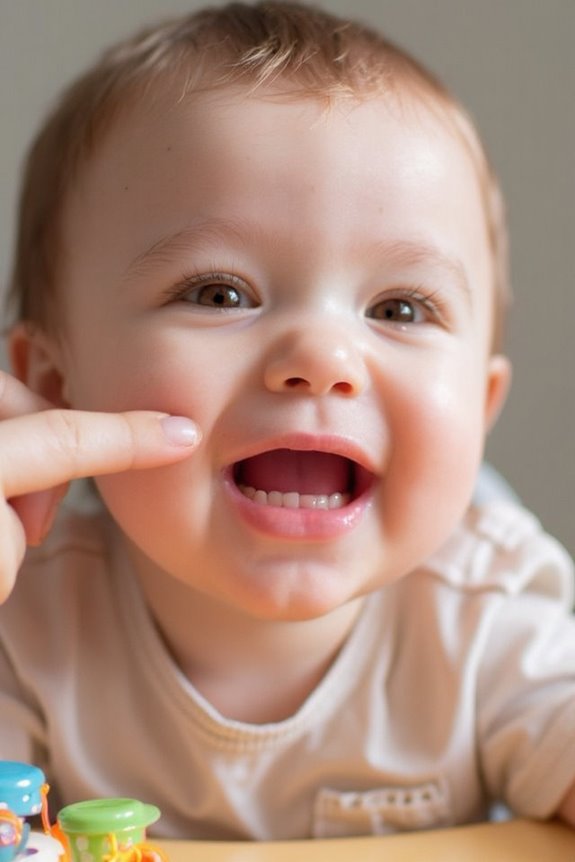
The journey of lower molar eruption follows a predictable pattern, though every baby’s timeline varies slightly. Most infants will get their lower first molars between 14 to 18 months of age, followed by second molars from 23 to 31 months.
These significant teeth appear after the lower incisors (which emerge from 6 to 16 months) but before all permanent teeth. Remember that:
- Genetic factors can shift eruption timing by several months
- Teething symptoms often include irritability, drooling, and sore gums
- First molars emerge before canines (17-23 months)
- Second molars are among the last primary teeth to appear
I recommend monitoring your child’s dental development with regular checkups, as proper molar eruption plays an essential role in jawbone development and future dental health.
Signs Your Baby Is Teething Their Molars
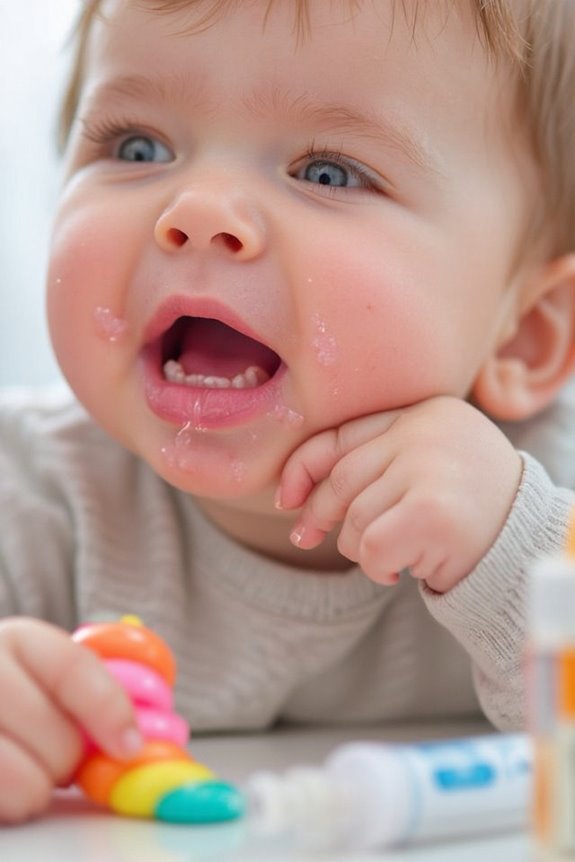
Recognizing when your baby’s molars are coming in can help you prepare for potential discomfort and behavioral changes. While teething symptoms vary between babies, there are several common indicators to watch for:
- Increased irritability and fussiness
- Swollen, tender gums where molars emerge
- Excessive drooling, which may cause facial rash
- Chewing on objects, fingers, or toys
- Sleep disturbances or frequent night waking
- Cheek rubbing or ear pulling due to referred pain
It’s important to note that teething doesn’t cause high fevers, diarrhea, or runny noses. If these symptoms occur, consult your pediatrician as they likely indicate a different condition.
For pain relief, consider:
- Cold teething toys
- Gentle gum massage
- Approved oral gels
- Cold washcloth for chewing
Recommended Products

Instant Oral Relief for Teething Babies - Designed to soothe tender gums, Bebecan’s silicone teething sticks provide gentle comfort during every stage of teething, helping calm fussiness naturally

Safe Material: The teethers for babies 18 months, made of the highest quality soft 100% food grade BPA free silicone. CPSC certified laboratory tested

SILICONE BABY TEETHING TOY: Thoughtfully designed with a room-temperature silicone handle that prevents baby's hands from getting cold while chewing, allowing for extended teething sessions without discomfort. The easy-grip ergonomic shape is perfectly sized for little hands and promotes independent use during teething pain
Easing Discomfort During Molar Eruption
While your baby’s molars emerge, you’ll likely need several strategies to help manage their discomfort effectively. Teething remedies like cold compresses can reduce swelling, while gently massaging the gums may provide relief.
Try these soothing techniques:
- Apply cold items to numb the area—refrigerated (not frozen) teething toys work well
- Offer soft, cold foods such as yogurt or applesauce
- Use age-appropriate oral gels sparingly according to package instructions
Maintain a consistent sleep schedule and create a calm environment to help your child rest. Consider silicone teething toys, which can be safely chilled for added relief.
If your child experiences severe pain, consult a pediatric dentist for professional guidance. Regular dental check-ups will guarantee proper tooth development during this challenging phase.
Recommended Products

★ Perfect Size To Hold -Our hand-held sensory toys for kids with autism are very easy to hold. Your children can hold the P shape style baby teething relief teething sticks for babies tightly through the round hole of the middle chewies for kids sensory, and make the sensory chewy toys become no drop autism sensory toys .

Water-filled teethers soothe baby’s gums

ULTIMATE TEETHING RELIEF: The Ritzy Teether’s innovative design features textured, hollow tubes that flex and collapse, providing soothing teething relief to sore gums. It easily reaches front teeth and back molars, ensuring comprehensive comfort for your little one.
Genetic and Environmental Factors Affecting Molar Timing
Babies’ molar eruption timing varies considerably due to a complex interplay of genetic and environmental factors. The genetic influence is evident in family patterns—children often follow their parents’ teething timeline. If you noticed your molars came in early, your child might experience the same.
Environmental impact is equally significant:
- Nutrition: Vitamin and mineral deficiencies can delay eruption
- Prenatal conditions: Exposure to toxins during pregnancy affects dental development
- Birth order: Firstborns typically get molars later than younger siblings
Other factors affecting timing include:
- Socioeconomic status and healthcare access
- Overall health conditions
- Individual developmental pace
Understanding these variables helps explain why some babies get their first molars as early as 13 months while others may wait until 19 months or later.
Essential Dental Care for New Molars
The arrival of your baby’s first molars marks an essential time to establish proper dental care routines. These back teeth have more grooves and surfaces where food can become trapped, making proper molar hygiene crucial.
For effective care:
- Use a soft-bristled toothbrush designed for babies
- Apply a rice-sized amount of fluoride toothpaste
- Clean twice daily, focusing on all surfaces
- Schedule dental check-ups by your child’s first birthday
I recommend starting dental visits when the first tooth appears, but no later than age one. Regular dental check-ups allow for early detection of potential issues. Remember that molars need extra attention due to their position and crevices. Maintaining proper cleaning techniques during this stage sets the foundation for lifelong dental health.
Recommended Products

BABY’S FIRST TOOTHBRUSH AND TOOTHPASTE. Safely clean baby’s first teeth and gums - just add a pea-sized drop of toothpaste to the toothbrush and use small circular motions to clean.

TRAINING TOOTHBRUSH. Sized just right for small mouths and little fingers to help baby build the skills they need to reach independent brushing.

SAFETY DESIGN: This flexible, soft training toothbrush helps prevent severe mouth injuries from falling accidents and peel handles prevent accidental swallowing.
Nutrition Tips to Support Healthy Molar Development
Proper nutrition serves as the foundation for your baby’s healthy molar development. The right nutritional sources can greatly impact when and how your child’s molars erupt.
Key dietary recommendations include:
- Calcium-rich foods like dairy products and leafy greens
- Vitamin D from sunlight exposure or supplements
- Foods high in vitamin K and phosphorus
- Protein-rich options to support overall growth
I recommend incorporating a variety of beneficial foods such as:
- Fortified cereals and juices
- Fatty fish containing omega-3 fatty acids
- Nuts and seeds (for older babies without choking risk)
For infants with restricted diets, appropriate supplements may be necessary. Calcium and vitamin D supplements are particularly important if your child has dietary limitations or deficiencies that might affect tooth development.
Recommended Products

STRONG BONES & TEETH – 130mg Calcium with Vitamins D3 (200IU) and K2 (MK-7) in every 5mL serving helps promote healthy bone growth and tooth development for babies and toddlers.

VITAMIN-D SUPPLEMENT FOR BABIES: Contains daily recommended value of Vitamin D for breastfed infants 0 months and up. Exposure to heat or sunlight may lead to melting/damage of product. Hence customers are expected to be available during the product delivery

ESSENTIAL NUTRIENTS - Our Liquid Calcium Stick Packs provide calcium, magnesium, Vitamin D3, & K2 to support healthy teeth and bone growth and development in toddlers and children*
From Baby Teeth to Permanent Molars: The Complete Journey
While nutrition lays the groundwork for your baby’s oral health, understanding the complete journey from baby molars to permanent ones helps you anticipate what’s ahead.
Your child’s molar anatomy is specialized for grinding food, with primary molars appearing between 13-33 months. These baby molars hold space for future permanent teeth and guide proper eruption sequence.
The progression begins around age 6-7 when:
- First permanent molars emerge behind existing baby teeth
- Primary molars gradually loosen and fall out (ages 10-12)
- Premolars replace primary molars
- Second permanent molars arrive (ages 11-13)
This carefully orchestrated process typically concludes by age 21, though wisdom teeth may not develop in everyone. Individual timing varies based on genetics and overall health.
Frequently Asked Questions
Recommended Products

BABY TEETHING TOY FOR 3+ MONTHS: Our Nuby Tube Teether baby teether toy soothes your little one's discomfort and assists in the emergence of teeth

【FOOD GRADE SAFETY】Hollow teether tubes are made of 100 food grade silicone, BPA Free, PVC Free, Phthalates free refrigerator and freezer safe . Soft baby teether toys safe for your baby's health.

EASY-GRIP DESIGN: This teething toy is crafted to align with your little one's natural grip reflex, making holding the teething straw a breeze for tiny hands. For ages 3 months and up, it's designed to grow with your baby through every teething milestone!
Can Molars Come in Before Front Teeth in Some Babies?
Like fish swimming against the tide, molars rarely appear before front teeth. I’ve found tooth eruption typically follows a predictable pattern. While some variations exist, molars timing almost always occurs after incisors have made their debut.
Do Premature Babies Get Their Molars Later Than Full-Term Babies?
I’ll typically see premature teeth and baby milestones occur on similar timelines when using adjusted age. For premature babies, I generally track their molar development based on their conceptual age, not birth date.
Can Medications Affect When Babies Get Their Molars?
During the “joy journey” of teething, I’d note that certain medication types might influence timing. While research is limited, some teething remedies or health medications could potentially impact molar eruption, though individual variability is common.
Are Molars More Painful During Eruption Than Other Teeth?
I believe molar eruption can cause more teething discomfort than other teeth due to their larger size and location. Many parents report increased fussiness, though pain experiences vary greatly among babies.
Can Thumb-Sucking Affect Molar Development or Alignment?
Based on my expertise, thumb sucking primarily affects front teeth, but can indirectly impact molar alignment. The overall dental arch narrowing from thumb sucking effects can create alignment issues throughout the entire mouth, including your child’s developing molars.