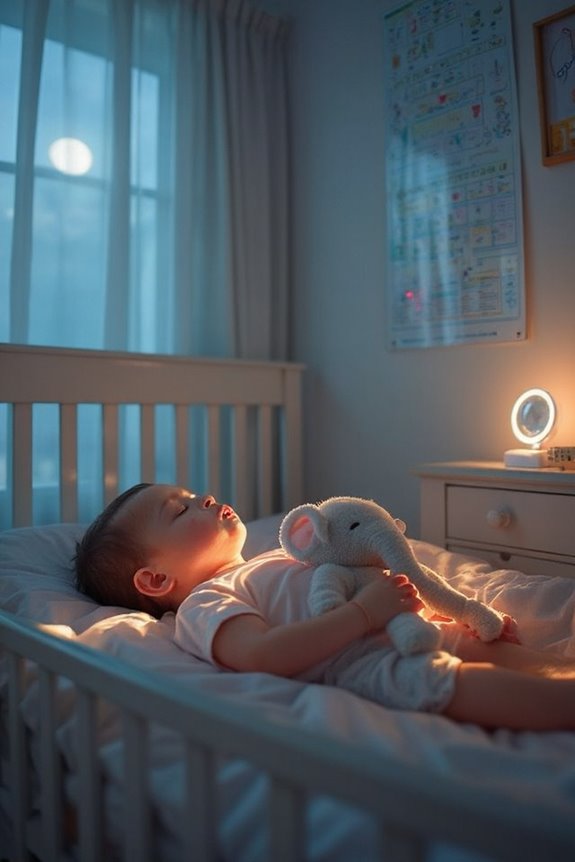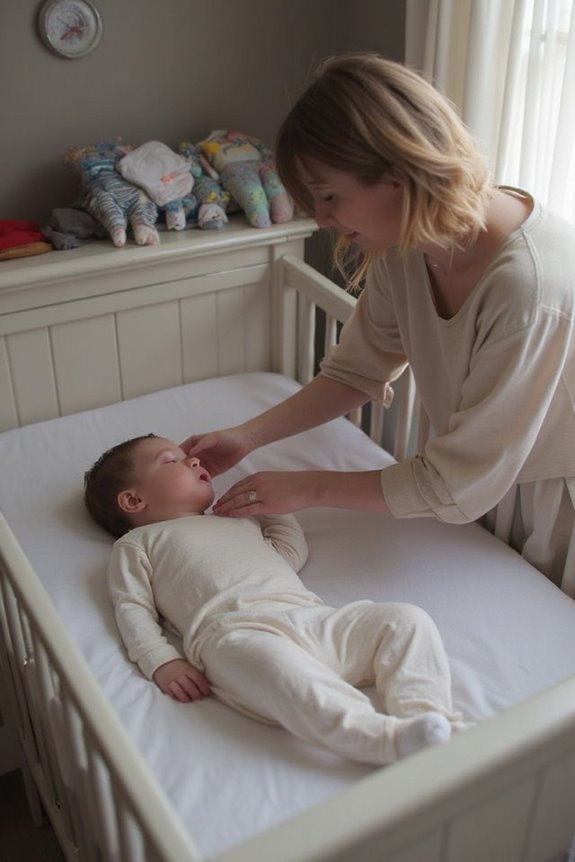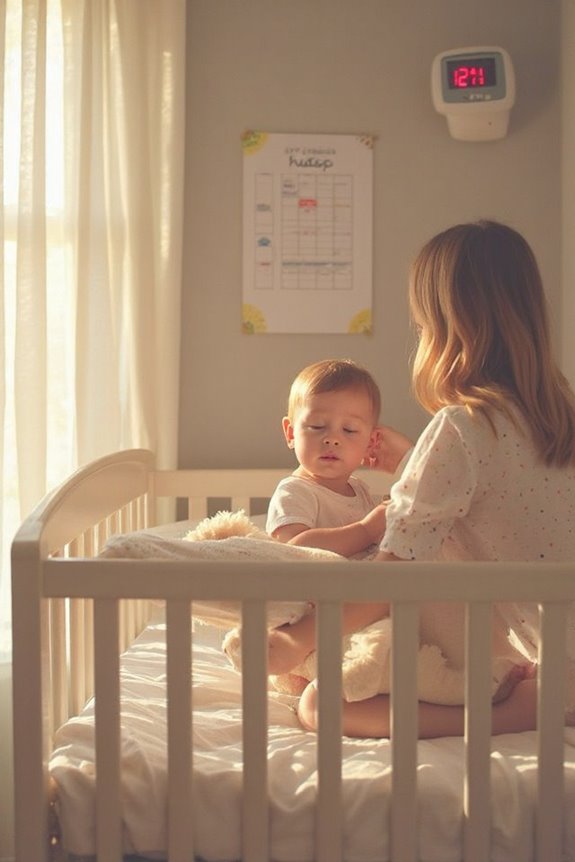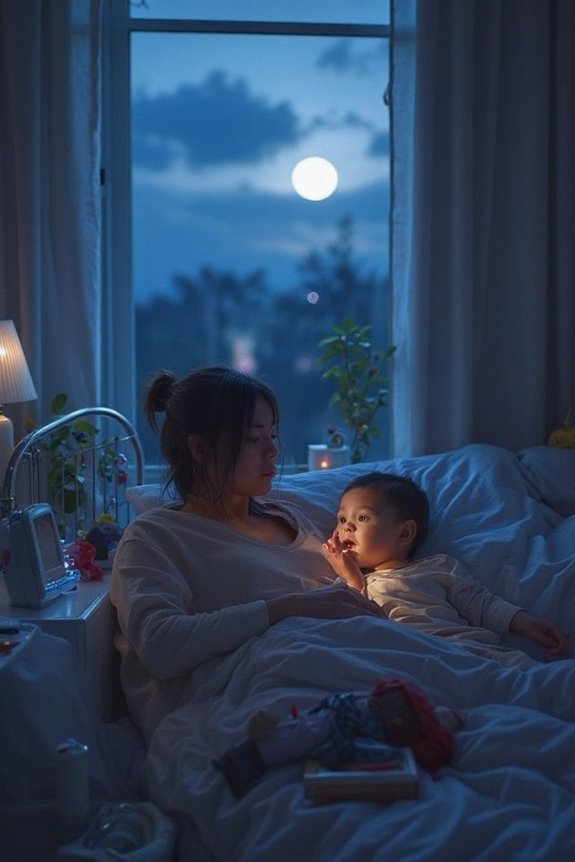


Babies typically begin developing self-soothing abilities between 3-6 months as their neurological systems mature and sleep cycles link together. I’ll see signs like hand-sucking, longer sleep periods, and brief pauses after waking before crying. To encourage this skill, I should establish consistent bedtime routines, put my baby down drowsy but awake, and gradually reduce my interventions during night wakings. These techniques align with natural developmental milestones for better sleep quality. The following sections explore specific methods that work for different temperaments.
Key Takeaways
- Most babies begin developing self-soothing abilities between 3 and 6 months of age.
- Self-soothing development coincides with neurological maturation and emerging sleep cycle patterns.
- Signs of readiness include hand-sucking, longer sleep periods, and brief pauses before crying.
- Placing babies down drowsy but awake helps them practice falling asleep independently.
- By 12 months, many infants have established solid self-soothing capabilities.
Understanding Self-Soothing in Infants
You may be interested

While many parents enthusiastically anticipate their baby’s first smile or first steps, the development of self-soothing abilities marks an equally vital milestone in an infant’s growth. Self-soothing refers to a baby’s capacity to fall asleep or return to sleep with minimal assistance.
Research shows that babies who develop self-soothing techniques often experience:
- Better sleep quality
- Longer consolidated sleep periods
- More time in quiet sleep associated with maturation
Parental influence plays an essential role in this development. I’ve found that consistency in bedtime routines greatly promotes self-soothing behaviors. Studies confirm that infants consistently placed in their cribs while still awake are more likely to develop these important skills.
The environment matters too—crib location and sleep aids can greatly impact how effectively your baby learns to self-regulate.
Developmental Timeline: When Babies Begin to Self-Soothe
Now that we recognize what self-soothing is, let’s look at when these important skills typically emerge in babies. The self-soothing timeline typically begins between 3 and 6 months of age, aligning with several other aspects of infant development.
This developmental window coincides with:
- Maturing neurological systems
- Emerging ability to link sleep cycles
- Development of circadian rhythms
Babies who demonstrate more quiet sleep tend to be neurologically more mature and often develop self-soothing skills earlier. By around 12 months, many infants who have been given opportunities to practice self-regulation have established solid self-soothing capabilities.
Remember that each baby develops at their own pace, and these timelines represent averages rather than strict deadlines for your child’s development.
Signs Your Baby Is Ready to Self-Soothe
Recognizing when your baby is ready to self-soothe can help you support this significant developmental milestone at the right time. Most babies show readiness between 3-6 months as their circadian rhythms develop.
Watch for these key indicators:
- Using self-soothing techniques like sucking hands or gentle rocking
- Longer sleep periods with fewer night wakings
- Pausing briefly after waking before crying
- Calmer behavior in stimulating environments
- Improved emotional regulation (calming down after being upset)
- Less dependence on you to fall asleep
Your baby’s environment also plays a vital role. A consistent bedtime routine and calm sleep space help promote self-soothing skills. When your baby can settle while drowsy but awake, it’s a strong sign they’re developing the neurological maturity needed for this skill.

[Soft Llama Lovey] The llama security blanket can help baby fall back to sleep quickly or feel safe regardless of where they are. Essential for every babies

COMFORTABLE SHIELD - These cute pacifiers for toddlers are fun and functional The curved shield with openings keeps older babies comfortable and allow skin to breathe

SOOTHER BLANKET: Help your baby to self soothe with a pacifier holder security blanket that’s sized just right for infants. A comfy friend & blankie all in one will give little ones the warm fuzzies.
Effective Methods to Encourage Self-Soothing
Once your baby shows signs of readiness for self-soothing, you’ll need a toolkit of effective approaches to help them develop this essential skill. I recommend starting with consistent sleep routines that incorporate recognizable sleep cues like baths, stories, or lullabies at the same time each night.
Implement these proven soothing techniques:
- Place your baby down drowsy but awake
- Use white noise to mimic womb sounds
- Offer pacifiers for comfort sucking
- Swaddle until rolling begins
- Gradually reduce your intervention during night wakings
During the day, allow brief periods of independent play to practice self-regulation. When night wakings occur, wait briefly before responding to give your baby a chance to self-settle. Remember that consistency is vital—maintain your approach across multiple nights to reinforce learning.

[ Plug In & Cable Connection ]: Use the white noise sound machine with the cord or plug it straight into the wall—whichever fits your space. Perfect for your nightstand, bedroom, nursery, or even travel. No extra wires, no hassle. Just plug in and relax.
![Jaroco Portable Baby Sound Machine [White Noise for Babies Kids Adults][Sleep Soother][12 Soothing Sounds] 15 Hours Battery Life, Registry Gift,Shower,Clips on Baby Stroller Rose](https://m.media-amazon.com/images/I/31eaxKIg4xL._SL500_.jpg)
White noise on the go: Portable sound machine with 12 kinds of the most soothing white noise can carry everywhere. Sounds including: White Noise, Hush, Heartbeat, Ocean and more.

[AI Smart Noise Canceling, Sleeps All Night] Say goodbye to peaceful sleep interrupted by sudden noises. The Qobayleo white noise machine for babies features a 5th-gen AI smart noise-canceling chip that performs 1000 surrounding audio analyses per second, generating a precise 40dB balanced sound field in real-time. This baby sleep sound machine intelligently identifies and neutralizes 100+ common disruptive sounds like doorbells, barking dogs, and street traffic, building a stable sound protection haven for your baby, allowing the whole family to enjoy truly restful all-night rest.
The Connection Between Self-Soothing and Sleep Quality
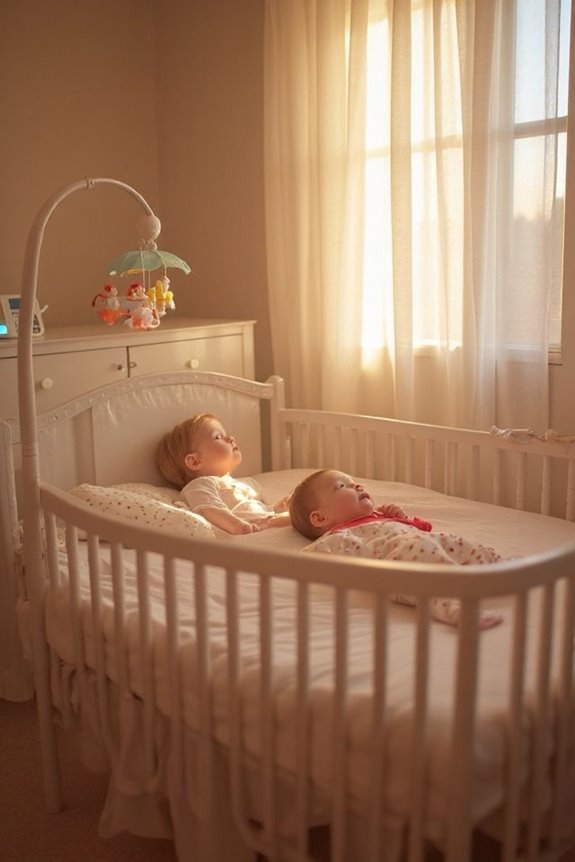
The benefits of teaching your baby to self-soothe extend far beyond simply getting them to fall asleep independently. Research shows that self-soothers experience better sleep consolidation, with longer uninterrupted sleep periods compared to babies who haven’t developed this skill.
When examining sleep patterns, self-soothing babies:
- Spend more time in quiet sleep
- Experience higher quality rest overall
- Wake up just as frequently as non-self-soothers but rarely vocalize afterward
The level of parental involvement greatly impacts this development. Babies who consistently receive assistance falling asleep typically require the same help when they wake during the night. Additionally, infants sleeping in their parents’ room tend to rely more on parental intervention and are less likely to develop self-soothing abilities.
This connection between self-soothing and sleep quality highlights why this developmental milestone matters for both baby and parents.
Common Challenges When Teaching Self-Soothing
While teaching your baby to self-soothe brings long-term benefits, you’ll likely encounter several roadblocks along the way. Many parents struggle with breaking feeding dependencies, where babies associate nursing or bottles with falling asleep.
Common obstacles include:
- Inconsistent routines that confuse your baby’s learning process
- Misreading emotional cues that indicate tiredness versus hunger
- Creating sleep associations that require your intervention
- Parental anxiety that transfers to your child
Environmental factors also play a significant role:
- Noisy or bright sleep spaces
- Overstimulating bedrooms with too many toys
- Changing sleep locations frequently
I’ve found that gradual withdrawal techniques and consistent bedtime routines are most effective for overcoming these challenges. Remember that teaching self-soothing requires patience—it’s a skill your baby develops over time, not overnight.

The All-in-1 Momcozy Baby Elite Kit - Superior Baby Shower & Registry Essential Kit covers 3 main baby care scenarios: Grooming, Health, and Cleanse. Including an electric nail trimmer, electric nasal aspirator, heated tummy wrap, thermometer, medicine pacifier, bath brush, cradle cap brush, teether, finger toothbrush, and comb, meet all the superior demands of the baby

Little Remedies New Baby Essentials Kit contains the essentials a new parent needs to safely and effectively tackle your baby’s most common symptoms from home, including runny, stuffy, dry, or crusty noses and upset tummies

Relaxing Baby Gift Set: Johnson's Baby Sleepy Time Gift Set includes Calming Shampoo, Bedtime Bath and Bedtime Lotion with relaxing NaturalCalm aromas to help soothe babies and support bedtime routines
Long-Term Benefits of Self-Soothing Skills
Learning to self-soothe establishes a foundation for your child’s emotional health that extends far beyond the crib years. The long term self soothing benefits include considerably improved emotional regulation and psychological resilience that can serve your child throughout life.
When children develop these skills early, they gain:
- Enhanced ability to manage stress independently
- Better academic performance through improved concentration
- Stronger social relationships due to balanced emotional responses
- Increased confidence in handling challenging situations
- Improved problem-solving skills
The emotional regulation advantages of self-soothing contribute to your child’s overall well-being by reducing anxiety and preventing potential mood disorders later in life. Children who can self-regulate effectively tend to develop healthier relationships and greater adaptability to life’s inevitable stresses, creating a positive trajectory for their mental health.
Frequently Asked Questions
Can a Baby Who Was Co-Sleeping Learn to Self-Soothe Later?
By 12 months, nearly half of infants self-soothe. I’ve seen babies shift from co-sleeping through gradual sleep training methods. With consistency and patience, they can develop this skill even after initially sharing your bed.
Does Using a Pacifier Prevent Babies From Developing Self-Soothing Skills?
I don’t believe pacifier usage necessarily prevents self-soothing development. While it provides external comfort, most babies can still develop their own calming skills over time, though some might become more dependent initially.
Can Illness or Developmental Delays Affect Self-Soothing Abilities?
Yes, I’ve seen how illness can temporarily disrupt self-soothing as babies need extra comfort when sick. Developmental delays often affect developmental milestones timing, including self-soothing, requiring more patience and specialized support from caregivers.
Do Breastfed Babies Typically Take Longer to Self-Soothe?
Oh, the irony of nature’s perfect food complicating sleep! Yes, I’ve found breastfed babies often take longer to self-soothe due to different breastfeeding patterns. They may need more intentional soothing techniques than their formula-fed counterparts.
Should Self-Soothing Techniques Differ for Twins or Multiples?
Yes, I’d recommend adjusting techniques based on twin temperament. While core methods remain similar, I find that multiple routines may need personalization. Remember, what soothes one twin might not work for both.