As an Amazon Associate, we earn from qualifying purchases. Some links on this site are affiliate links at no extra cost to you. Our recommendations are based on thorough research and editorial judgment.


When Do Babies Experience Growth Spurts?

Babies typically go through five major growth spurts during their first year. I’ve observed these predictable patterns at 7-10 days after birth, 3-8 weeks, 3 months, 6 months, and around 12 months. During these brief periods, you’ll notice increased hunger, disrupted sleep patterns, and possibly more fussiness or clinginess. These spurts are completely normal developmental phases as your baby’s body works hard to achieve significant physical milestones. The specific timeline can help you prepare for these challenging but important phases.
Key Takeaways
- Babies typically experience their first growth spurt 7-10 days after birth.
- A significant growth period occurs at 3-8 weeks of age.
- The third growth spurt happens around 3 months, coinciding with developmental milestones.
- Mid-year growth acceleration takes place at approximately 6 months.
- The final first-year growth spurt occurs at 12 months of age.
Understanding What Growth Spurts Are and Why They Happen
You may be interested


While many parents notice their baby suddenly outgrowing clothes or seeming extra hungry, they’re often witnessing a growth spurt in action. These brief periods of rapid development typically last a few days and cause noticeable changes in your baby’s behavior and size.
Growth spurts are influenced by several factors:
- Genetic influences primarily determine your baby’s growth pattern
- Nutritional requirements increase during these periods
- Emotional fluctuations like fussiness and irritability often accompany spurts
- Environmental impacts can affect overall growth trajectory
I’ve found that babies experiencing growth spurts commonly show increased hunger, disrupted sleep patterns, and may become more clingy. These changes are normal developmental processes as your baby’s body works hard to achieve significant physical milestones.
First Year Growth Spurts: A Complete Timeline
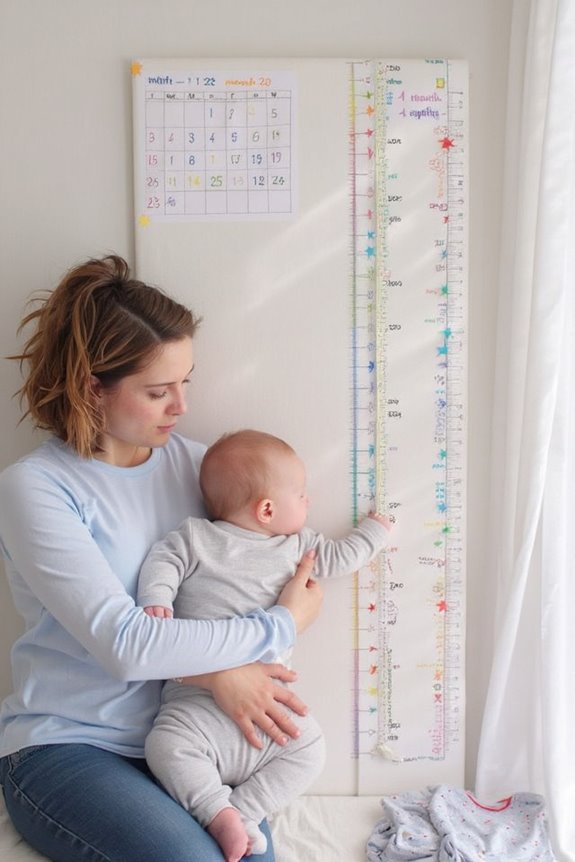
Now that we’ve covered what growth spurts are, let’s examine when you can expect them throughout your baby’s first year.
The typical timeline includes:
- 7-10 days after birth: First noticeable growth spurt
- 3-8 weeks: Second major growth period
- 3 months: Coincides with developmental milestones
- 6 months: Mid-year growth acceleration
- 9 months: Continues physical development pattern
- 12 months: Final first-year growth spurt
Growth spurt frequency varies among babies, with some following a consistent three-month cycle while others develop more irregularly. Duration variations are common too—most spurts last 2-3 days, but some extend up to a week. During these periods, you’ll notice increased hunger, potential sleep disruptions, and sometimes fussiness as your baby’s body works overtime.
Signs Your Baby Is Going Through a Growth Spurt

Recognizing when your baby’s experiencing a growth spurt can help you understand their changing needs and behaviors. During these intense development periods, you’ll notice several telltale indicators:
Changes in Eating Patterns:
- Increased hunger cues, including hand-sucking and more frequent feeding demands
- Feeding every 30-60 minutes in some cases
Sleep Changes:
- Sleep disruptions, even in previously good sleepers
- More night wakings for feeds
- Irregular nap patterns
Behavioral Changes:
- Increased fussiness and irritability
- General restlessness and mood swings
These signs typically coincide with rapid weight gain and physical development. While challenging, growth spurts are temporary—usually lasting just a few days. Maintaining flexible feeding schedules and consistent sleep routines can help both of you navigate these developmental milestones.
Recommended Products

Pump Anytime, Anywhere: The smallest, lightest and quietest wearable breast pump Elvie Pump makes it possible to pump on your own terms, at home, at work, or on the go; Ditch the hours spent hidden in cupboards, tethered to a wall or cleaning tubes; With Elvie Pump you can lead the meeting, get outside or simply enjoy some peace and quiet, all while you pump

EFFORTLESS FORMULA PREPARATION: This advanced baby bottle maker machine mixes warm formula bottles in seconds with one tap from the app on your phone. Skip measuring for perfectly prepared bottles with this innovative bottle maker for seamless feeding.

𝗭𝗲𝗿𝗼 𝗦𝗶𝗻𝗸 𝗧𝗶𝗺𝗲, 𝗠𝗼𝗿𝗲 𝗧𝗶𝗺𝗲 𝗳𝗼𝗿 𝗕𝗮𝗯𝘆: Go from dirty to ready-to-use with one machine. It automatically washes away grime, 212°F Steam Sterilizer, perfectly dries every drop, and keeps everything in storage for up to 72 hours. Experience true hands-off freedom.
The Connection Between Feeding Patterns and Growth Spurts
The feeding patterns of your baby directly relate to their growth spurts, creating a biological feedback loop that supports their rapid development. During these periods, you’ll notice increased feeding frequency as your little one’s nutritional needs surge dramatically.
Watch for hunger cues like increased fussiness or seeming unsatisfied after normal feeds. These signals indicate your baby requires additional nourishment to fuel their growth.
Adaptability strategies:
- Respond flexibly to feeding schedules
- Add extra nighttime feeds when needed
- Adjust breastfeeding support to stimulate milk production
- Time solid food introduction strategically
When breastfeeding, more frequent nursing sessions help stimulate milk production to meet increased demands. For older babies, integrating appropriate solid foods can supplement their heightened caloric needs while maintaining their regular milk intake.
Recommended Products

Parent unit features large 5” LCD color screen with LED sound level indicator and rechargeable battery with low battery alert

Effortless Tracking: Keep track of everything your baby needs & your pediatrician asks about with the Talli Baby One-Touch Tracker. It's an easy, screen-free way to log things like feedings, diapers & sleep with one touch of a button.

See Clearly Both Day and Night: The 3K 5MP resolution allows you to see images with super clarity and the finest details. Never miss a thing even at night with brilliant night vision of up to 40ft.
Sleep Changes During Growth Spurts: What Parents Should Know

As your baby experiences growth spurts, you’ll notice significant changes in their sleep patterns that directly correlate with their physical development. Research shows infants typically sleep about 4.5 hours more per day for two days before a growth spurt occurs.
Recommended Products

𝐇𝐎𝐌𝐄 𝐒𝐀𝐅𝐄𝐓𝐘 𝐁𝐀𝐁𝐘 𝐂𝐑𝐘 𝐌𝐎𝐍𝐈𝐓𝐎𝐑𝐈𝐍𝐆: Monitoring your baby’s well-being is a top priority for any parent. The Baby Cry Transmitter from Bellman & Symfon provides a reliable and secure way to stay connected and instantly alerted when your baby needs attention.

What's included: Nanit Pro Baby Monitor with 1080p HD video, 2-way audio; companion app for always-on monitoring; ASTM-certified Floor Stand (Gen 1); free trial of Nanit Insights Sleep Plan

WELLNESS & SLEEP TRACKING FOR PEACE OF MIND: Watch over your baby while they sleep with tracking of heart rate and movement from anywhere. Our smart sock gives you peace of mind by monitoring your little one's sleep patterns.
Key Sleep Indicators to Watch For:
- Increased nap frequency – expect up to three additional naps daily
- Longer total sleep duration – each extra hour increases growth spurt probability by 20%
- More slow-wave sleep periods – critical for growth hormone secretion
Effective sleep monitoring through detailed sleep logs can help you anticipate these growth phases. When you observe sudden changes in your baby’s nap frequency and overall sleep time, you’re likely witnessing the biological preparation for a growth spurt that will typically occur within 48 hours.
How to Support Your Baby Through Growth Spurts
Supporting your baby through growth spurts requires strategic adjustments to their care routine, particularly in feeding, comfort, and sleep patterns.
Feeding Strategies:
- Respond promptly to hunger cues
- Allow more frequent feeds during daytime
- Guarantee proper hydration importance for both you and baby
Emotional Care:
- Practice parental patience during fussy periods
- Implement a flexible daily rhythm
- Utilize skin-to-skin contact for reassurance
Soothing Techniques:
- Try gentle massage or swaddling
- Use white noise for sleep support
- Consider dream feeding to reduce night wakings
Establish strong support systems by involving family members and consulting healthcare providers regularly. Remember that growth spurts are temporary—your understanding approach now builds the foundation for your baby’s healthy development and emotional security.
Recommended Products
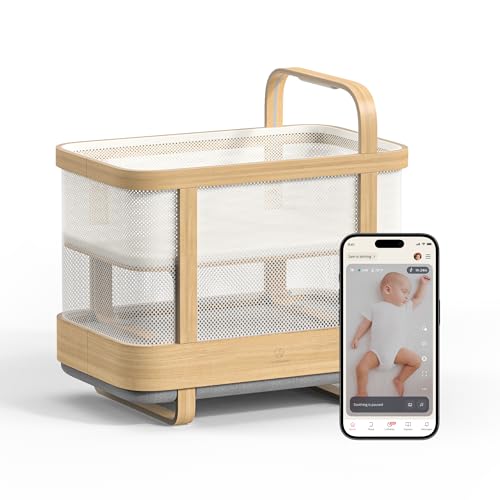
PREDICTIVE AUTO-SOOTHING TECHNOLOGY: Built-in sensors & AI camera detect early wake cues and activate a gentle bounce to soothe babies before they fully wake, supporting longer sleep stretches for both the baby and the parents

ADVANCED SLEEP INSIGHTS & AUTOMATIC TRACKING: Unlike basic audio monitors or standard WiFi cameras, this smart baby monitor acts as a sleep coach for parents, delivering everything you need as one of your baby must haves. Automatically track sleep duration, efficiency, and disturbances. . Monitor nursery conditions, cough/cry detection, and get AI-powered sleep coach insights with NextNap predictions and long-term trends to optimize your baby’s routine.

BENEFITS OF CONTACT-FREE MONITORING: Truly smart contact-free breathing and sleep tracking - powered by SensorFusion technology - works through blankets, stuffed animals, and in any sleep position or lighting. Unlike other wearable-free monitors that rely on image processing, Miku remains accurate as your child grows. No wearables, charging, or repositioning needed. Families trust Miku for years, with most still using it well beyond age three.
Growth Spurts vs. Developmental Milestones: Key Differences
While parents often confuse growth spurts with developmental milestones, they’re distinctly different aspects of your baby’s journey.
Growth spurts represent rapid physical changes in your baby’s weight and length, typically lasting just a few days. These growth patterns are influenced by genetics and nutritional impact, and occur at predictable intervals during the first year.
Developmental milestones, however, focus on skill acquisition:
- Cognitive skills (recognizing faces)
- Language abilities (babbling, cooing)
- Motor development (crawling, sitting)
- Social-emotional progress (smiling, showing affection)
Though these processes can overlap, they’re generally independent. I monitor growth using infant charts that track physical measurements, while developmental progress requires skill-based assessments. Both are affected by nutrition, but in different ways—adequate calories support growth spurts, while specific nutrients enable brain development and milestone achievement.
Physical Development During Each Major Growth Spurt
Your baby’s body undergoes remarkable transformations during each growth spurt, creating both visible and invisible changes in their development. During these periods, you’ll notice significant physical milestones as your baby’s body rapidly builds bone, muscle, and fat.
Key physical developments by growth spurt:
- Initial (7-10 days): First noticeable weight gain
- 3 weeks: Continued rapid weight increase
- 6 weeks: Notable height and weight changes
- 3 months: Accelerated overall development
- 6 months: Significant strength improvements
- 9 months: Final major first-year growth phase
Nutritional needs increase dramatically during these periods, with babies often demanding more frequent feedings. Their bodies require additional calories and nutrients to fuel this rapid development. Sleep patterns typically change as their bodies work overtime to grow.
Tracking Your Baby’s Growth: Tools and Methods
Four essential approaches exist for monitoring your baby’s development during critical growth spurts. I recommend maintaining consistent records using both traditional methods and modern technology:
- Traditional measurement techniques: Regularly track weight, height, and head circumference during pediatric check-ups, which provide baseline data for growth patterns.
- Growth standard charts: Compare your baby’s measurements against WHO Child Growth Standards to understand percentiles and identify potential concerns early.
- Tracking apps: Utilize specialized tools like CDC’s Milestone Tracker or TheParentZ Baby Growth Tracker that offer AI assistance and visualization of growth metrics.
- Consistent documentation: Whether digital or paper-based, regular tracking creates valuable data for healthcare providers and helps detect developmental issues before they become problematic.
This systematic approach guarantees you’ll notice growth spurts and potential concerns promptly.
Recommended Products

TIMELESS, CLEAN DESIGN— VERSATILE, EASY-TO-MATCH STYLE: The Graco Hadley 5-in-1 Convertible Crib and Changer with Drawer features clean lines, timeless details, and an easy-to-match versatile design making it the perfect addition to any nursery

1080p HD Video Quality: Full HD baby monitor with crystal clear video resolution, infrared night vision allows you see your baby clearly even in total darkness.

SLEEK, CLEAN DESIGN— VERSATILE, EASY-TO-MATCH STYLE: The Shiloh 5-in-1 Convertible Crib and Changer with Drawer features sleek lines, clean details, and an easy-to-match versatile design making it the perfect addition to any nursery
When to Consult a Pediatrician About Growth Patterns
Recognizing when to seek professional medical advice about your baby’s growth patterns can make a significant difference in their development. As a parent, I’ve learned that pediatric consultation is essential in certain situations:
- When your baby’s measurements fall below the 2nd percentile or above the 98th percentile on growth charts
- If you notice sudden changes or plateaus in growth over multiple check-ups
- When there’s a significant decline in growth velocity
- If weight-for-length measurements show concerning discrepancies
Family history of growth issues or the presence of chronic conditions also warrant discussion with your doctor. Remember that regular check-ups using WHO growth standards (for babies up to 2 years) provide important baseline data for monitoring development.
Don’t hesitate to consult your pediatrician if nutritional concerns or developmental delays accompany abnormal growth patterns.
Frequently Asked Questions
Can Growth Spurts Cause Temporary Regression in Already Acquired Skills?
Like Penelope unraveling her tapestry nightly, I’ve seen babies temporarily lose acquired skills during growth spurts. They may experience skill regression, but it’s a natural part of their developmental milestones. Don’t worry—it’s temporary!
Do Premature Babies Follow the Same Growth Spurt Timeline?
No, I’ve found that premature babies don’t follow the same timeline. They experience growth spurts based on their adjusted age, with premature growth patterns often being more variable while still progressing toward similar developmental milestones eventually.
Are Growth Spurts Affected by Seasonal Changes or Climate?
I’ve found that seasonal nutrition may influence infant growth patterns, though direct evidence is limited. Climate impact is more indirect, affecting food availability and health conditions that could subsequently influence your baby’s growth spurts.
Can Siblings Have Identical Growth Spurt Patterns?
No, I’d say identical growth spurts between siblings are rare. While genetics play a role, sibling growth patterns vary due to individual hormonal differences, environmental factors, and unique timing of developmental phases.
Do Formula-Fed and Breastfed Babies Experience Growth Spurts Differently?
Yes, I can tell you that breastfed and formula-fed babies do grow differently. I’ve seen breastfed babies grow faster in the first 2-3 months, while formula-fed babies show quicker weight gain after 3 months. Breastfeeding benefits include more natural growth patterns.