As an Amazon Associate, we earn from qualifying purchases. Some links on this site are affiliate links at no extra cost to you. Our recommendations are based on thorough research and editorial judgment.


When Do Babies Start Sitting Up and Crawling?

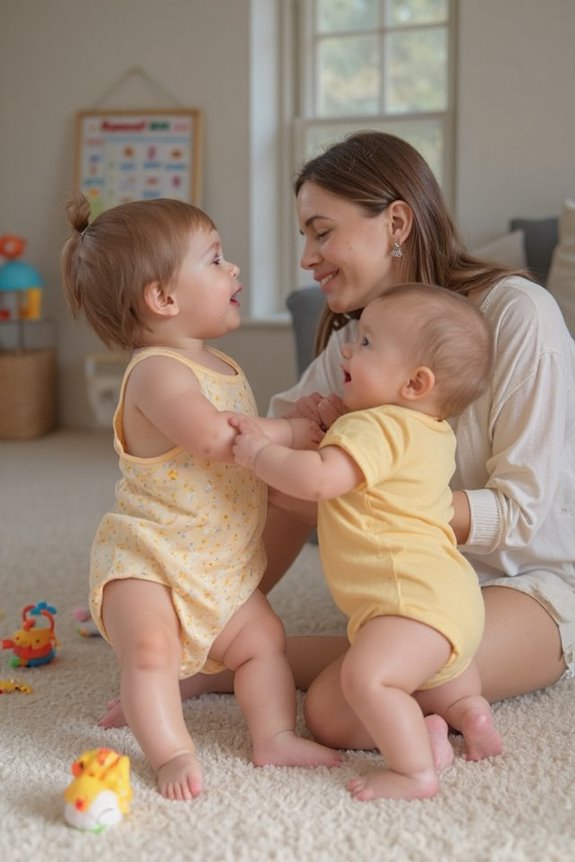
Most babies begin sitting with support around 3-5 months, progressing to independent sitting between 6-9 months. This developmental milestone requires strong neck control and core muscles, which tummy time helps build. Crawling typically follows sitting, emerging between 8-10 months as babies master pivoting and rocking movements. Remember that each baby develops at their own pace, with biological factors and environmental support influencing timing. The following sections explore how you can safely encourage these important motor skills.
Key Takeaways
- Babies typically achieve supported sitting between 3-5 months when neck muscles develop sufficient head control.
- Most babies master independent sitting between 6-9 months after developing core strength through tummy time.
- Sitting progression follows a pattern: supported sitting (3-5 months), prop sitting (4-6 months), then independent sitting (6.5-7 months).
- Crawling typically begins between 8-10 months after babies develop pivoting and rocking movements in the sitting position.
- Development timelines vary based on biological factors, environmental influences, nutrition, and parental support.
The First Steps to Sitting: Supporting Your Baby’s Early Efforts
You may be interested
When does your baby start their journey toward sitting independently? Most infants begin with supported sitting between 3-5 months, when their neck muscles have developed enough for good head control.
For early support during this significant stage of muscle development:
- Position your baby in your lap or on the floor, providing gentle support at the ribcage
- Gradually reduce your hands-on assistance as they show increased stability
- Place cushions around them during practice sessions to prevent injuries from toppling
- Limit time in baby seats which can inhibit natural balance development
- Offer toys at eye level to encourage reaching while seated
Remember that floor time on the back, belly, and sides builds the essential foundation for sitting skills. Always supervise these practice sessions for safety.
Recommended Products

Ergonomic Chair Design: The Gesture chair by Steelcase is expertly designed to redefine the relationship between you and your chair, adjusting to your unique body and work posture

The Ranger Super Lightweight Folding Electric Wheelchair weighs just 43 pounds without the battery (47 lbs with it), making it ultra-lightweight and portable. Designed for indoor and outdoor use, it offers versatile, reliable mobility support. Featuring a sleek design, large footplate for added leg room, and a brushless motor and controller for smooth operation, this wheelchair ensures comfort and efficiency. Anti-tip wheels provide extra safety and stability, making it a secure and durable choice for those seeking a high-quality, lightweight wheelchair.

Recliner Chair Comfort: Enjoy plush relaxation with soft 90% polyester and 10% PU upholstery, designed for ultimate support whether in the living room or as a nursery favorite.
Achieving Independent Sitting: What to Expect and When
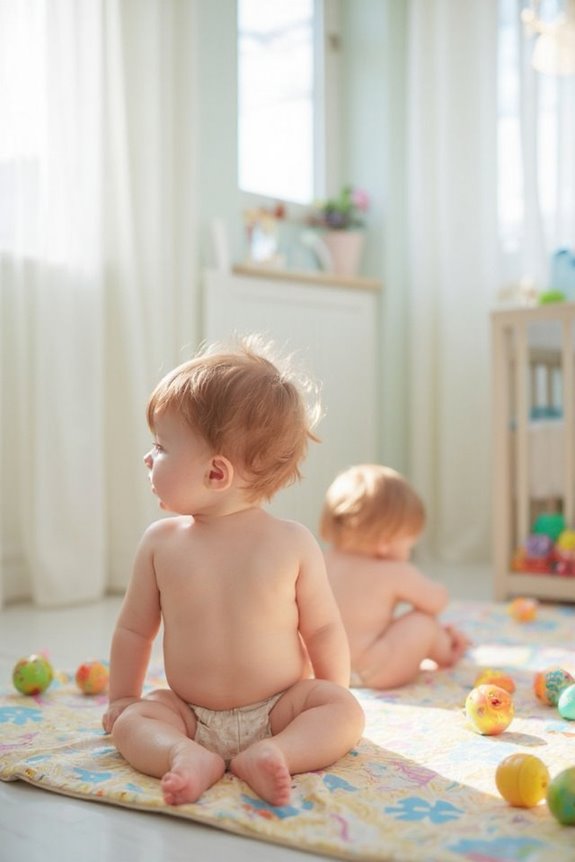
Between 6 and 9 months, most babies achieve the exciting milestone of sitting independently. This development follows a predictable pattern, with several sitting readiness signs to watch for:
- Good head control
- Ability to roll in both directions
- Pushing up during tummy time
- Using the tripod position for support
Core muscle development is essential for this milestone. I’ve found that regular tummy time helps strengthen these muscles, preparing your baby for sitting success. Initially, your little one may need support from pillows or your hands, sitting for just moments before toppling over.
Recommended Products

POWER RECLINER & GLIDER: The Kiwi is a nursery essential! It swivels 270-degrees, glides back and forth, electronically reclines at the push of a button has a built-in USB A/C charger, and arrives fully assembled, ready out of the box.

MADE FROM REAL PARENT FEEDBACK: Interviewed hundreds of parents to design the ultimate nursery glider for your growing family. Ergonomically engineered to provide support during feeding and soothing sessions, made with life-proof fabrics for the best (and messiest) shared moments. Requires minimal assembly.

Adjustable Armrests and Headrest: Featuring adjustable armrests, a headrest, and a removable lumbar pillow, this nursery chair adapts to your needs. The flip-up armrests add flexibility and a modern touch, making every moment—feeding, reading, or resting—more enjoyable.
How Babies Develop Sitting Skills: A Progressive Journey
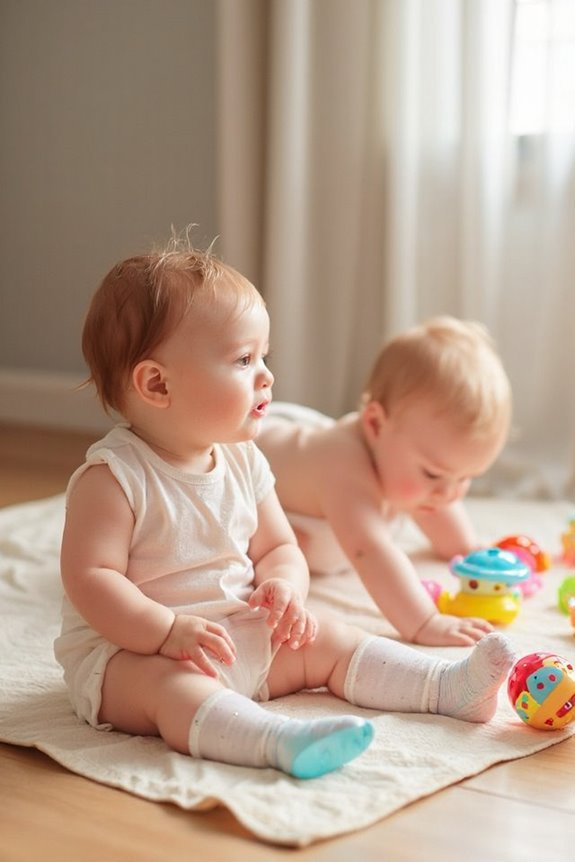
Your baby’s journey to sitting independently unfolds as a step-by-step progression rather than an overnight achievement. This development typically spans several months, with distinct sitting milestones marking their progress.
The journey begins around 3-5 months with supported sitting, where your baby needs your hands or props for balance. As their core strength improves, they advance to “prop sitting” at 4-6 months, using their arms for support.
By 6 months, most babies can maintain a sitting position when placed there, though they may still wobble. The advancement continues:
- 6.5-7 months: Independent sitting begins
- 7.5-8.5 months: Protective reflexes develop
- 9 months: Sitting without assistance and shifting positions
Throughout this process, your baby’s neck, shoulder, and core strength gradually build, enabling balanced, functional sitting.
Key Factors That Influence Your Baby’s Sitting Timeline
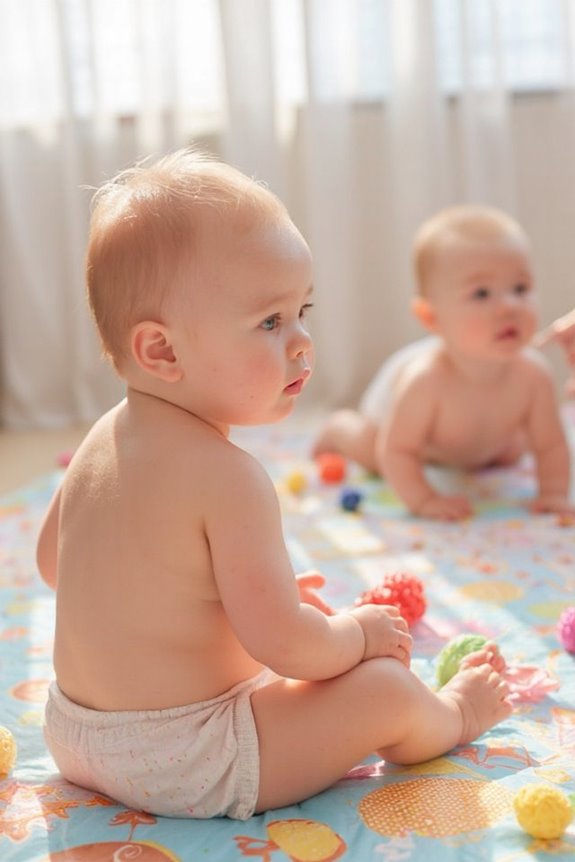
While every baby follows a unique developmental path, several critical factors affect when your little one will master independent sitting.
Biological factors play a fundamental role—brain development, muscle strength, and neck control must reach certain thresholds before sitting becomes possible. Environmental influences like regular tummy time and supportive play positions help build necessary strength. Your baby’s nutritional health directly impacts muscle development and energy levels needed for this milestone.
Parental support matters greatly. When you provide physical assistance during early attempts and create stimulating environments, you’re helping your baby build confidence and strength.
Remember that developmental variability is normal—most babies sit independently between 6-9 months, but your child’s unique timeline depends on individual differences in strength, coordination, and temperament.
Recommended Products

BABY PLAY YARD: This multi-functional play set has two pieces. Place them together to form a 10-sided sensory play yard to restrict the movement of early-crawlers. Use them separately to form two, individual, pentagon shapes to entertain more than one child at a time.

INDOOR PLAY EQUIPMENT: A rainbow colored mat has become a staple for safe, indoor play in classrooms as well as homes. Mat comes with two 2 ft. x 6 ft. segmented pieces that can be rearranged to form all sorts of play areas. Hook and loop strips on the edges allow kids to make quick changes and ensure the two segments don't slide apart during activities.

Premium Memory Foam Comfort: Engineered with high-density memory foam.
From Sitting to Crawling: The Natural Developmental Progression
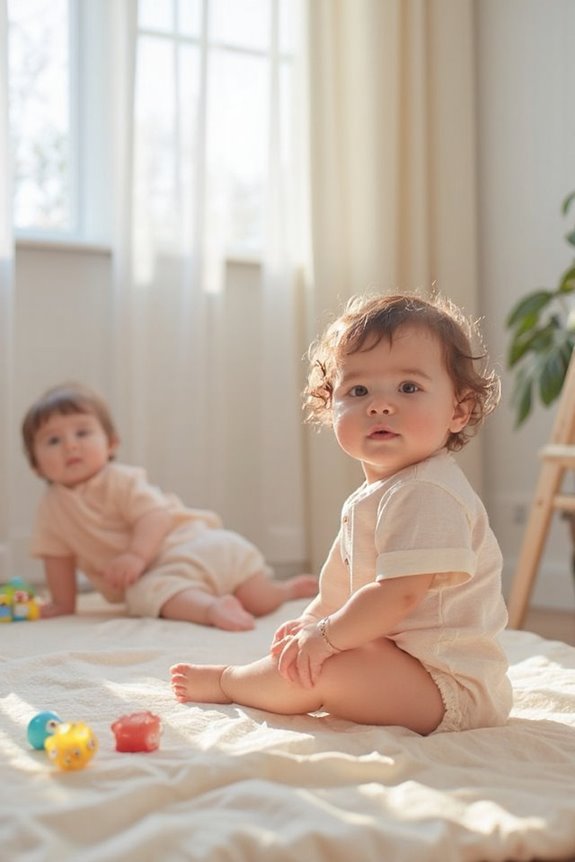
Now that we’ve explored the factors affecting your baby’s sitting timeline, let’s look at how sitting becomes the foundation for crawling.
The progression from sitting to crawling follows a predictable sequence of sitting milestones:
- Around 4-6 months: Babies sit with support, strengthening core muscles
- 6-8 months: Most achieve independent sitting, freeing hands for play
- 5-7 months: Pivoting and rocking movements develop, indicating crawling readiness
- 8-10 months: The typical age when crawling begins
Before true crawling, you’ll notice your baby pushing up on hands while on their tummy (4-6 months), then assuming the quadruped position (8-9 months). This progression builds the strength and coordination needed for mobility.
To encourage crawling readiness, limit time in upright seats to 15-30 minutes daily, and place toys just beyond reach during floor play.
Recommended Products
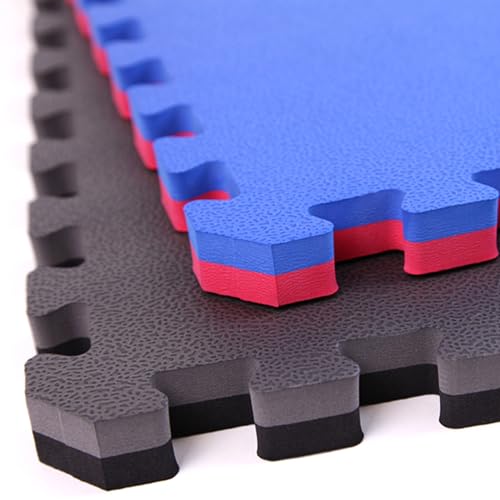
【Built for combat sports and home fitness】These 1” thick interlocking foam tiles are perfect as MMA mats, jiu jitsu mats, wrestling mats, and workout mats for home gyms. High-density EVA foam offers joint-saving shock absorption for every takedown, roll, or roundhouse.

IKAT COLLECTION- This collection showcases traditionally inspired designs that exemplify timeless styles of elegance, comfort, and sophistication. The pattern on the design is not repeated unlike other play mats.

Baby is learning to crawl but your hard floors are unforgiving? This soft foam play set creates a safe landing zone. The high-density foam cushions every fall, and the PU cover is smooth but non-slip. Your little one can practice crawling, rolling, and climbing without bumps or bruises.
Supporting Your Baby’s Motor Development Through Play and Practice
Babies develop essential motor skills through purposeful play experiences that challenge and engage their growing bodies. By creating a supportive environment with play mats and tummy time routines, you’ll foster playful exploration that strengthens vital muscles.
To enhance your baby’s development:
- Position toys just out of reach to encourage movement
- Use mirrors to stimulate curiosity and self-awareness
- Incorporate diverse textures for sensory stimulation
- Establish daily tummy time sessions (3-5 minutes initially, gradually increasing)
I recommend rotating activities regularly to maintain interest. Place cushions strategically to support sitting practice, and create simple obstacles for pre-crawling practice. Remember to track your baby’s progress against typical milestones, consulting with your pediatrician if you notice significant delays in motor skill development.
Recommended Products

1.3" Thick Patented Elasti-Foam – Like a Cloud for Your Baby's First Steps:Most mats are thin and hard. Ours? 2X softer. This thick play mat absorbs every tumble, protecting tiny knees, elbows, and heads. Whether it's tummy time or crawling, your baby gets a soft landing every time

SCANDINAVIAN DESIGN: Inspired by Swedish minimalism and a neutral palette, the Lillefolk playmat blends with your home and playroom décor and provides a safe and calming play area for your baby or toddler.

1.3" Extra Thick Play Mat: The thick foam mat provides superior cushioning to protect your baby’s knees, elbows, and head from hard flooring. This ultra-padded design offers enhanced shock absorption, making it ideal for crawling, tummy time, kick activities, ensuring safety and comfort during every movement.
Frequently Asked Questions
Can Premature Babies Achieve Sitting Milestones on the Same Timeline?
Like tiny butterflies emerging, I’ve seen premature babies blossom differently. They typically reach sitting milestones based on their corrected age, not calendar age. Premature milestones follow their own paths, with developmental variations being normal.
Should I Use Baby Seats to Help My Baby Sit Up?
I’d recommend baby seats sparingly – 15-30 minutes daily max. They offer benefits for short breaks, but proper usage is key. Too much time in seats can actually hinder natural muscle development for sitting independently.
When Should I Consult a Doctor About Sitting Delays?
Oh, don’t worry! Babies only need to master sitting by college orientation, right? I’d seriously consult your doctor about sitting milestones if your baby isn’t sitting with support by 9 months—that’s when developmental delays warrant attention.
Do Taller or Heavier Babies Typically Sit up Later?
From what we understand, a baby’s height or weight doesn’t greatly delay sitting milestones. I’d focus more on muscle strength development than size when tracking your baby’s growth and developmental milestones.
How Does Tummy Time Specifically Affect Sitting Development?
I’ve found that tummy time benefits sitting development directly by building essential muscle strength in your baby’s neck, back, and core. These are exactly the muscles they’ll need to maintain balance when sitting independently.