As an Amazon Associate, we earn from qualifying purchases. Some links on this site are affiliate links at no extra cost to you. Our recommendations are based on thorough research and editorial judgment.

When Do Babies Recognize They’re Separate From Mom?

Babies gradually recognize they’re separate from mom through a developmental process. Newborns can differentiate themselves from their environment, but true self-awareness emerges between 15-24 months. This milestone typically coincides with mirror self-recognition, when toddlers understand the reflection is themselves, not another child. Earlier signs include separation anxiety (around 8-10 months) and independent exploration. Touch experiences, like toe-grabbing and face-touching, accelerate this self-recognition by approximately two months. The sections below explore these fascinating developmental stages more thoroughly.
Key Takeaways
- Newborns show early differentiation from their environment, with basic awareness beginning at birth.
- Situational awareness develops around two months, when babies respond to social cues and facial expressions.
- Separation anxiety typically emerges at 6-8 months, indicating babies recognize their separateness from caregivers.
- Full self-recognition develops between 15-24 months, as demonstrated through mirror tests and language acquisition.
- Mobility milestones like crawling (6-10 months) mark growing independence and physical separation from mother.
The Early Days: Building Blocks of Self-Recognition
You may be interested
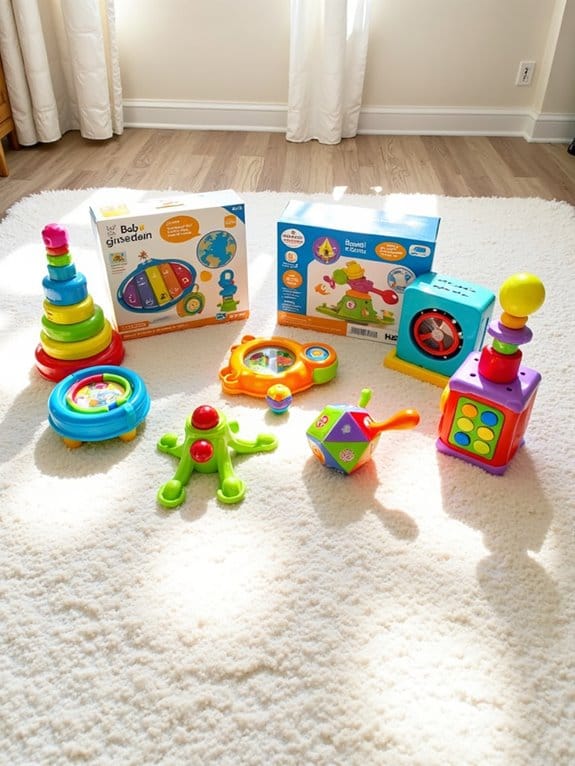
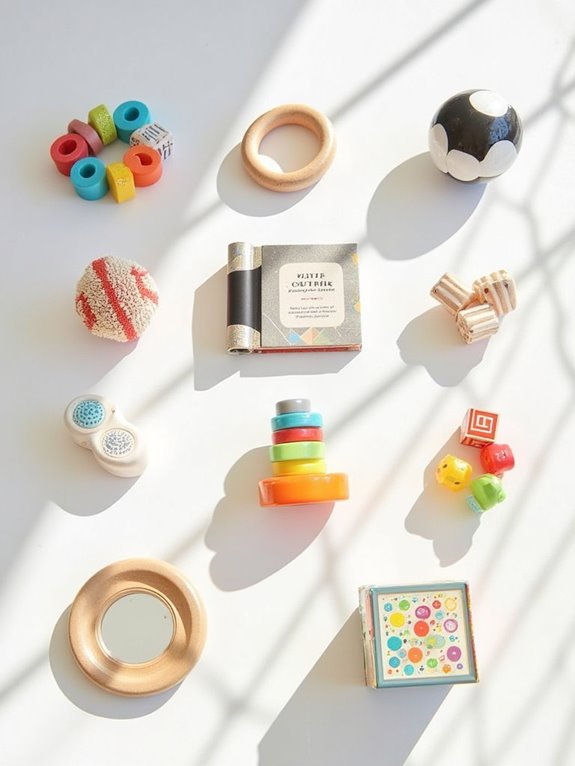
While it may seem like your newborn has no concept of being separate from you, infants actually begin differentiating themselves from their surroundings from birth. This foundational awareness develops rapidly in the first months of life.
By around two months, your baby develops situational awareness, recognizing their body’s position relative to the environment. This coincides with their emerging ability to respond to social cues and reciprocate facial expressions.
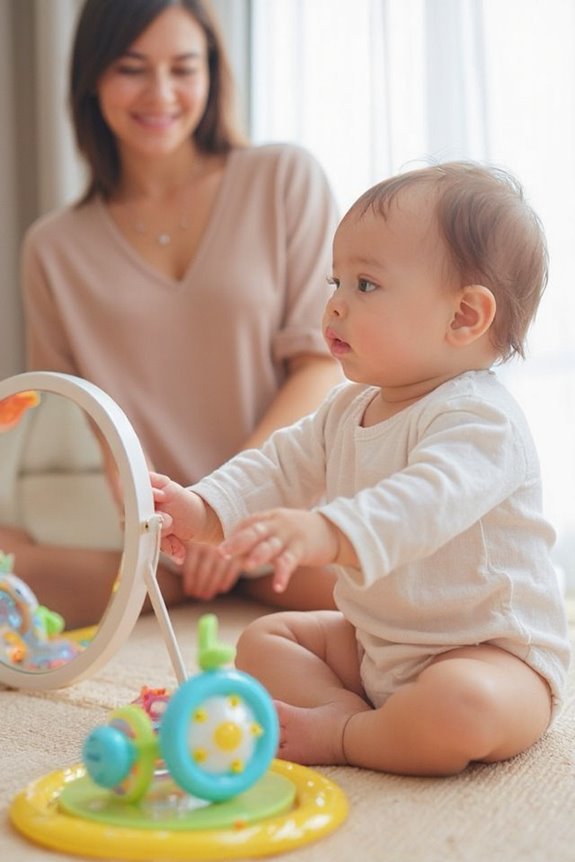
When it comes to infant reflections, babies initially treat mirrors as visual stimuli containing other babies. They may:
- Smile or coo at their reflection
- Reach out to touch the “other baby”
- Respond differently to self-reflection than to peers
Touch plays a vital role in this development, with self-directed activities like toe-pulling contributing greatly to early self-awareness.
Understanding Developmental Milestones in Self-Awareness
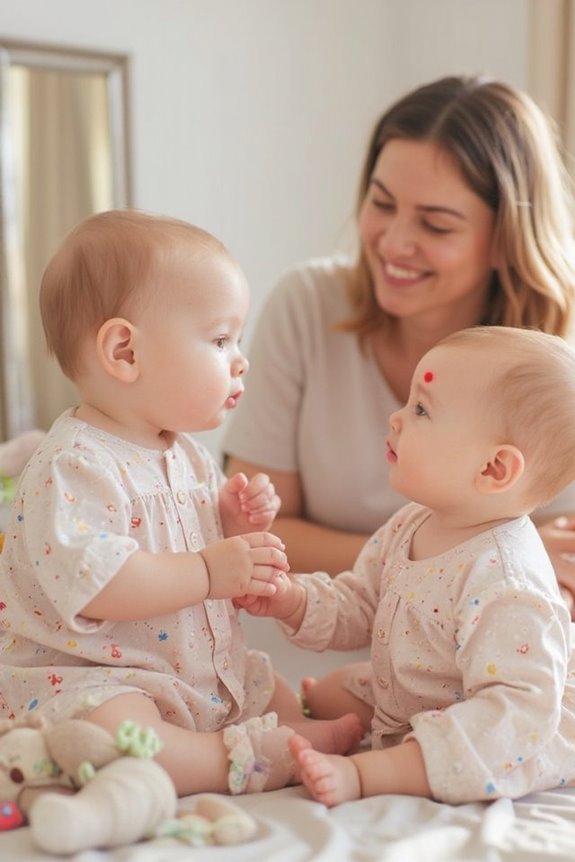
How exactly does your baby’s sense of self emerge over time? Self-awareness develops through predictable cognitive development stages that begin at birth.
- Birth to 2 months: Your baby starts differentiating their body from the environment and shows situational awareness through reciprocal facial expressions.
- 15-18 months: Reflective self-awareness emerges as they recognize themselves in mirrors.
- 16-24 months: Language development accelerates self awareness milestones with expressions like “mine” and “me.”
During this journey, your baby’s understanding develops through:
- Object permanence (realizing things exist when out of sight)
- Social interactions that reinforce their identity
- Environmental exploration
- Emotional awareness
Your interactions greatly impact this development, as babies learn about themselves through your responses to their needs and emotions.
Recommended Products

ENGAGING SELF-DISCOVERY: The Itzy Ritzy sensory tummy time mirror features an adorable cow character and a baby mirror that captivates your little one's attention, fostering self-awareness and visual development in a fun and engaging way.

ENGAGING SELF-DISCOVERY: The Itzy Ritzy sensory tummy time mirror features an adorable bear character and a baby mirror that captivates your little one's attention, fostering self-awareness and visual development in a fun and engaging way.

Baby Mirror Toy: This is a black and white baby mirror toy for crawling time, perfect for baby to get more fun through the interesting patterns. Tummy time toy helps strengthen baby’s muscles through crawling and playing
The Mirror Test: A Window Into Baby’s Self-Perception
When your baby gazes into a mirror, they’re not just seeing a reflection—they’re participating in one of developmental psychology‘s most revealing experiments. The mirror test, developed in the 1970s, offers vital insights into when self-recognition emerges.
Here’s what typically happens during self-recognition development:
- 6-12 months: Babies treat reflections as another child
- 13-24 months: Recognition begins to emerge
- 20-24 months: Most toddlers clearly recognize themselves
The classic test involves placing a mark on your baby’s nose without their knowledge. If they touch their own nose (not the mirror) when seeing their reflection, they’ve demonstrated self-recognition—a notable milestone typically achieved around 18-24 months in Western cultures.
Cultural differences greatly impact results, with pass rates varying dramatically across different societies.
Recommended Products

Multi-Sensory Baby Activity Toy: 5 engaging sides designed for infants to support early learning, sensory development, and motor skills through touch, sight, and sound

Large True-Reflection Mirror engages baby's developing vision

Meaningful & Lovely Newborn Toys By ZICOTO: Watch your baby evolve day by day - truly heartwarming! The adorable soft baby book is designed for 2 developmental stages - crinkle filling, sensory textures & fun activities make for an absolute favorite among infant toys
How Touch Experiences Accelerate Self-Recognition
The touch experiences your baby encounters play a pivotal role in developing their sense of self. Research shows that tactile exploration actually accelerates self-recognition by about two months earlier than the typical 18-month milestone.
When babies engage in self-directed activities like:
- Touching their face
- Grabbing their toes
- Exploring their fingers
These actions contribute greatly to sensory integration, helping infants understand where their body ends and the external world begins.
In a fascinating study, researchers used vibrating discs to encourage babies to touch their faces, which prompted earlier self-recognition. This challenges previous assumptions that self-recognition is purely innate, suggesting instead that it develops through physical interactions with their environment and themselves.
For parents, encouraging these self-directed touch activities can support your child’s cognitive and emotional development.
Recommended Products


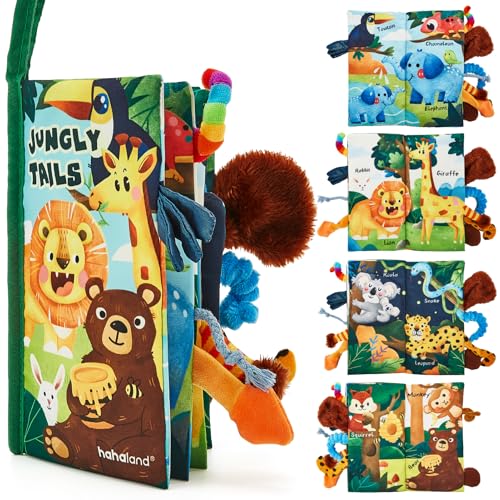
All for Baby's Safe: The Jungly Tails baby book is made from BPA-free cloth and is soft to touch and chew, easy to use by baby without getting hurt, especially suitable for 0-12 months babies. No small or loose parts to avoid choking hazards and the stitching is strong enough to withstand chewing. Features soft, light and easy to clean so that can be carried anywhere and the colors and graphics do not easily fade and can be maintained with just a quick wash
Signs Your Baby Is Discovering Their Independence
As your baby’s self-exploration continues through touch, their journey toward recognizing themselves as separate individuals unfolds through observable behaviors.
Watch for these key indicators:
- Mobility milestones: When your baby begins crawling or taking steps, they’re physically demonstrating independent exploration
- Self-feeding attempts: Grabbing spoons or finger foods shows growing autonomy
- Separation anxiety (around 6-7 months): This actually signals they understand they’re separate from you
- Emotional growth: New expressions of happiness, frustration, or curiosity indicate developing self-awareness
- Social interaction: Engaging with others beyond primary caregivers demonstrates their expanding world
These developments typically emerge between 6-24 months as your baby gradually builds their sense of self. Each milestone represents important cognitive and emotional progress toward understanding their individual identity.
Nurturing Healthy Attachment While Supporting Separation
Balancing secure attachment with healthy independence creates the foundation for your baby’s emotional development and self-identity. Understanding your baby’s attachment style helps you respond appropriately to separation anxiety.
Consistent caregiver responsiveness builds secure attachment, which actually makes separation easier for your baby over time. When I respond promptly to my daughter’s distress signals, I’m teaching her that her needs matter, developing her emotional regulation skills.
To nurture independence while maintaining strong bonds:
- Introduce brief separations gradually
- Establish consistent goodbye routines
- Provide physical comfort before departures
- Encourage secure exploration within your sight
- Respond warmly upon reunion
Remember that healthy attachment doesn’t mean your baby never leaves your side—it means they feel secure enough to venture away, knowing you’ll be there when they return.
Recommended Products

INSTINCTUAL ANXIETY RELIEF: Features a true-to-life heartbeat that mimics a mother or companion, effectively reducing separation anxiety, fear of thunder, and loneliness to help your puppy adapt quickly to new environments.

INSTINCTUAL ANXIETY RELIEF: Features a true-to-life heartbeat that mimics a mother or companion, effectively reducing separation anxiety, fear of thunder, and loneliness to help your puppy adapt quickly to new environments.

Separation Anxiety Relief: The heartbeat toys with heartbeat which is a simulation of the true pulsing heartbeat enables the puppy to feel the heartbeat, thereby reducing their anxiety and get used to the new home or tough time as soon as possible.
Frequently Asked Questions
Can Premature Birth Affect When Babies Recognize Separation From Mom?
I believe premature birth can delay a baby’s recognition of separation from mom. NICU stays interrupt bonding time, potentially affecting when separation anxiety develops and how infants process maternal attachment relationships.
Do Twins Develop Self-Recognition Differently Than Single Babies?
Yes, I believe twins develop self-recognition differently due to their unique twin bonding experiences. They often face more complex challenges establishing individual identity while steering through their close relationship compared to single babies.
How Does Daycare Impact a Baby’s Sense of Separation?
Isn’t it interesting—I was just thinking about this! In my view, daycare environments can influence how babies develop separation awareness, particularly through the lens of attachment theory—sometimes enhancing their understanding of being separate individuals.
Can Technology or Screens Influence Self-Recognition Development?
I believe screen exposure may hinder self-recognition if excessive, but supervised digital interactions could potentially support this development through mirror-like experiences. However, we need more research to understand technology’s specific impacts on infant self-awareness.
Do Cultural Differences Affect When Babies Develop Separation Awareness?
While some think babies develop uniformly, I’ve found cultural practices greatly affect when infants recognize separation. Different attachment styles emerge from collectivist versus individualist societies, influencing the timeline of a baby’s separation awareness development.